



Milk bath nails are the soft, sheer, milky-white manicure that took over salon menus and TikTok feeds across spring 2026, and the look shows no sign o
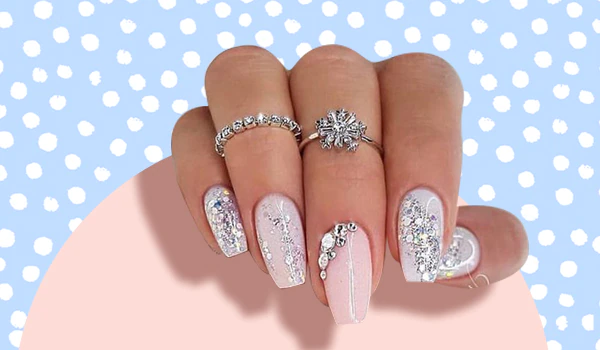
Milk bath nails are the soft, sheer, milky-white manicure that took over salon menus and TikTok feeds across spring 2026, and the look shows no sign of cooling off as wedding season hits full tilt. Picture nail tips that look like they are floating in a glass of cold milk, with tiny pressed flowers, gold flakes, or pearl micro-charms suspended just beneath a glassy top coat. It is the romantic, more textured cousin to the glazed doughnut nail and a quiet rebuke to anything heavy or chrome. This guide covers what the look actually is, who it flatters across skin tones, how to recreate it at home, what salon pros do differently, the variations worth trying, the mistakes that flatten the effect, and a full FAQ.
Published · Updated
What Milk Bath Nails Actually Are (and Why They Are Trending in 2026)
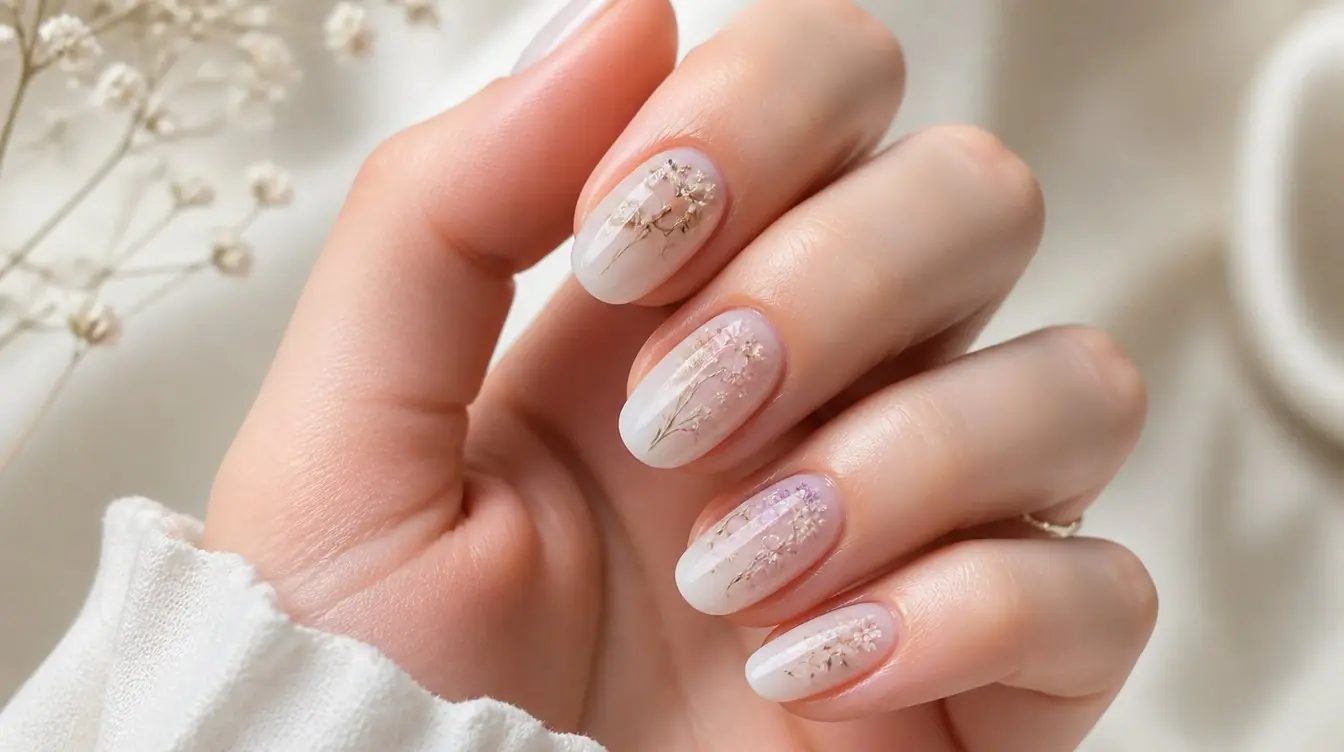
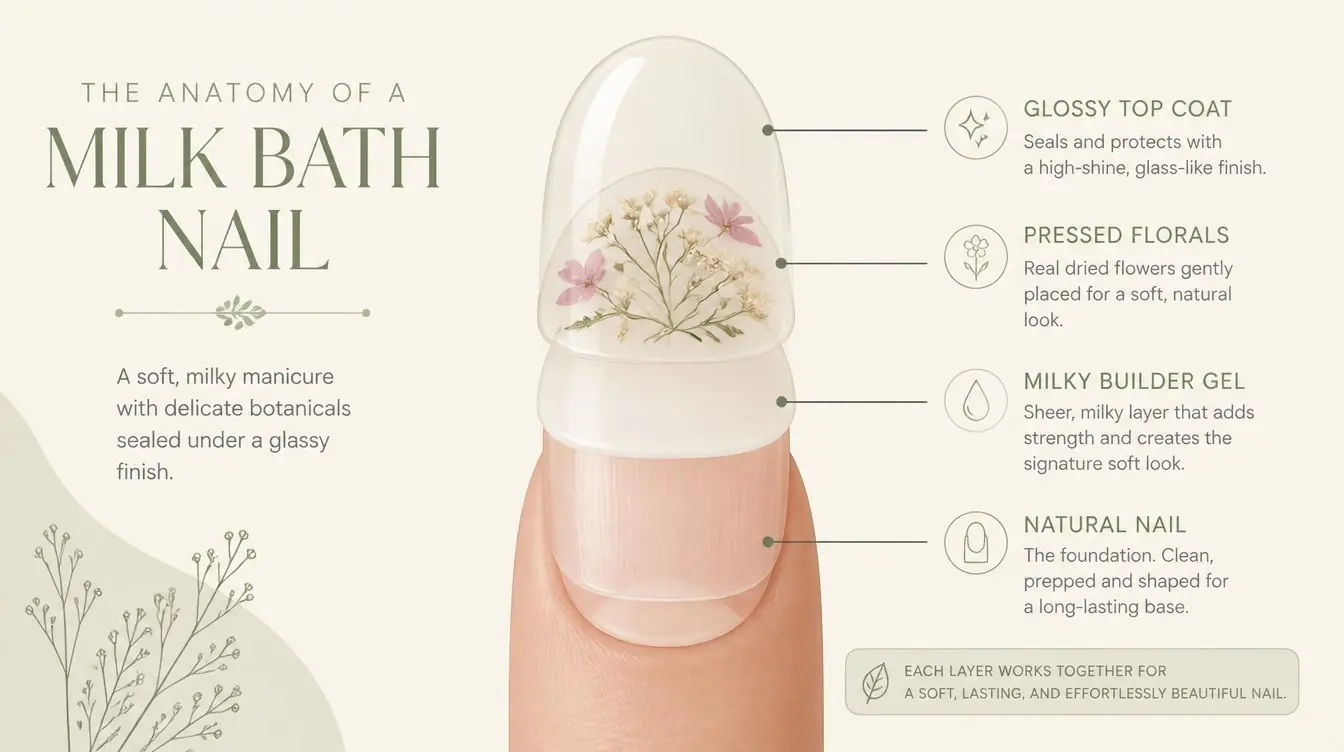
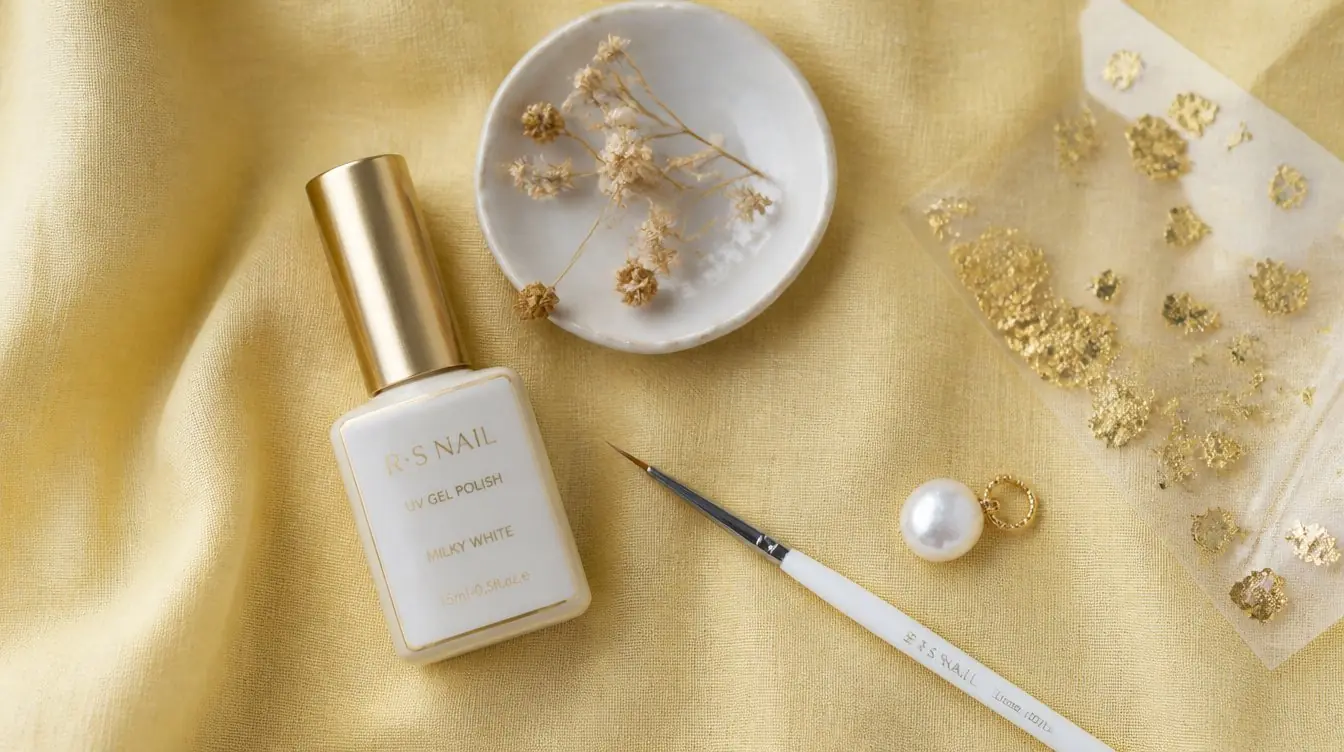
Milk bath nails are a translucent, milky-white manicure built from a tinted jelly base, usually a white-tinted builder gel or a sheer milky lacquer, applied in thin layers over the natural nail. The opacity sits between a clear coat and a true white press-on, so the natural pink of the nail bed glows through, much like how a slice of fruit looks suspended in a glass of cold milk. Optional micro details, pressed flower petals, gold flakes, tiny pearls, or hand-painted dots get sandwiched between the milky base and a thick, glossy top coat, so they appear to float just under the surface.
The trend is exploding for one reason: it solves the 2026 nail brief better than anything else on the menu. Clients want minimalism, but they also want softness, texture, and something that photographs as expensive rather than bare. Hard chrome and aggressive 3D nail art read as dated next to this style. The look bridges the gap between the bare-nail movement and full nail art, which is exactly why brides, summer-wedding guests, and quiet-luxury devotees are booking it on repeat.
Who Milk Bath Nails Flatter (and Who Should Adapt the Look)
The short answer: almost everyone, because the translucent base reads as a soft wash rather than a dominant colour. The longer answer depends on undertone. On fair and porcelain skin, a cool milky white with a hint of blue keeps the look crisp and avoids the chalky daughter-of-Wite-Out effect. On medium and olive skin, a warmer milky base with the faintest cream tint flatters the undertone and stops the manicure from going stark. On deep and rich brown skin tones, the look is gorgeous, but the trick is choosing a base with more transparency and warmth so the natural nail glow comes through; an overly opaque white can read as flat against deeper skin.
Nail bed shape matters too. Long almond, soft squoval, and tapered oval shapes show off the floating-in-milk effect best because there is room for the petals and flakes to breathe. Very short nails still work, but the embellishments need to be scaled down to micro size; otherwise, the design crowds the bed. Wide nail beds suit larger embedded florals; narrow beds look cleanest with single asymmetric placements rather than a full sprinkle.
How to Get Milk Bath Nails at Home: Step by Step
Recreating the look at home is realistic if you already work with gel polish and a small UV or LED lamp. A plain lacquer version is also possible, though the floating-flower effect is harder to lock in without the thickness of builder gel. Here is the step-by-step.
- Prep the nail. File to your preferred shape, push back the dry cuticles rather than soaking, and lightly buff the surface to remove shine. Dehydrate with a swipe of pure acetone or a nail-prep dehydrator. Skip oil-based cuticle treatments until the very end.
- Apply a thin base coat. Use a clear gel base coat and cure for the time your lamp specifies, usually 30 to 60 seconds. This grips the natural nail and stops shadowing under the milky layer.
- Build the milk layer. Apply a thin coat of milky-white sheer gel or white-tinted builder gel. Cure. Add a second thin coat if the opacity is still too low, and cure again. You are aiming for the look of skim milk, not paint.
- Place the embellishments. While the nail is tacky after a brief uncured pause (or on a fresh thin layer of clear gel), use tweezers or a dotting tool to position pressed micro flowers, gold flake fragments, or tiny pearls. Less is more; three to five micro pieces per nail is the sweet spot.
- Encapsulate. Brush a thin layer of clear builder gel or thick clear top gel over the embellishments to sink them into the design. Self-level the surface and cure fully. If anything sits proud of the surface, add a second clear coat.
- Glossy top coat. Finish with a no-wipe glossy top coat for that wet, milk-in-a-glass shine. Cure for the full recommended time, usually 60 seconds.
- Hydrate the cuticles. Massage cuticle oil into each nail bed. This is also the step that makes the manicure photograph beautifully.
The Salon Pro Version
A trained nail tech delivers a tighter version of the same look, and the difference shows up in three places: the cuticle line, the apex shape, and the embellishment placement. Pros usually use an e-file to make the cuticle area perfectly flush, then they build a structured apex with builder gel so the milky layer has a curved canvas instead of a flat one. That subtle dome is part of what makes the salon manicure appear more expensive on camera.
Pricing varies widely. In Indian metros, expect a gel manicure with a milk bath to sit in the rough range of INR 1,800 to INR 3,500 depending on the salon tier and how many embellished nails you opt for. In the US, the comparable range tends to run roughly USD 60 to USD 110 for a gel set, with hand-placed floral encapsulation adding to that. UK pricing typically sits between the two. Wedding-day appointments often carry a small surcharge for the longer chair time and the trial run that some brides book the week before.
Common Milk Bath Nails Variations to Try in 2026
The base formula is endlessly remixable. A few of the variations are getting the most airtime right now.
Pressed-flower milk bath. The original interpretation. Tiny dried daisies, baby’s breath, or forget-me-not petals suspended under the top coat. Reads as soft, romantic, and very bridal.
Gold-flake milk bath. Swap the florals for irregular gold leaf fragments. This version photographs incredibly well under warm lighting and pairs especially nicely with deeper skin tones.
Pearl-drop milk bath. A single off-centre micro pearl on each nail, or a graduated cluster near the cuticle. Quiet luxury in nail form.
Half-and-half milk bath. Only the ring finger or accent nail gets the embedded design; the rest stay milky and clean. Best when you want the effect without the maximalism.
Coloured milk bath. Swap the white-tinted base for a barely-there pink, sage, or butter-yellow milky base. This is where summer 2026 is going next, and salons are already previewing the palette.
What to Avoid: Mistakes That Kill the Look
The look is forgiving, but a few errors flatten it fast.
Going too opaque. A pure dense white reads as a basic French alternative, not a milk bath. The bed should glow through. Fix: thin your milky layer or use fewer coats.
Overcrowding the embellishments. Six pressed flowers, three gold flakes, and a pearl on one nail look like a craft project. Fix: cap each nail at three to five micro pieces and vary the placement across the hand.
Skipping the encapsulation step. If the florals sit on top of the milky layer with only a thin glossy top coat, they snag on hair and clothing within a day. Fix: always sink the embellishments into a clear builder gel layer before the final top coat.
Mismatched warmth. A cool blue-white milky base with warm gold flakes can clash. Fix: Match temperature; cool whites pair with silver or pearl, and warm cream whites pair with gold and bronze.
Ignoring the apex. A flat, plate-like nail kills the dimensional quality. Fix: Even at home, build a tiny structured curve with a thicker gel layer in the middle of the nail before the final top coat.
Cheap dried flowers. Petals from craft-store potpourri are too thick to sit flush. Fix: source nail-art-specific pressed microflorals; they are sliced thinner and lie flat under the encapsulation gel.
Products That Actually Work for Milk Bath Nails
Skipping brand names deliberately, here is what to look for on the label when you shop.
Milky-white sheer gel polish. Look for descriptors like “jelly”, “sheer”, “translucent”, or “milky” on the bottle, and avoid anything labelled “opaque” or “one-coat coverage”. Two thin coats should still let the nail bed show through.
Clear builder gel or rubber base. A medium-viscosity builder gel is your friend. It self-levels enough to bury the embellishments cleanly but holds enough body to create that subtle apex.
No-wipe glossy top coat. The wetter the finish, the more the look reads as the real thing. Avoid matte top coats for this trend; the visual point is the just-poured-milk shine.
Pressed microfibrils. Sold in small craft trays specifically for nail art. The petals should be paper-thin. If they look three-dimensional in the packet, they are too thick.
Gold flake transfer sheets. Irregular flakes look more organic than perfectly cut pieces. You want torn-edge fragments, not uniform confetti.
Use a fine-tip nail brush and pointed tweezers. Placement is everything. A standard nail brush is too thick for this work; spend a few extra rupees or dollars on a 00 or 000 detail brush.
Milk Bath Nails vs Glazed Donut Nails: How to Choose
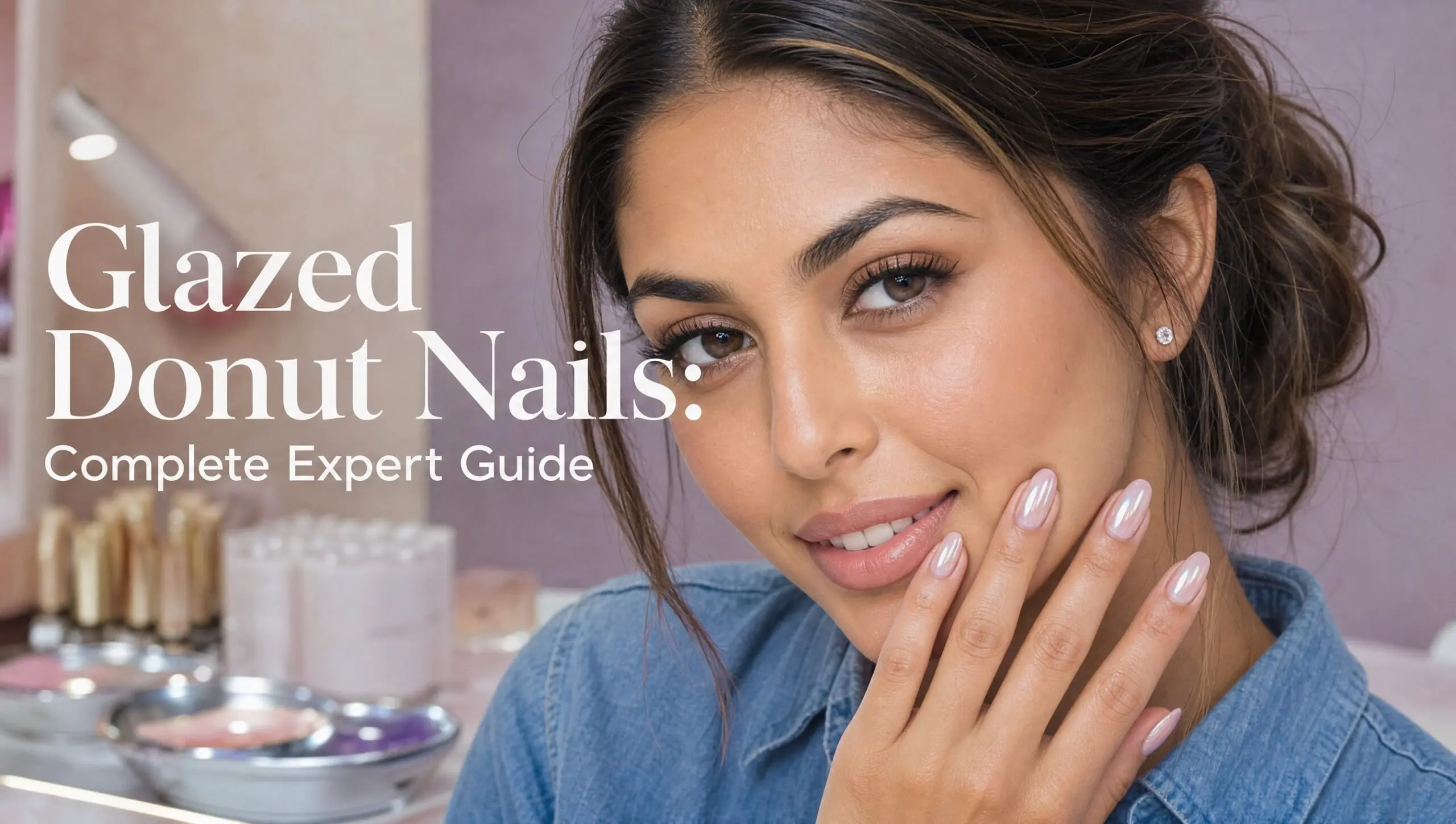
The two trends are in the same soft-glow neighbourhood, but they serve different purposes. Glazed doughnut nails are about a chrome pearlescent shimmer dusted over a sheer pink or nude base, finished with a high-gloss topcoat. The effect is wet and iridescent, almost like a clean coat of clear nail polish caught in sunlight, with a subtle colour shift as the light moves. There is no embedded detail; the magic is in the chrome powder.
Milk bath nails, by contrast, are about translucency plus floating texture. The base is milkier and slightly more opaque, and the embedded micro details, florals, flakes, and pearls are the entire personality of the look. Choose glazed doughnut nails if you want the cleanest possible finish with zero texture and a uniform shine across the hand. Choose milk-bath nails if you want softness, romance, and an artisanal feel that photographs as bespoke. Brides leaning ethereal pick the milk bath; brides leaning sleek and modern pick the glazed doughnut.
How Long the Milk Bath Nails Trend Will Stay Relevant
Trend forecasting is part science, part pattern recognition, and the patterns here are encouraging. Glazed doughnut nails entered the chat in mid-2022 and stayed editorially relevant well into 2024, with chrome variations still on salon menus today. Milk bath nails are tracking a similar shape: strong social ignition, broad salon adoption, sustained editorial coverage, and a bridal pipeline that locks in repeat bookings for at least eighteen months in advance.
The honest read is that the peak of the milk-bath nails moment is right now, June through September 2026, driven by summer weddings and travel content. The look will likely soften into a steady-state classic by late 2026, much like the French manicure did in earlier eras: less ubiquitous on red carpets, still very much a default request at the salon. The coloured milky bases, pale sage, soft butter, and dusty rose, are the next phase, and they should extend the trend through 2027 without it ever feeling stale.
Frequently Asked Questions About Milk Bath Nails
What are milk bath nails, and how are they made?
Milk bath nails are a soft, sheer manicure built from a milky-white translucent gel or lacquer base applied in thin layers over the natural nail. The opacity sits between a clear coat and a solid white, so the natural pink of the bed glows through. Tiny pressed flowers, gold flakes, or pearl micro-charms are then placed on the tacky surface, encapsulated under a thin layer of clear builder gel, and sealed with a high-gloss top coat. The finished look gives the impression of nail tips suspended in a glass of milk.
How are milk bath nails different from glazed doughnut nails?
Glazed doughnut nails use a chrome pearlescent powder buffed over a sheer pink base for a uniform iridescent shine with zero embedded detail. Milk bath nails skip the chrome entirely and lean on a translucent milky-white base with floating embellishments like pressed florals, gold flakes, or pearls trapped under a glossy top coat. “Glazed doughnut” reads as sleek, wet, and modern; “milk bath” reads as soft, romantic, and artisanal. Choose chrome for minimalism; choose milk bath for soft texture and bridal-friendly detail.
Can I do milk bath nails at home?
Yes, if you already work with gel polish and own a small UV or LED lamp. The home version uses a clear gel base coat, two thin layers of milky-white sheer gel, hand-placed pressed microflorals or gold flake fragments, an encapsulation layer of clear builder gel, and a no-wipe glossy top coat. Plan for roughly 45 to 60 minutes for the full set. The hardest steps are getting the opacity right and sinking the embellishments flush. Practise on one nail before committing to the whole hand.
What designs work best for milk bath nails?
Three families of embellishment dominate. Pressed microflorals, baby’s breath, daisy petals, and forget-me-nots are the most bridal and romantic. Irregular gold leaf fragments add warmth, photograph beautifully on deeper skin tones, and feel slightly more editorial. Tiny pearls or pearl-drop clusters near the cuticle line lean toward quiet luxury. Cap each nail at three to five micro pieces, and vary the placement across the hand so it looks intentional rather than uniform. Match warmth: cool whites with silver or pearl and warm creams with gold or bronze.
How long do milk bath nails last?
A properly executed gel milk bath manicure with full encapsulation typically lasts two to three weeks before any visible lift or chip, which is roughly in line with a standard gel set. Plain lacquer versions hold for five to seven days at most because the lacquer cannot lock the embellishments in place. Longevity depends on three things: a thorough cuticle prep, full curing time on every layer, and that critical clear builder gel encapsulation step that sinks the embellishments flush. Skip the encapsulation and the design lifts within 48 hours.
Are milk bath nails ideal for weddings?
They are arguably the defining bridal nail look for 2026. The translucent base photographs well in every lighting setup; the floating florals tie into bouquet imagery without competing with the dress, and the soft palette pairs cleanly with both warm gold and cool platinum jewellery. Most brides book a trial run one to two weeks before the wedding to lock in the embellishment density, then a fresh set 48 to 72 hours before the ceremony. Bridesmaids often opt for the plain milky version without embellishments to keep the bride’s hands the focal point.
Related Articles
- Glazed Donut Nails: The 2026 Pearlescent Manicure
- Baby Boomer Nails: The Classic French Soft Gradient
- Russian Manicure: The Dry Cuticle Technique Explained
About The Author

COMMENTS