
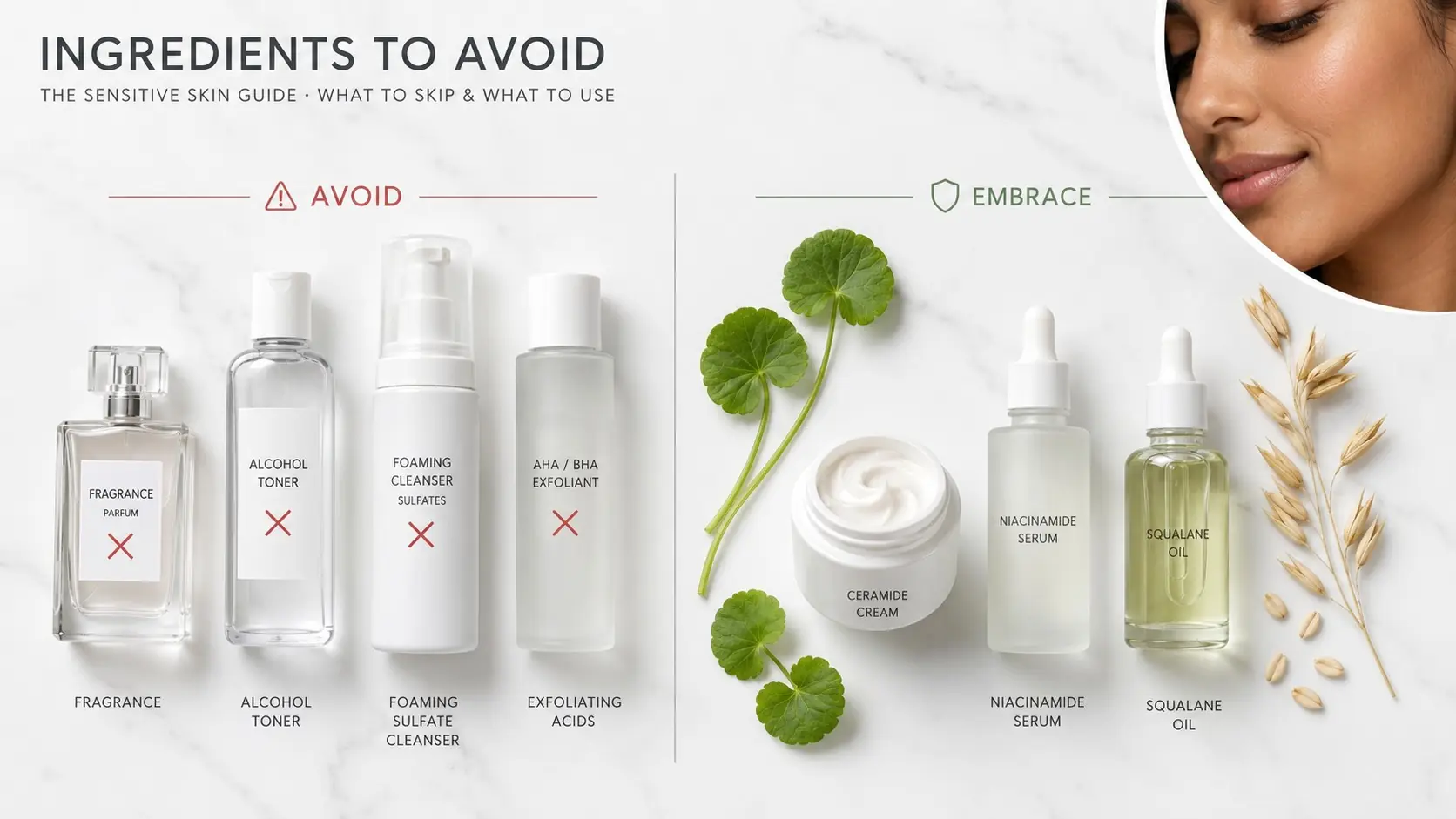
Ingredients to avoid for sensitive skin are the single most useful thing to learn if your face stings, flushes, or burns at the slightest provocation.
Ingredients to avoid for sensitive skin are the single most useful thing to learn if your face stings, flushes, or burns at the slightest provocation. Sensitive skin affects an estimated 60 to 70 percent of women, yet shelves stay full of formulas that quietly damage your barrier. This guide goes beyond the usual alcohol and fragrance warnings to explain why your skin reacts, which triggers hide in your routine, and the gentle alternatives that genuinely work.
Standing in the skincare aisle with a tight, tingling face and a basket full of products that promised glow but delivered burning is a uniquely frustrating beauty moment. If your cheeks flush at the slightest breeze, your skin stings when you apply something new, or you have spent years collecting half-used bottles that betrayed you, you are far from alone. Sensitive skin affects an estimated 60 to 70 percent of women globally, according to multiple dermatological surveys, yet the cosmetic industry continues to flood shelves with formulas packed with ingredients that can quietly sabotage your barrier.
Understanding ingredients to avoid for sensitive skin is the single most powerful step you can take toward calm, comfortable, resilient skin. This guide goes far beyond the usual warnings about alcohol and fragrance. You will learn the science of why your skin reacts the way it does, the full list of triggering ingredients hiding in everything from your cleanser to your sunscreen, the gentle alternatives that actually work, and how to build a routine that respects your skin instead of fighting it. Whether your sensitivity is genetic, hormonal, or developed after years of over-exfoliation, this is the comprehensive playbook dermatologists wish every reader had before walking into a beauty store.
What Sensitive Skin Actually Is, According to Dermatology
Reviewed by the BeautynFacts editorial team. Last updated: May 2026.
Sensitive skin is not a single condition or a marketing label. It is a syndrome, a cluster of symptoms that signal your skin barrier is not functioning at full capacity. The Spanish Association of Dermatology and Venereology defines it as a condition characterised by subjective symptoms such as itching, pain, tightness, indeterminate discomfort, and, occasionally, visible signs of irritation, including redness, flaking, and small papules. The International Forum for the Study of Itch broadens this definition to include stinging and burning sensations triggered by stimuli that would not normally provoke a response.
The mechanism behind these reactions is microscopic but profound. Your epidermis, the outermost layer of skin, has a structure called the stratum corneum on top. Imagine it as a brick wall where corneocyte cells are the bricks and a lipid matrix of ceramides, cholesterol, and fatty acids is the mortar holding everything together. In healthy skin, this wall is sealed tightly, locking in moisture and keeping out irritants. In sensitive skin, the mortar is thin or patchy. The bricks no longer fit snugly. Water escapes through a process called transepidermal water loss, while irritants, allergens, pollution particles, and microbes seep in through the gaps.
Once those irritants reach the deeper layers of the epidermis, they activate sensory nerve endings called TRPV1 receptors. These receptors send distress signals to your brain, which interprets them as itching, stinging, or burning. They also trigger inflammatory cascades, releasing histamines and cytokines that produce visible redness and swelling. This is why sensitive skin often reacts within minutes, sometimes seconds, of contact with a problematic ingredient.
The Difference Between Sensitive, Sensitized, and Reactive Skin
Dermatologists distinguish between three overlapping categories that consumers often confuse. Genetically sensitive skin is something you are born with, often associated with fair complexions, Celtic ancestry, or a family history of eczema, rosacea, or asthma. Sensitised skin is acquired and develops through over-exfoliation, harsh products, environmental stressors, or a compromised diet. Reactive skin tends to flush easily in response to temperature, spicy food, stress, or alcohol but may not have a chronically damaged barrier. Knowing which category you fall into helps determine whether avoidance alone is enough or whether you also need active barrier repair.
Underlying Conditions That Mimic Sensitivity
Before assuming you simply have sensitive skin, a dermatologist should rule out specific dermatoses that share symptoms. Rosacea presents with persistent central facial redness, visible capillaries, and sometimes pustules. Seborrhoeic dermatitis causes flaking and itchiness around the nose, eyebrows, and scalp. Perioral dermatitis creates small bumps around the mouth, often after topical steroid use. Contact dermatitis is a delayed allergic reaction to a specific substance. Demodicosis, an overgrowth of microscopic mites, can produce inflammation that resembles sensitivity. Each of these requires targeted treatment that goes beyond gentle skincare.
The Master List of Ingredients Sensitive Skin Should Avoid
Once you understand the mechanism of sensitivity, the logic behind ingredient avoidance becomes clear. The goal is to prevent further barrier damage, reduce nerve activation, and minimise inflammatory triggers. Below is the comprehensive list of categories that consistently appear in dermatological literature as problematic for reactive complexions.
Synthetic Fragrances and Parfum
Fragrance is the single most common cause of cosmetic allergic contact dermatitis worldwide. The word ‘parfum’ or ‘fragrance’ on an ingredient label can legally hide a blend of dozens, and sometimes hundreds, of individual aromatic compounds. The European Union has identified 26 fragrance allergens that must be declared separately on labels, including linalool, limonene, citronellol, geraniol, eugenol, and cinnamal. These molecules are small enough to penetrate the stratum corneum easily, where they bind to skin proteins and trigger immune responses.
Even products labelled ‘unscented’ can contain masking fragrances that are added to neutralise the smell of raw ingredients. The phrase to look for is ‘fragrance-free’, which carries stricter implications, but it is still worth scanning the full ingredient list. Essential oils deserve a special mention here because the natural beauty movement has positioned them as safer alternatives, but lavender, peppermint, tea tree, ylang ylang, and citrus oils are some of the most potent sensitisers in cosmetic chemistry.
Denatured Alcohol and Drying Solvents
Not all alcohols in skincare are problematic. Fatty alcohols such as cetyl, stearyl, and cetearyl alcohol are emollient and beneficial. The alcohols to avoid are the simple, volatile ones: alcohol denat, ethanol, isopropyl alcohol, and SD alcohol 40. These solvents are added to create a quick-drying, lightweight feel, particularly in toners, mists, and gel moisturisers, but they strip protective lipids from the stratum corneum and accelerate transepidermal water loss within minutes of application.
Sulfates and Harsh Surfactants
Sodium lauryl sulphate is the gold standard irritant in dermatological research, so much so that scientists use it in patch tests to deliberately provoke reactions and measure barrier function. Its close cousin, sodium laureth sulphate, is slightly milder but still problematic. These detergents create the foamy lather we associate with cleanliness, but they bind to and remove not only dirt but also the skin’s natural lipid coating. For sensitive skin, gentler surfactants like coco glucoside, decyl glucoside, sodium cocoyl isethionate, and sodium methyl cocoyl taurate are much better.
Alpha and Beta Hydroxy Acids at High Concentrations
Glycollic acid, lactic acid, salicylic acid, and mandelic acid are exfoliating powerhouses, but they work by dissolving the bonds that hold dead skin cells together. For a compromised barrier, this approach is the equivalent of removing more bricks from an already crumbling wall. Salicylic acid, despite its anti-inflammatory reputation, can sting and dry sensitive skin at concentrations above one percent. If exfoliation is needed, mandelic acid at low concentrations or polyhydroxy acids like gluconolactone and lactobionic acid provide gentler resurfacing because their larger molecular size limits how deeply they can penetrate.
Retinoids and Vitamin A Derivatives
Retinol, retinaldehyde, tretinoin, adapalene, and the newer retinyl esters are celebrated for anti-ageing benefits, but they accelerate cell turnover so dramatically that they often produce redness, flaking, and stinging even in resilient skin. Sensitive complexions frequently cannot tolerate them at all, or only after months of careful introduction at minimal concentrations. Bakuchiol, a plant-derived alternative from the babchi plant, has demonstrated comparable wrinkle-reducing effects in clinical trials without the irritation profile, making it a worthy substitute for many sensitive skin patients.
Chemical Sunscreen Filters
Sunscreen is non-negotiable for skin health, but the type matters enormously. Oxybenzone, octinoxate, avobenzone, octocrylene, and homosalate are organic UV filters that absorb radiation by undergoing chemical reactions on the skin. These reactions can generate free radicals, contribute to contact dermatitis, and in some studies have been linked to hormonal disruption. Mineral filters, zinc oxide and titanium dioxide, sit on the surface and reflect UV without penetrating the skin, making them the preferred choice for sensitive complexions, rosacea sufferers, and anyone with a compromised barrier.
Artificial Colorants and Dyes
The FD&C and D&C dye families, identified by names like Red 40, Yellow 5, and Blue 1, serve no skincare function beyond aesthetics. They are synthesised from petroleum derivatives and have documented links to allergic contact dermatitis. Pigments in coloured cosmetics, particularly carmine, nickel-containing pigments, and certain lake colours, can also trigger reactions in predisposed individuals.
Formaldehyde-Releasing Preservatives
Quaternium 15, DMDM hydantoin, imidazolidinyl urea, diazolidinyl urea, and bronopol slowly release formaldehyde to prevent microbial contamination. Formaldehyde is a recognised contact allergen, and these preservatives account for a significant percentage of cosmetic allergic reactions. Methylisothiazolinone and methylchloroisothiazolinone are equally notorious, with the former named Allergen of the Year by the American Contact Dermatitis Society in 2013.
Lanolin and Its Derivatives
Lanolin, derived from sheep wool, is an excellent emollient for some but a known sensitiser for others. The reaction is often delayed and can be confused with other irritations. Wool alcohols, lanolin alcohol, and amerchol are related compounds that warrant caution if you have a history of reactivity.
Propylene Glycol and Some Glycols
Propylene glycol functions as a humectant and solvent in countless products. While many people tolerate it well, it ranks among the more common sensitisers. Butylene glycol and pentylene glycol tend to be better tolerated, while glycerin remains the safest humectant for the vast majority of sensitive complexions.
Menthol, Camphor, Eucalyptus, and Cooling Agents
That tingling sensation you feel from a minty toner or cooling eye gel is not refreshing your skin. It is activating the same TRPV1 nerve receptors that generate sensitivity reactions. Menthol, methyl salicylate, camphor, eucalyptus oil, and peppermint oil should all be avoided, particularly in eye-area products where the skin is thinnest.
Hidden Triggers in Everyday Products
Knowing which ingredients to avoid is only useful if you can spot them across the full spectrum of products you use daily. Sensitive skin reactions often come not from a single offender but from cumulative exposure to multiple low-grade irritants applied throughout the day.
Cleansers That Strip Without You Noticing
Many gel and foaming cleansers marketed as gentle still contain sulphates buried mid-list. The squeaky clean feeling after washing is actually a sign that protective lipids have been removed. A truly gentle cleanser should leave skin feeling soft, supple, and never tight. Cleansing milks, cream cleansers, and oil cleansers formulated without essential oils tend to be the kindest options for reactive skin. Micellar waters can work, but check for fragrance and preservative content.
Toners and Astringents
Traditional toners were designed to remove cleanser residue from hard water and rebalance skin pH after harsh soaps. Modern formulations have evolved, but many still contain witch hazel, alcohol, menthol, or astringent botanicals that strip and irritate. If you enjoy the toning step, look for hydrating essences with ingredients like glycerin, hyaluronic acid, panthenol, and centella asiatica instead.
Serums and Treatment Products
The serum category is where the most aggressive actives congregate. Vitamin C serums often use L-ascorbic acid at concentrations between 10 and 20 percent, which can sting compromised skin. If you want vitamin C, gentler derivatives like sodium ascorbyl phosphate, magnesium ascorbyl phosphate, or tetrahexyldecyl ascorbate are far better tolerated. Niacinamide, often praised for sensitive skin, is generally well tolerated at 4 to 5 percent but can cause flushing in some individuals at concentrations above 10 percent.
Moisturizers Masquerading as Soothing
Read the labels of products marketed for sensitive skin, and you will sometimes find fragrance, essential oils, or drying alcohols hiding in the formulation. The terms ‘hypoallergenic’ and ‘dermatologist tested’ are not regulated and do not guarantee safety. Instead, look for short ingredient lists that contain recognisable barrier-supporting components.
Makeup and Color Cosmetics
Foundations, concealers, blushes, and especially long-wear or transfer-proof formulas often contain silicones, fragrances, and preservatives that build up over the day. Eye makeup deserves particular scrutiny because the skin around the eyes is the thinnest on the face. Mascaras with fibre additives, eyeliners with latex, and eyeshadows with shimmer mica can all trigger periorbital irritation.
Ingredients That Sensitive Skin Should Embrace
Avoidance is only half of the equation. Building a routine around actively soothing, barrier-reinforcing ingredients is what transforms reactive skin into resilient skin over the course of weeks and months.
Niacinamide, the Universal Peacekeeper
Niacinamide, also known as vitamin B3, is one of the most thoroughly studied ingredients in modern dermatology. It strengthens the skin barrier by stimulating ceramide production, reduces inflammation, regulates sebum, fades hyperpigmentation, and minimises the appearance of pores. For sensitive skin, the ideal concentration is usually between 2 and 5 percent. Higher concentrations are not necessarily more effective and can occasionally cause flushing.
Centella Asiatica and Its Bioactive Compounds
Known in Korean skincare as cica, centella asiatica is a herb whose extracts contain madecassoside, asiaticoside, madecassic acid, and asiatic acid. These compounds accelerate wound healing, reduce redness, and calm inflammation. Centella has been used in traditional medicine for centuries and is now backed by modern clinical trials demonstrating measurable improvements in skin barrier function within four to eight weeks of consistent use.
Panthenol, the Skin Hydration Hero
The skin converts panthenol, or provitamin B5, into pantothenic acid. It deeply hydrates, soothes irritation, and supports the natural healing process. Look for it in concentrations of 2 to 5 percent in serums, moisturisers, and even sheet masks designed for stressed skin.
Ceramides and Lipid Replenishers
If your skin barrier is the brick wall, ceramides are the mortar. Topical ceramides, especially when mixed with cholesterol and free fatty acids in a 3:1:1 ratio, have been shown to restore barrier function in compromised skin. Look for ingredient names like ceramide NP, ceramide AP, ceramide EOP, and phytosphingosine on labels.
Hyaluronic Acid and Polyglutamic Acid
These humectants attract and hold water in the skin without irritation. Hyaluronic acid comes in various molecular weights, with low molecular weight versions penetrating deeper and high molecular weight versions hydrating the surface. Polyglutamic acid is a newer humectant with even greater water-binding capacity than hyaluronic acid.
Allantoin and Bisabolol
Both ingredients have anti-inflammatory and skin-soothing properties. Allantoin promotes cell renewal at low concentrations without irritation. Bisabolol, derived from chamomile, calms redness and enhances the absorption of other beneficial actives.
Beta Glucan
Extracted from oats, mushrooms, or yeast, beta glucan is a polysaccharide that forms a hydrating film on the skin while modulating immune responses. Studies have shown it can reduce wrinkle depth and skin roughness comparable to hyaluronic acid while providing additional anti-inflammatory benefits.
Cannabidiol and Plant Cannabinoids
Isolated cannabidiol, particularly when free of trace THC and other cannabinoids, has shown promise in reducing inflammation and calming reactive skin. Research is still emerging, but early studies suggest CBD interacts with the skin’s endocannabinoid system to modulate sebum production, reduce redness, and support barrier function.
How to Read a Cosmetics Label Like a Dermatologist
The INCI list, or International Nomenclature of Cosmetic Ingredients, follows specific rules. Ingredients are listed in descending order of concentration, except those present at less than one percent, which can appear in any order at the end. This means the first five to seven ingredients typically make up the bulk of the formula, while everything after the preservative system tends to be in trace amounts.
When evaluating a new product, start by scanning for the following potential concerns: fragrance, perfume, alcohol denat., sodium lauryl sulphate, essential oils, menthol, and the formaldehyde-releasing preservatives mentioned earlier. If any appear in the top half of the list, the product is likely too aggressive for sensitive skin. Next, look for the supportive ingredients you want to see: glycerin, hyaluronic acid, niacinamide, panthenol, ceramides, centella, and squalane in meaningful positions.
Be wary of greenwashing. Terms like natural, botanical, and clean carry no regulatory weight. Plant extracts can be just as sensitising as synthetic chemicals, and sometimes even more so. A short, transparent ingredient list from a brand willing to disclose concentrations of key actives is far more valuable than vague marketing language.
The Patch Test Protocol Every Sensitive Skin Owner Should Follow
Even the gentlest-looking product can provoke a reaction in unpredictable ways. A proper patch test takes the guesswork out of new introductions. Apply a small amount of the product to the inside of your forearm or behind your ear twice daily for five to seven consecutive days. Watch for redness, itching, tiny bumps, or any discomfort. If the test area remains calm, repeat the same protocol on a small patch along the jawline before applying to your full face.
This level of caution may feel excessive, but it is far less inconvenient than dealing with a full facial flare that can take weeks to resolve. Introduce only one new product at a time, separated by at least two weeks, so you can pinpoint any culprit if a reaction occurs.
Building a Sensitive Skin Routine That Actually Works
A truly effective routine for sensitive skin is built on the principle of less but better. The goal is not to layer dozens of products but to consistently support the barrier with a small number of well-chosen formulas.
The Morning Routine
Begin with a splash of cool water or a gentle cream cleanser if your skin feels oily upon waking. Follow with a hydrating essence or thermal water mist containing minimal ingredients. Apply a barrier supporting serum featuring niacinamide, centella, or panthenol. Layer a fragrance-free moisturiser that is rich in ceramides and squalane. Finish with a mineral sunscreen offering broad-spectrum protection at SPF 30 or higher. The entire routine should take five minutes and produce no stinging at any step.
The Evening Routine
Remove makeup and sunscreen with a gentle oil cleanser or cleansing milk, followed by a soft cream cleanser if you wore heavy makeup. Apply a hydrating toner or essence. Use a treatment serum if your skin tolerates one, focusing on barrier repair rather than active exfoliation. Seal everything in with a richer night cream or facial oil containing fatty acids and lipids. Avoid layering too many actives in the evening. One treatment is plenty.
Weekly Additions
If your skin tolerates them, gentle exfoliation with a polyhydroxy acid mask once or twice a week can support cell turnover without disrupting the barrier. Hydrating sheet masks with simple ingredient lists can be used as often as every other day during particularly stressed periods.
Lifestyle Factors That Influence Skin Sensitivity
Skincare cannot do all the work alone. The state of your skin barrier reflects your overall internal and external environment. Hot showers, hard water, indoor heating, air conditioning, and high pollution levels all contribute to barrier disruption. Using a humidifier, especially in winter, can significantly reduce transepidermal water loss. Lukewarm water for cleansing is gentler than hot water.
Diet plays a measurable role. Omega 3 fatty acids from fish, flaxseed, and walnuts support the lipid matrix of the stratum corneum. Antioxidant-rich foods, including berries, leafy greens, and green tea, help neutralise the oxidative stress that compromises barrier function. Adequate hydration matters, though drinking water alone will not solve dry, sensitive skin if topical care is lacking.
Stress directly worsens skin sensitivity through the cortisol pathway. Elevated cortisol thins the skin over time, slows wound healing, and increases inflammatory responses. Practices like adequate sleep, meditation, gentle exercise, and time spent outdoors in nature have measurable benefits for skin reactivity. Sleep itself is when the skin performs most of its repair, with cell turnover peaking between 11 PM and 4 AM.
When to Consult a Dermatologist
While many sensitive skin issues respond well to thoughtful product choices, certain warning signs indicate that you should seek professional evaluation. Persistent redness that does not resolve, visible broken capillaries, recurrent breakouts in characteristic patterns, intense itching that disrupts sleep, and any rash that spreads or worsens despite careful skincare all suggest an underlying condition that needs targeted treatment.
A dermatologist can perform patch testing to identify specific allergens, prescribe topical anti-inflammatories or barrier repair treatments, and rule out conditions like rosacea, perioral dermatitis, or seborrhoeic dermatitis that mimic generic sensitivity. They can also guide you through introducing more active ingredients safely if your barrier eventually recovers enough to tolerate them.
Common Mistakes That Make Sensitive Skin Worse
Even well-intentioned skincare can backfire when applied without understanding. The most frequent mistake is overwashing. Cleansing more than twice daily, or using a cleanser that produces a tight, squeaky feeling, gradually erodes the barrier. Another common error is mixing too many actives in the pursuit of faster results. Combining vitamin C with retinoids and exfoliating acids in the same routine almost guarantees irritation, even for resilient skin.
Switching products too frequently prevents your skin from settling into any particular formulation. The skin needs at least four to six weeks to demonstrate the effects of a new product, and reactions can take days to surface. Stockpiling new products from beauty hauls and rotating them based on whim makes it nearly impossible to identify what is helping or harming your skin.
Skipping sunscreen, particularly in winter or on cloudy days, allows UV damage to compound the inflammatory burden your skin is already managing. UV exposure also degrades the lipid matrix of the stratum corneum, worsening barrier dysfunction over time. A daily mineral SPF is one of the most powerful interventions available for sensitive complexions.
Frequently Asked Questions
Can sensitive skin become less sensitive over time?
Yes, in many cases, consistent barrier repair can substantially reduce sensitivity. While genetic factors cannot be changed, sensitised skin caused by environmental damage, harsh products, or over-exfoliation often responds remarkably well to a simplified routine focused on ceramides, niacinamide, panthenol, and gentle hydration. Many people who follow a barrier-first approach for three to six months report being able to reintroduce ingredients that previously caused reactions, though always at lower concentrations and with patch testing first. Patience is essential because the stratum corneum takes approximately 28 days to fully renew itself, and meaningful barrier improvement often requires two to three full cycles.
Is ‘fragrance-free’ the same as ‘unscented’?
No, these terms have important differences. ‘Fragrance-free’ means that no fragrance compounds, including masking fragrances, have been added to the formulation. ‘Unscented’ usually means the product has no detectable scent, but masking fragrances may have been added to neutralise the smell of raw ingredients. For sensitive skin, fragrance-free is the safer choice because it eliminates an entire category of potential allergens. Always check the full ingredient list because terms like parfum, fragrance, aroma, and even some essential oils can appear under different names depending on the regulatory region where the product is sold.
Are natural and organic products better for sensitive skin?
Not necessarily. The notion that natural equals safe is a marketing myth that has caused considerable harm in sensitive skin communities. Many of the most potent allergens in cosmetic chemistry come from natural sources, including essential oils, plant extracts, and botanical preservatives. Lavender, citrus, peppermint, tea tree, and ylang ylang oils are common triggers despite their natural origin. Some synthetic ingredients, including silicones, certain humectants, and lab-developed peptides, are remarkably gentle and well tolerated. Judge each ingredient on its individual merits and your personal tolerance, not on whether it comes from a plant or a laboratory.
Can I use anti-ageing ingredients if I have sensitive skin?
Absolutely, though your toolkit looks different from someone with resilient skin. Bakuchiol offers retinol-like benefits without the irritation. Peptides such as matrixyl, copper peptides, and argireline support collagen production gently. Antioxidants like vitamin E, ferulic acid, and stable vitamin C derivatives protect against oxidative damage. Polyhydroxy acids like gluconolactone provide mild exfoliation without compromising the barrier. Niacinamide addresses multiple signs of ageing simultaneously. The key is starting with very low concentrations, introducing one product at a time, and always pairing actives with strong barrier support in the same routine.
What is the best sunscreen for sensitive skin?
Mineral sunscreens containing zinc oxide and titanium dioxide are universally recommended for sensitive skin because they sit on the skin surface and reflect UV without undergoing chemical reactions that can trigger irritation. Look for formulations with at least 10 percent zinc oxide for adequate broad-spectrum coverage and SPF 30 or higher. Modern mineral formulas have largely overcome the chalky white cast issue, particularly those using non-nano zinc oxide combined with cosmetic tints. Avoid sunscreens containing fragrance, alcohol denat, or chemical filters like oxybenzone, octinoxate, and avobenzone if your skin is reactive.
How long should I wait between trying new products?
Wait at least two to four weeks between introducing new products to sensitive skin. This timeline allows you to observe how your skin responds across different conditions, including hormonal cycles, weather changes, and stress fluctuations. Some reactions develop slowly over repeated exposures rather than appearing immediately, so a quick three-day trial is not sufficient to determine compatibility. If you experience any redness, stinging, itching, or unusual breakouts during the trial period, discontinue the product immediately and allow your skin to fully recover before introducing anything else new.
Why does my skin sting even when I use products labelled for sensitive skin?
The terms ‘sensitive skin’ and ‘hypoallergenic’ are not regulated in most countries, so brands can use them without meeting any specific criteria. Products marketed for sensitive skin frequently contain fragrance, essential oils, or other irritants. Stinging may also indicate that your barrier is more compromised than you realise, and even neutral ingredients can trigger nerve activation. The solution is twofold: scrutinise ingredient lists rather than trusting front-of-bottle marketing, and focus your routine on rebuilding the barrier with ceramides, lipids, and humectants for several weeks before reassessing your tolerance.
Can diet really affect skin sensitivity?
Diet has a measurable but indirect impact on skin sensitivity through several mechanisms. Omega 3 fatty acids support the lipid matrix of the stratum corneum, while inflammatory foods like refined sugar, alcohol, and processed seed oils can worsen systemic inflammation that manifests in the skin. Some individuals experience that spicy foods, hot beverages, and alcohol trigger flushing in conditions like rosacea. Food sensitivities, particularly to dairy and gluten in genetically predisposed individuals, can sometimes worsen skin reactivity. While diet alone cannot resolve sensitive skin, an anti-inflammatory eating pattern rich in omega 3s, antioxidants, and polyphenols supports barrier health alongside topical care.
Bringing It All Together
Sensitive skin does not mean you must rely on bland products and constant vigilance. It is a signal from your body that the protective wall between you and the world needs care, attention, and strategic support. Avoiding the worst offenders, fragrance, denatured alcohol, sulphates, harsh acids, retinoids at high doses, chemical sunscreens, and aggressive preservatives removes the daily insults that prevent healing. Embracing barrier-supporting ingredients like niacinamide, ceramides, centella, panthenol, and beta-glucan actively rebuilds what has been damaged.
The transformation happens slowly but predictably. Within two weeks of simplifying your routine, redness typically begins to fade. By the four to six week mark, stinging from previously triggering products often diminishes. After three months of consistent barrier repair, many people find their skin no longer reacts to environmental changes the way it once did. The discipline of reading every label, patch testing every new product, and resisting the lure of trendy actives is what separates skin that struggles indefinitely from skin that genuinely heals.
Start tonight by auditing your current routine. Pull every product from your shelf and read the ingredient list carefully. Anything containing fragrance, essential oils, denatured alcohol, or sulphates in the top half of the list is a candidate for replacement. Build your minimal routine around three to five gentle, well-formulated products and commit to using them consistently for at least one month before evaluating results. Your skin has been asking for less aggression and more genuine support all along. Giving it exactly that is how you finally end the cycle of sensitivity and step into the calm, comfortable complexion you deserve.
RELATED ARTICLES:
Here Is How To Shave Your Face The Right Way—Without Nicks Or Cuts
How to shave your legs at home
Mineral water as a makeup fixer: does it really work? we have tried it
How to apply makeup when you have acne?
If you have acne, you shouldn’t wear makeup
About The Author

COMMENTS