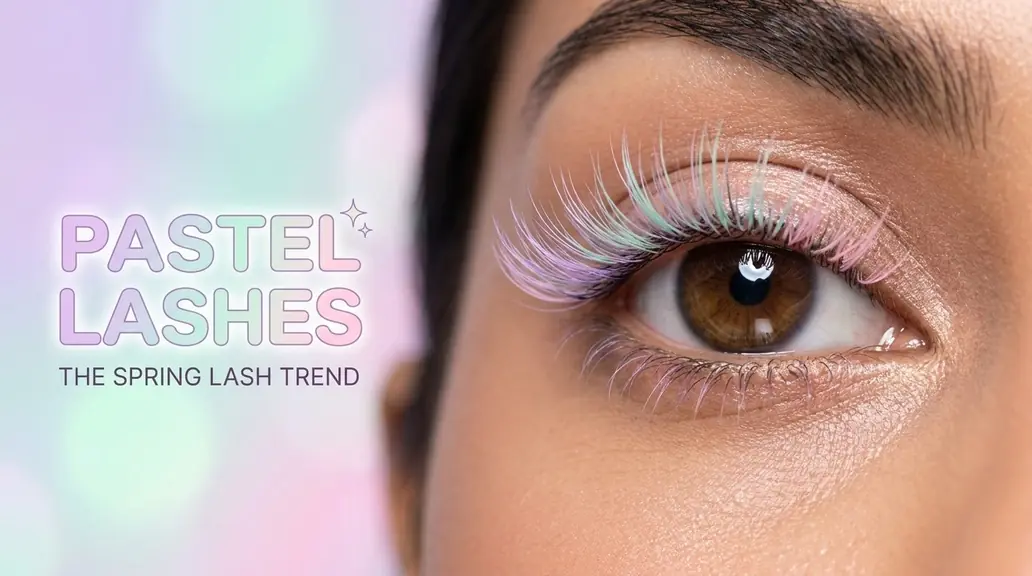
Pastel eyelashes are the standout spring beauty trend, moving from runways and editorial shoots straight into everyday routines. Whether you sweep on
Pastel eyelashes are the standout spring beauty trend, moving from runways and editorial shoots straight into everyday routines. Whether you sweep on soft lavender mascara for brunch or book a full set of mint green lash extensions for a festival, this look meets you where you are. Pastel lashes offer a low-commitment way to play with color, striking enough to earn compliments yet soft enough to feel wearable.
The appeal goes beyond aesthetics. Pastel lashes offer a low-commitment way to experiment with color without altering a full hair color or wardrobe. They sit at the perfect intersection of whimsical and wearable, striking enough to earn compliments yet soft enough to feel approachable. From beauty beginners to seasoned makeup artists, everyone is finding a version of this look that feels deeply personal.
This guide covers everything you need to make pastel lashes work for you. You will learn the science behind pastel pigments, how to choose the right shade for your complexion, how to apply colored mascara and lash extensions with precision, and how to remove and nourish your lashes after the color comes off. By the end, you will feel fully equipped to make this spring trend your signature look.
What Are Pastel Eyelashes and Why Is Everyone Talking About Them?
Reviewed by the BeautynFacts editorial team. Last updated: May 2026.
The Definition and Origins of the Trend
Pastel eyelashes refer to any technique that gives your lashes a soft, muted color rather than the traditional black or brown. The color palette draws from the pastel family: baby pink, powder blue, mint green, lilac, peach, and soft yellow. These shades share a common quality. They are diluted with white, giving them a gentle, airy appearance rather than the bold saturation of neon or jewel tones.
The trend has roots in J-beauty and K-beauty movements, both of which have long celebrated the idea of lashes as an expressive canvas. Korean beauty brands began releasing colored mascaras in pastel tones around 2019, and the concept quickly migrated westward through social media platforms. By 2024, pastel lash extensions had become a fixture at major beauty expos, and now, in 2026, the trend has settled firmly into mainstream culture.
Runway appearances accelerated the shift considerably. Fashion houses including Valentino and Molly Goddard sent models down the runway with lashes in dusty rose and periwinkle, and beauty editors took immediate notice. When celebrity makeup artists began posting their pastel lash tutorials online, search interest exploded. Google Trends data consistently shows spikes in pastel lash queries every March through May, confirming that spring is the definitive season for this look.
The Science of Pastel Pigments in Beauty Products
Understanding what makes a pigment pastel helps you shop smarter. Traditional black mascara gets its color from carbon black or iron oxides. Pastel mascaras use a combination of synthetic organic dyes and titanium dioxide. Titanium dioxide is the white pigment that dilutes the base hue, pulling it from a saturated tone into a softer, chalky finish. The ratio of dye to titanium dioxide determines how muted or vivid the pastel appears on the lash fiber.
For lash extensions and strips, pastel color is applied during the manufacturing process. Synthetic fibers, commonly made from polybutylene terephthalate (PBT), are dyed in large batches before being cut and sorted. The structural stability of PBT fiber means the color holds well under normal conditions, resisting fading from water exposure and daily friction.
Lash tints work differently from mascara and extensions. Semi-permanent tints use oxidative dye chemistry to deposit color molecules inside the hair cortex rather than coating the outside of the fiber. Achieving a true pastel with tint requires first lightening dark lashes, which is why most professional tinting services default to more saturated shades for darker lash types. For very light or blonde lashes, a pastel tint can work beautifully without any pre-lightening step.
Pastel Versus Bold: Understanding the Difference
Many people confuse pastel lashes with brightly colored lashes, but the distinction matters deeply for styling purposes. Bold, saturated lash colors such as electric blue or hot pink create a high-contrast look that dominates the face. Pastel shades integrate more softly with surrounding makeup because their low saturation allows them to harmonize rather than compete.
This difference makes pastel lashes far more versatile day to day. You can wear lilac lashes with a simple no-makeup look and they appear delicate rather than dramatic. Swap in the same shade fully saturated, and suddenly you need a fully editorial makeup context to make the look feel intentional. Pastels also interact differently with light. They tend to catch and reflect natural light in a way that creates a luminous, dimensional effect around the eye area, which photographs beautifully in both natural and artificial settings.
How to Choose the Right Pastel Shade for Your Features
Matching Pastel Lashes to Your Eye Color
Your natural eye color is the single most important factor when selecting a pastel lash shade. The goal is to find a color that either complements the undertones in your iris or creates a contrast that makes your eye color appear more vivid and alive.
Brown eyes are the most flexible. Nearly every pastel shade works well with brown eyes because the warmth of the iris provides a neutral backdrop. Pastel peach and warm lavender are particularly flattering because they echo the golden undertones in hazel and dark brown eyes. Soft pink lashes on brown eyes create a romantic, sun-kissed look that is effortless to wear.
Green eyes shine brightest when paired with pastel pinks, soft corals, and light lilacs. These shades sit on the opposite side of the color wheel from green, creating a complementary contrast that makes the green in the iris appear more saturated. Avoid pastel green or mint on green eyes because the similarity can flatten and neutralize the eye color rather than enhancing it.
Blue eyes benefit enormously from pastel peach, pale gold, and warm pink lashes. These warm-toned pastels contrast with the cool blue of the iris and make the eyes appear larger and more striking. Pastel blue lashes can also be worn on blue eyes when you want a tonal, ethereal look, but the effect is softer and requires more intentional styling to prevent the eye from disappearing into the look.
Hazel eyes are a blend of brown, green, and sometimes amber flecks. Pastel purple and lavender lashes work beautifully here because they pull out the green and amber simultaneously, creating a multidimensional effect. Soft rose gold lashes are another excellent choice for hazel eyes in spring settings.
Selecting Pastels Based on Skin Tone
Skin tone shapes how a pastel lash color reads from a distance. A shade that looks dreamy on a cool porcelain complexion may appear washed out on a warm, deeper complexion. Thinking about undertones rather than depth alone leads to the most flattering choices.
Fair skin with cool undertones, indicated by pink or blue veins at the wrist, pairs best with cool pastels: lavender, powder blue, mint, and pale pink. These shades complement the natural coolness of the complexion without creating an unflattering contrast around the eye.
Medium skin with warm or olive undertones benefits from peachy pastels, soft yellows, and warm lavenders. These shades add warmth and glow around the eye area. Cool pastels like mint or icy blue can still work on medium warm skin, but benefit from warm-toned accompanying eye shadow to prevent the look from feeling disconnected from the rest of the face.
Deep and rich skin tones look extraordinary with dusty rose, warm lilac, and peach pastel lashes. These shades provide enough contrast to remain visible while still reading as soft and dimensional. Pastel shades that are too light on very deep skin tones can lose visual impact, so leaning toward slightly deeper pastels within the family, such as a rose mauve rather than a pale blush, yields stronger and more intentional results.
Occasion and Season Considerations
The event and setting you dress for should guide your shade selection as much as your physical features. Daytime spring events, garden parties, brunches, and outdoor festivals call for the lightest, most delicate pastels. Baby blue and blush pink are the go-to choices for these occasions because they read as playful and fresh rather than theatrical or overdone.
Evening events create an opportunity to use slightly deeper pastels, such as dusty mauve or smoky lavender. These shades retain the pastel softness while offering a touch more drama appropriate for candlelit settings. Pairing a slightly deeper pastel lash with a glossy lid and flushed cheek creates a modern, sophisticated take on the trend that works beautifully from dinner to dancing.
For professional settings where you still want to experiment with the trend, a single coat of a light pastel mascara applied only to the lower lashes is the most understated approach. It adds a hint of color without drawing overwhelming attention, making it acceptable in most workplace environments while still feeling like a deliberate style choice.
Pastel Colored Mascara: Your Entry Point to the Trend
How to Shop for Pastel Mascara
Not all pastel mascaras are created equal. The formula matters as much as the color. A poorly formulated colored mascara can look patchy, flake throughout the day, or transfer onto the eyelid within hours. Knowing what to evaluate on an ingredient list and in texture tests saves both time and money.
Look for mascaras that list film-forming polymers early in the ingredient deck. Ingredients such as polyvinyl alcohol or acrylates copolymer help the pigment adhere to the lash fiber without flaking. Water-resistant formulas offer extended wear but require an oil-based makeup remover at the end of the day. Fully waterproof pastel mascaras are excellent for humid spring weather and outdoor events but can be drying with very frequent use.
The brush shape affects the finished look significantly. A thin, precise brush concentrates color at the root and tip of the lash without clumping. A fat, rounded brush deposits more product, which works well if you want a bold pastel effect. A comb-style brush separates lashes cleanly and is ideal if you are layering a pastel mascara over a base coat of black for a gradient ombre effect.
Swatch the product on a white card before purchasing whenever possible. Pastel mascaras can look surprisingly different in the tube compared to how they dry on an actual lash. The true color only becomes apparent once the formula dries fully. Water-based formulas often shift slightly cooler as they dry, while wax-heavy formulas can appear chalkier and more opaque on the lash.
Step-by-Step Application of Pastel Mascara
Achieving clean, defined pastel lashes requires proper preparation. Start with clean, completely dry lashes. Any oil residue from moisturizer or eye cream will cause the pigment to slip and bead rather than coat evenly across the fiber.
First, curl your lashes with a clean eyelash curler held at the root for ten seconds. A good curl opens up the eye and ensures the pastel color is fully visible when looking straight ahead rather than tilting downward. Follow with a single coat of clear primer or clear mascara if your natural lashes are dark. The clear base creates a lighter foundation for the pastel pigment to sit against, which intensifies the color payoff dramatically and prevents dark undertones from muting the shade.
Apply the pastel mascara in a zigzag motion from root to tip, rotating the wand slightly to coat all sides of each lash. Allow the first coat to dry for ninety seconds before applying a second. Rushing the second coat over wet mascara is the most common cause of clumping. Two coats provide full color coverage on lighter lashes. Three coats build volume and intensity for special occasions.
For a gradient effect, apply two coats of black or dark mascara at the roots and one coat of pastel from mid-shaft to tip. This technique creates a dimensional ombre effect that photographs beautifully and bridges the gap between everyday wearability and trend-forward styling. Clean any transfer from the lid using a small brush dipped in micellar water before the mascara dries completely, since dried pastel pigment is harder to remove without disturbing surrounding makeup.
Making Pastel Mascara Last All Day
Longevity is a common concern with colored mascaras. Pastel pigments, being lighter in tone, can appear faded by midday if the formula is not matched correctly to your environment and routine. A few targeted steps extend wear considerably.
Setting the mascara with a light dusting of translucent powder over the upper lashes helps lock the film in place. Use a very clean, fine brush for this step to avoid disturbing the lash coat. This trick is particularly effective for humid climates and long outdoor events where natural oils and moisture accelerate breakdown.
Avoid using any oily products around the eye area before applying pastel mascara. Eye creams and heavy primers can migrate into the lash line and break down the mascara film throughout the day. If your skincare routine includes a rich under-eye product, apply it at least thirty minutes before beginning eye makeup so it has time to fully absorb into the skin.
Contact lens wearers should ensure there is no excess mascara on the inner corner lashes, as this tends to flake and irritate the eye with blinking. Choosing a formula labeled contact lens safe or ophthalmologist tested provides additional confidence. Applying a coat of mascara only to the upper lashes and skipping the lower lashes entirely is another option that dramatically reduces flaking risk for lens wearers.
Pastel Lash Extensions: The Long-Wear Color Solution
Understanding the Lash Extension Process for Color
Pastel lash extensions are individual synthetic fibers applied one by one to your natural lashes using a semi-permanent adhesive. The process is identical to classic lash extensions except that the fibers carry pastel pigment rather than the standard black. The result lasts four to six weeks with proper aftercare, making extensions the ideal choice for anyone who wants to commit to the look without daily mascara application.
During the consultation, a trained lash technician will assess your natural lash health, thickness, and growth cycle. Not all natural lashes can support every style of extension. Fine or sparse lashes require lightweight fibers, typically 0.07 or 0.10 diameter, to prevent stress and breakage. Thicker, stronger natural lashes can accommodate slightly heavier fibers, which hold pastel pigment more vibrantly and create fuller visual impact.
The mapping process determines where each color is placed across the lash line. A full set in a single pastel shade creates a uniform, dreamy look. A multi-color set alternating two or three pastel shades, such as alternating blush and lavender, produces a watercolor-like effect that changes tone depending on the viewing angle and light source. This multi-tonal approach has become one of the most requested extension styles throughout spring 2026, particularly for bridal parties and festival-goers.
Aftercare for Pastel Lash Extensions
Caring for lash extensions is critical to preserving both the color saturation and the adhesive bond strength. The adhesive reaches its maximum strength twenty-four to forty-eight hours after application. During this window, avoid any contact with water, steam, or oils around the eye area. This means skipping workouts, saunas, and steam rooms for at least the first full day after your appointment.
After the curing period, clean your lash extensions every two to three days using a lash-safe, oil-free cleanser. Oil breaks down cyanoacrylate adhesive, which is the bonding compound used in virtually all professional extension applications. Even oil-free products with certain emollients can weaken the bond over time, so a dedicated lash extension shampoo is the safest long-term option.
Pastel-colored extensions are susceptible to a particular type of fading that black extensions never experience: UV exposure can bleach lighter pigments over time with prolonged sun exposure. If you spend extended time outdoors, wearing sunglasses provides meaningful protection for both eye health and lash color. Some lash technicians apply a UV-protective coating to colored extension sets upon client request, which is a worthwhile upgrade for spring and summer wear.
Brush your extensions gently with a clean spoolie every morning, starting at the tips and working slowly toward the base. This prevents tangling and keeps each fiber properly separated and fanned. Never pull or tug at the extensions. This can remove them prematurely and take the natural lash they are bonded to along with them.
When to Get Infills and How Long Extensions Last
The natural lash growth cycle spans approximately six to eight weeks from growth to shedding. As your natural lashes complete their cycle and shed, the extensions attached to them shed along. Most wearers notice visible gaps at the three to four-week mark, which is the ideal timing for an infill appointment.
Infills are significantly less expensive than a full set and take less time because the technician only replaces lashes that have shed rather than starting from scratch. For pastel extensions, infill color matching is straightforward as long as you return to the same technician using the same fiber supplier. Color consistency can vary between brands, so if you switch technicians, bringing a clear photo reference ensures the shade stays as close to the original as possible.
If you decide you no longer want the extensions, visit a professional for a safe removal rather than attempting to remove them yourself. A trained technician applies a professional-grade remover that dissolves the adhesive without stressing the natural lash. Attempting home removal using oil, steam, or physical peeling risks significant lash breakage and potential follicle damage that can delay new lash growth for weeks.
DIY Pastel Lash Looks: Strips, Sprays, and Temporary Options
Pastel Strip Lashes: The Weekend Option
Pastel strip lashes are pre-made false lash strips sold in pastel colors. They provide an instant, dramatic transformation that requires no professional application or long-term commitment. For events, photoshoots, and special occasions, strip lashes are the most practical way to achieve a striking pastel lash look with full control over the final result.
When shopping for pastel strip lashes, prioritize lightweight bands. Heavy cotton bands tug the eyelid and become uncomfortable within hours. Thin, transparent bands are the most comfortable and the least visible once the lash is applied. The lash fibers themselves should feel soft to the touch. Stiff fibers irritate the eye, particularly at the outer corner where the band is closest to the waterline.
Application begins with measuring the strip against your eye and trimming any excess from the outer edge. Apply a thin line of strip lash adhesive along the band and allow it to become tacky, typically thirty to forty-five seconds. The tacky stage is critical. A wet strip will slip and slide, making precise placement nearly impossible. Position the strip as close to your natural lash line as possible, pressing first at the center, then at the inner and outer corners. Hold each corner in place for ten seconds. Seal any lifted sections with a cotton swab dipped in a small amount of additional adhesive. Finish by pressing your natural lashes and the strip lashes together gently with a clean lash curler to unify both sets into one cohesive line.
Temporary Color Sprays and Lash Paint Techniques
Temporary lash color sprays are an emerging product category designed to apply pastel color directly to existing lashes, including extensions, without the commitment of mascara or the preparation of strip lashes. These products use film-forming technology borrowed from temporary hair color sprays. The formula coats the lash fiber in a flexible, peelable film that removes cleanly with warm water and gentle cleansing.
Lash paint is a closely related product applied with a fine-tip brush rather than a spray nozzle, allowing for greater artistic precision. Makeup artists use lash paint to create gradient effects, two-tone lashes, and even intricate patterns along the lash line. While this level of detail requires a steady hand and practice, the technique is gaining significant popularity in the nail and lash art communities.
Both lash sprays and lash paints are generally formulated without harsh chemicals, as they are designed for use very close to the eye. Always check that any product you use carries ophthalmologist testing credentials before applying it near the eye area. Performing a patch test on the inner arm twenty-four hours before first use is a simple precaution that catches sensitivity reactions before they affect the delicate skin around the eye.
Lash Tinting for a Natural Pastel Effect
Professional lash tinting can be a surprisingly effective route to a subtle pastel lash look, particularly for those with naturally light or blonde lashes. Lash tints are semi-permanent color treatments applied by a trained esthetician. The dye penetrates the lash cortex and deposits color that lasts three to four weeks, fading gradually as the natural lash completes its growth cycle.
Traditional lash tints come in a limited range of colors: primarily black, brown, and blue-black. However, specialist salons increasingly offer fashion lash tints in deep rose, violet, and teal tones. Achieving a true pastel with tint requires a pre-lightening step. This process is only appropriate for natural lashes in good condition and should never be attempted outside of a professional setting.
A professional stylist will use a gentle lash bleach to lift the natural pigment to a near-white or pale yellow base, then apply the pastel fashion tint over the lightened fiber. The result is a soft, permanent-looking pastel that requires zero daily maintenance. Because the tint lives inside the lash fiber rather than coating the outside, it does not flake, smear, or transfer onto the eyelid throughout the day.
Styling Pastel Eyelashes with the Rest of Your Makeup
Eye Shadow Combinations That Elevate Pastel Lashes
Pastel lashes work best when the surrounding eye shadow does not compete for attention. The most successful approach is to use complementary tones in the shadow that echo the lash color without duplicating it exactly, creating a cohesive palette across the entire eye.
For pink or rose pastel lashes, a wash of warm champagne or pale gold shadow on the lid amplifies the softness of the lash without adding visual noise. A clean, blended crease in a soft mauve grounds the look and prevents it from appearing washed out. Avoid heavy brown contour shades in the crease because the contrast reads as jarring against the delicate lash color, breaking the softness that defines the look.
Lavender or lilac lashes pair beautifully with a sheer white or pearl shadow across the entire lid. For added dimension, dust a small amount of the lavender shade used on the lash into the outer corner of the lid. This echo technique creates cohesion throughout the eye look and feels intentional rather than accidental. A cool grey or periwinkle shade at the outer V adds depth without overpowering the lash color.
Blue or mint pastel lashes invite a fresh, barely-there eye shadow approach. A clean lid with just a touch of highlighter across the inner corner and brow bone keeps the focus entirely on the lash color. For a bolder editorial look, copper or bronze eye shadow creates a striking warm contrast against cool mint or blue lashes that reads as sophisticated and highly intentional in the right setting.
Coordinating the Full Face with Pastel Lashes
Pastel lashes carry color weight across the face, so balancing the lip, cheek, and base requires a thoughtful approach. The safest guiding principle is to keep the lip and cheek relatively soft so the eye becomes the clear focal point of the overall look.
A tinted lip balm or sheer gloss in a neutral or slightly rosy tone is the ideal lip pairing for nearly every pastel lash shade. If you are wearing pink or rose lashes, a deeper berry lip can work beautifully in an evening context, but the lash color becomes secondary to the lip in that case. For daytime, keep the lip effortless and natural so the eyes speak loudest.
Blush placement shifts slightly when pastel lashes are part of the look. A high, rounded blush application on the apples of the cheeks reads as youthful and cohesive, complementing the playful nature of the pastel trend. Avoid heavy contouring that draws the visual focus down the face when the goal is to lead the eye upward to the pastel lash effect.
Foundation and base should lean toward a skin-like or dewy finish. Heavy, matte foundation creates a visual disconnect between the playful softness of pastel lashes and the rest of the face. A satin or natural finish foundation allows the pastel lash to feel like an organic extension of the overall look rather than a stylistic element bolted onto an otherwise flat base.
Hair and Outfit Coordination for the Full Spring Look
Pastel lashes sit most naturally within a broader spring color palette. If you are wearing pastel tones in your outfit, choose a lash shade that does not directly duplicate any clothing piece you are wearing. Instead, draw from an adjacent color on the pastel wheel. Wearing a pastel yellow dress? Lilac or pink lashes create a complementary spring palette. Wearing blush pink? Try mint or powder blue lashes to add unexpected dimension to the overall look.
Hair color and texture interact with pastel lashes more than most people anticipate. Lighter hair colors, including blonde, silver, and pastel-dyed hair, create a highly ethereal, cohesive aesthetic with matching or tonal pastel lashes. Darker hair colors such as brunette or black provide a striking frame for pastel lashes, making the color more visible and dramatically beautiful by contrast. Neither combination is superior. They simply produce different types of impact and both are equally valid expressions of the trend.
How to Remove Pastel Eyelashes Safely and Care for Your Natural Lashes
Removing Colored Mascara Without Damaging Natural Lashes
Removing pastel mascara properly is as important as applying it correctly. Aggressive rubbing during mascara removal is the leading cause of lash breakage and follicle damage over time. The key is always to dissolve the product thoroughly before any physical removal begins.
Apply a dedicated eye makeup remover, micellar water, or cleansing balm to a cotton pad. Hold the pad gently against your closed eye for twenty to thirty seconds. This softening step allows the film-forming polymers in the mascara to relax their grip on the lash fiber. After the soak, slide the cotton pad downward slowly rather than rubbing back and forth. Most of the mascara should come away in this first single pass.
For stubborn pigment at the lash roots or inner corner, a cotton swab dipped in eye makeup remover provides the precision to remove residual color without disturbing the surrounding skin or liner. Oil-based cleansers are the most effective at breaking down both waterproof and non-waterproof formulas. However, avoid using heavy face oils near the eye if you are currently wearing lash extensions, as the oil will weaken the adhesive bond and cause premature shedding.
Removing Pastel Strip Lashes
Strip lash removal requires patience above all else. Tugging a strip lash off without releasing the adhesive first is a common mistake that can pull natural lashes away along with the strip, causing unnecessary damage and thinning over time.
Start at the outer corner, where the adhesive tends to lift slightly with wear throughout the day. Apply a small amount of oil-based remover or a dedicated lash glue dissolver to the outer edge of the band using a fine brush or cotton swab. Wait fifteen seconds, then gently lift the outer corner and peel the strip inward toward the inner corner in one smooth, slow motion. If you feel any resistance at any point, stop immediately and apply more remover before continuing. Forcing the lash risks tearing your natural lashes at the follicle.
Clean the residual adhesive from the strip itself by rolling the glue between your fingers once the strip is off. Store the cleaned strip on its original tray or a clean lash holder for future use. High-quality pastel strip lashes can be reused three to five times if they are cleaned thoroughly and stored flat to preserve their curl and shape.
Nourishing Your Lashes After Repeated Color Use
Repeated use of colored mascaras, strip lashes, and lash adhesives creates cumulative stress on the natural lash fiber. Building a consistent nourishment routine keeps lashes strong, flexible, and ready for the next application without showing visible signs of wear.
Lash-conditioning serums containing biotin, peptides, and panthenol are the most scientifically supported options for maintaining lash health. Biotin supports keratin production, which is the structural protein that forms the lash fiber. Peptides signal the hair follicle to prolong the anagen phase of the growth cycle, resulting in longer, denser lashes over time with consistent nightly use.
Apply a lash serum every night as the final step in your skincare routine, drawing the wand along the upper lash line similarly to an eyeliner application. Results from peptide-based serums typically appear within six to eight weeks of consistent use. Castor oil is a widely cited home remedy and does have evidence supporting its ability to condition and add flexibility to lash fibers, although it does not stimulate new growth at the follicular level in the way that growth factor peptides do.
Common Mistakes to Avoid When Wearing Pastel Lashes
Color Selection and Formula Errors
One of the most frequent mistakes is choosing a pastel shade based solely on how it looks in the tube or packaging rather than how it dries on the lash. Always check swatches on a pale background before purchasing. If a brand offers testers, swatch the dried formula rather than the wet product, since the color can shift considerably as the formula cures.
Mixing multiple pastel mascaras from different brands without testing compatibility first is another common pitfall. Formulas from different manufacturers use different film-forming systems that may not layer well together. One product may cause the other to peel or develop a crumbly texture on the lash. When building a multi-mascara look, test compatibility on the back of your hand and allow both products to dry before evaluating the result.
Choosing a pastel that is too light for your natural lash color without using a primer base first results in a chalky, uneven appearance that reads as faded rather than intentionally pastel. A white or clear mascara base coat is always the correct first step when applying any pastel shade over medium to dark natural lashes.
Application and Timing Mistakes
Applying pastel mascara before the rest of your eye makeup is complete risks mascara fallout staining your eye shadow beneath the eye. Always finish shadow, liner, and any concealing work before reaching for the mascara wand. This sequence protects the base and makes any cleanup significantly easier.
Applying lash strips to oily lids guarantees early lifting regardless of how strong the adhesive is. Blot the lid with a clean oil-absorbing sheet and set with a thin layer of translucent powder before applying any strip lash adhesive. This creates a dry, slightly textured surface that the adhesive bonds to far more securely throughout the day.
Not allowing lash adhesive to reach full tackiness before placing the strip remains the single most common application mistake made by beginners and experienced users alike. Wet adhesive has no grip. Wait until the adhesive appears slightly stringy and matte when you lightly touch two dots of it together before attempting to place the lash on the lid. This single step makes precise placement dramatically more achievable.
Aftercare and Maintenance Oversights
Sleeping in pastel mascara creates problems that extend beyond smudged pillowcases. Mascara acts as a stiffening agent on the lash fiber. Sleeping with your face pressed against a pillow with mascara-coated lashes creates repeated mechanical pressure that bends and kinks the fiber, leading to breakage and loss over time. Always remove mascara before bed without exception.
Using cotton pads to remove mascara without soaking the product first causes the mechanical friction that damages lash fibers at their most vulnerable point. Investing in reusable silicone eye patches or soft lint-free pads reduces friction during removal and is markedly gentler on the delicate periorbital skin.
Forgetting to clean mascara wands between uses spreads bacteria back onto the lash line with every application. Mascara is a moist environment that supports microbial growth rapidly. Most ophthalmologists recommend replacing mascara every three months for this reason alone. If a pastel mascara dries out before the three-month mark, do not add water or saline to thin it. Adding liquid disrupts the product’s preservative system and increases contamination risk significantly while also altering the color payoff and formula performance.
Frequently Asked Questions About Pastel Eyelashes
How long does pastel mascara last on the lashes throughout the day?
A well-formulated pastel mascara applied over a clear base coat can last eight to twelve hours on clean, primer-prepped lashes in normal conditions. Humidity, tearing, and oily lids reduce longevity. To extend wear, choose a water-resistant formula and set the finished mascara lightly with translucent powder brushed over the top using a fine brush. Avoid touching or rubbing the eye area throughout the day, as even minimal contact transfers mascara and breaks down the film. If mid-day fading is an issue, carry the mascara wand for a light touch-up rather than applying a full new coat over accumulated product.
Can I wear pastel eyelashes with glasses?
Yes, and glasses can actually amplify the effect of pastel lashes considerably. The lens frame draws attention to the eye area, and pastel lash color becomes more visible within this framed context than it would be otherwise. The key adjustment is choosing shorter, fluffier lash styles that do not touch the lens with normal eye movement and blinking. Lashes that are too long will brush against the glass and smear mascara throughout the day. A subtle pastel mascara or a demi-wispie strip lash with pastel tips is the most glasses-friendly option. Avoid heavily voluminous styles that press forward rather than lifting upward.
Are pastel lash extensions safe for sensitive eyes?
The safety of pastel extensions depends on the adhesive used and the skill of the technician rather than the color of the fiber itself. Cyanoacrylate adhesives are standard across the professional lash extension industry. Some people are sensitive to formaldehyde, which is a byproduct released as cyanoacrylate cures. Low-formaldehyde adhesives are available specifically for sensitive clients and are the correct choice for anyone with a history of eye reactions or known chemical sensitivities. Request a patch test at least forty-eight hours before committing to a full application. If any redness, swelling, or itching appears during the patch test window, extensions using that adhesive are not appropriate for you regardless of lash color.
How do I achieve a pastel lash look on dark, thick natural lashes?
Dark, thick natural lashes require a preparation step for any pastel mascara to show its true color. Apply two coats of white mascara as a base, allow each coat to dry fully between applications, and then apply the pastel mascara over the top. The white base neutralizes the dark fiber beneath, creating a blank canvas for the pastel pigment to read correctly. Three coats of pastel mascara over this prepared base should yield a clear, accurate representation of the shade. For strip lashes, the strip color is entirely independent of your natural lash color, so no preparation is needed. For extensions, the extension fiber is dyed before application and sits on top of the natural lash, meaning natural lash darkness has no influence on the extension color that appears.
Can pastel lashes work for mature eyes?
Pastel lashes are absolutely wearable for mature eyes and can be a genuinely beautiful complement to features that benefit from soft, luminous color. The key lies in formula selection and shade choice rather than any limitation of age. Avoid heavily clumped or very thick mascara applications that weigh the lash down and draw the eye downward. Instead, opt for a lengthening formula in a soft rose or warm lavender that lifts the lash and optically opens the eye. Strip lashes with a thin, transparent band and natural-looking fiber are more comfortable and flattering than heavily dramatic theatrical styles. Keeping the rest of the eye makeup soft, well-blended, and focused on the upper lid allows the pastel lash to do its lifting work without drawing attention to fine lines or creasing in the crease area.
Conclusion: Making Pastel Lashes Your Spring Signature
Pastel eyelashes are more than a seasonal trend. They represent a broader shift toward beauty that is expressive, joyful, and genuinely accessible to everyone regardless of skill level or experience. The range of options available, from a five-minute colored mascara application to a full set of professionally placed extensions, means there is a pastel lash entry point for every lifestyle, budget, and comfort level.
The science supporting this look is sound. Pastel pigments are well-understood in cosmetic chemistry, the product categories offering them have matured significantly, and the techniques for both application and removal are well-documented and achievable at home with the right preparation.
Here are the key takeaways to carry forward as you explore this trend:
- Choose your pastel shade based on eye color and skin tone first, then refine based on occasion and season.
- Always use a white or clear mascara base when applying pastel mascara over dark natural lashes to achieve true color payoff.
- Allow lash adhesive to reach full tackiness before placing strip lashes to prevent premature lifting and misalignment.
- Protect pastel lash extensions from UV exposure and oil-based products to preserve both color vibrancy and adhesive bond integrity.
- Remove all lash products gently using a soak-first method to prevent mechanical damage to the natural lash fiber over time.
- Nourish lashes consistently with a peptide or biotin-based serum to maintain fiber strength with repeated color use through the season.
Your next steps are straightforward. Start with a single tube of pastel mascara in the shade that most complements your eye color. Practice the application technique over a low-pressure weekend when you have time to refine your method without the stress of an event deadline. Once you feel confident with mascara, explore strip lashes for a more dramatic result on a special occasion. If you fall in love with the effect, consult a certified lash technician about a full pastel extension set for lasting, low-maintenance color through the entire spring and summer season.
Spring only comes once a year. Make this one as colorful as you deserve.
RELATED ARTICLES:
Get Ready to Dazzle: Viral Arabic Doll Eye Makeup Look!
Blue Eyeshadow Makes a Comeback: How to Wear 2026’s Coolest Eye Color Trend
The Ultimate Guide to Brow Lamination, Lash Lift, Brow Tint, and Lash Tint in 2024
Makeup for Glasses: Eye Looks That Stand Out Behind Lenses
Coloured Eyeliners: Try Emerald Green, Gold, Deep Plum, and Peach for a Pop of Colour to Your Eyes
About The Author

COMMENTS