
Spicule serums are the at-home micro-needling trend that promises real results without a dermatologist's roller. This guide explains how spicule serum
Spicule serums are the at-home micro-needling trend that promises real results without a dermatologist’s roller. This guide explains how spicule serums use tiny sponge-derived spicules to create micro-channels, what they do for skin, and how to use them safely.
A spicule serum is the at-home micro-needling trend that took over skincare feeds in the second half of 2026, and the promise is bold: deeper active penetration and faster skin turnover without a clinic visit. Spicules are microscopic silica needles harvested from marine sponges, and when you press them into the skin, they create thousands of tiny channels that let serums sink further than they normally could. Fans call it a facial in a bottle. Sceptics call it controlled irritation. Both are partly right. The tingling is real, the purge is real, and the results depend entirely on how carefully you use it. This guide covers what spicules actually are, how they work, the benefits worth expecting, the sensations that scare first-time users, and exactly how to use a spicule serum without wrecking your barrier.
Reviewed by the BeautynFacts editorial team. Last updated: July 2026.
What a Spicule Serum! Actually Is
A spicule serum is a treatment product that suspends thousands of tiny mineral needles, called spicules, in a liquid or gel base. The needles are the active mechanism. The base carries whatever else the brand wants to deliver, usually humectants, peptides, or brightening agents.
Spicules are not a metaphor. They are real, physical microstructures made mostly of silica, the same mineral family as glass and sand. Most cosmetic spicules come from freshwater or marine sponges, which build these needle-shaped skeletons naturally. Manufacturers harvest and process them into a uniform size for skincare use.
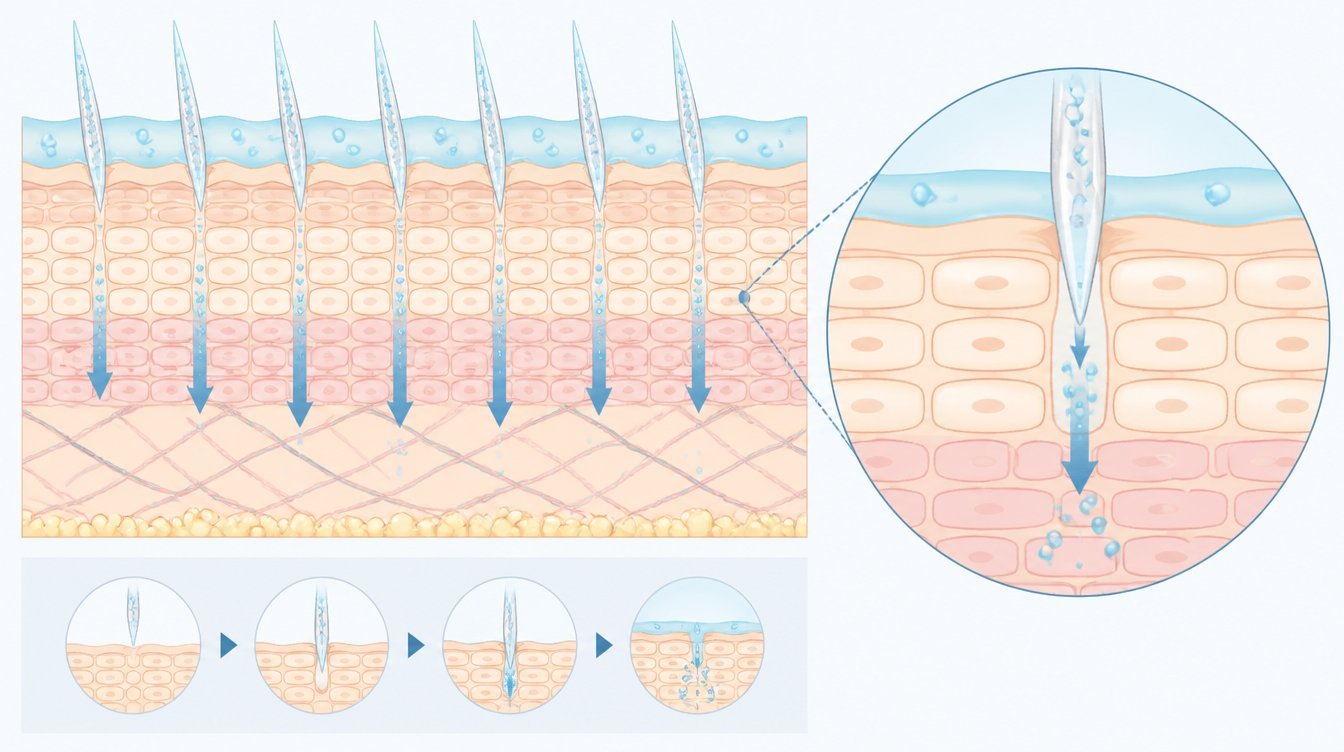
When you massage the serum in, the needles align and lodge in the upper layers of the skin. They are far too small to see, but not too small to feel. That is the whole point. The spicules puncture microscopic channels and then dissolve or shed over the following hours and days.
How Spicules Create Micro-Channels
The mechanism is mechanical, not chemical. Chemical exfoliants dissolve the bonds between dead cells. Spicules physically pierce the surface, and that difference explains most of what people love and fear about them.
Tiny needles, thousands of entry points
Each spicule is a sharp, rigid sliver measured in micrometres. Pressed against the skin, it slips between and into the outermost cells, opening a channel that stays briefly open. Multiply that by the thousands of needles in a single dose, and you create a temporary surface full of micro-openings.
Deeper penetration for the actives that follow
Those channels are shortcuts. Serums, moisturisers, and treatment ingredients applied after a spicule session pass through the usual barrier resistance more easily, so more of each active ingredient reaches the layers below. That is why brands pair spicules with peptides or brighteners: the needles improve delivery of whatever comes next.
A nudge to skin turnover
The controlled micro-injury also signals the skin to repair and renew. In principle that speeds cell turnover, the same broad idea behind professional micro-needling and exfoliating acids, which is where the smoother-texture claims come from over a few weeks of use.
The Benefits People Chase
Marketing around spicule serums leans hard on transformation. The honest version is narrower but still meaningful, and it clusters around a handful of outcomes.
- Smoother texture as the surface renews and rough patches soften
- The look of smaller pores as buildup clears and skin firms slightly
- Better penetration of the actives you layer afterward
- A gradual softening of fine dehydration lines
- A temporary post-treatment glow as circulation lifts
None of these are instant miracles. They stack up over weeks of careful, spaced-out use, and they depend on pairing the spicules with genuinely good supporting products.
The Tingling and the Purge, Explained
Two sensations catch every first-time user off guard, and both are worth understanding before you buy.
The first is the tingling. Within minutes of application, most people feel a prickling, itching, or mild stinging warmth. That is the physical presence of the needles, not an allergic reaction in most cases. It usually peaks early and eases over the next hour or two. Rubbing or scratching makes it worse and can drag needles deeper than intended, so hands stay off.
The second is the purge. Because spicules speed surface turnover and open clogged areas, some users see a wave of small breakouts in the first couple of weeks. This mirrors the purge people describe with retinoids and acids. It tends to settle as the skin adjusts, but it can be discouraging if nobody warned you it might happen. If breakouts worsen steadily rather than settling, that is a sign to stop, not to push through.
How to Use a Spicule Serum Safely
This is the part that separates a good result from an irritated mess. Spicules are a physical treatment, so restraint matters more than enthusiasm.
- Patch test first. Apply a small amount to the jaw or inner arm and wait 24 to 48 hours for redness, swelling, or lasting stinging before going near the full face.
- Start slow. Once a week is plenty at the beginning. Your skin needs to show it can handle the micro-injury before you add frequency.
- Apply to clean, dry skin. Water and slippery serums stop the needles from lodging properly and can blunt the effect.
- Use the dose the brand specifies and massage gently for the stated time. More product and harder pressure means more irritation, not better results.
- Follow immediately with hydrating and soothing layers to calm the skin and take advantage of the open channels.
Keep the whole thing to the evening. Freshly channelled skin is more vulnerable to the sun, so you want hours of recovery before daylight.
Frequency and Building a Routine
Frequency is where most people go wrong. The instinct is to use a tingling product often because the sensation feels like it is working. With spicules, that instinct backfires.
Begin at once, once a week for the first three to four weeks. If your skin stays calm, with no lingering redness or worsening breakouts, you can consider twice a week. Very few skin types benefit from more than that, and daily use is almost always too much. On the nights between spicule sessions, drop back to plain barrier repair: hydration, ceramides, and soothing ingredients that let the skin rebuild.
Think of a spicule serum as a treatment, not a staple. It belongs in the same mental category as a strong peel or a needling session, spaced out and respected, rather than a nightly serum you reach for without thinking.
What to Pair With Spicules and What to Avoid
The open channels cut both ways. They help good ingredients get in, and they also let harsh ones sting far more than usual. Pairing decisions matter more with spicules than with almost any other product.
Good partners are gentle and reparative. Hyaluronic acid, glycerin, panthenol, centella, and ceramides all soothe the skin and make use of the improved delivery without adding irritation. A calm barrier cream on top seals the work in.
The ingredients to hold back are the aggressive actives. Strong exfoliating acids, high-strength retinoids, benzoyl peroxide, and physical scrubs should not share a night with spicules. Stacking two forms of exfoliation or irritation is the fastest route to a damaged barrier. Give retinoids and acids their own separate nights, well away from any spicule session.
Spicule Serum Versus Chemical Exfoliation Versus Professional Micro-Needling
Spicule serums sit between two established approaches, and understanding where they land stops you from buying the wrong tool for your goal. All three renew the skin, but they do it differently, at different depths, and with different risk.
| Feature | Spicule Serum | Chemical Exfoliation | Professional Micro-Needling |
|---|---|---|---|
| Mechanism | Physical micro-channels from silica needles | Acids dissolving bonds between cells | Fine metal needles on a device |
| Where it is done | At home | At home or clinic | Clinic or trained hands |
| Depth reached | Upper surface layers | Surface layers | Deeper, adjustable by needle length |
| Main use | Texture, penetration, mild renewal | Texture, tone, congestion | Scars, deeper lines, firmness |
| Irritation risk | Moderate, tingling and possible purge | Low to moderate, depends on strength | Higher, with downtime |
The short read: chemical exfoliation is the gentlest and most flexible for everyday routines, professional micro-needling is the strongest for real structural concerns like scarring, and spicule serums are a middle option that brings some needling logic home without a device. They do not replace a clinical treatment, and they are not as forgiving as a mild acid.
Who Should Avoid Spicule Serums
A physical, mildly injurious treatment is not for every face. Some skin types get more harm than benefit, and honesty here saves people real trouble.
- Sensitive or reactive skin that stings at the smallest provocation
- Rosacea-prone skin, where the micro-injury can trigger flushing and flares
- Active, inflamed acne, since piercing pustules can spread bacteria and worsen breakouts
- Broken, raw, sunburned, or freshly treated skin that has no barrier to spare
- Anyone in the middle of strong retinoid or acid courses that already thin the surface
If any of these describe you, a gentle chemical exfoliant or a barrier-first routine is the smarter path. When in doubt, a dermatologist can tell you whether your skin can handle the mechanical stress at all.
Common Mistakes That Cause Irritation
Even suitable skin can end up red and unhappy when the product is used carelessly. The errors repeat in predictable patterns.
The first is skipping the patch test because the serum looks harmless. It is not harmless, and 48 hours of caution can prevent a week of regret. The second is using it too often, chasing the tingle as proof of progress when the skin needs rest between sessions. The third is stacking it with acids or retinoids on the same night, which turns a manageable treatment into a barrier emergency.
Two more round out the list. Rubbing or scratching during the tingling phase drags needles deeper and inflames the skin, so hands must stay down. And skipping sunscreen the next morning leaves freshly renewed skin exposed to UV, which undoes the benefit and raises the risk of irritation and pigmentation.
What Results to Expect and When
Setting the timeline correctly keeps you from quitting early or expecting too much. Spicule serums work in stages, not overnight.
In the first session or two, you mostly feel the tingle and see a short-lived flush and glow. Over the first two weeks, some people hit the purge phase, with small breakouts that then settle. From around week three to six of consistent, spaced-out use, the real changes show: smoother texture, a more even surface, pores that look tidier, and better payoff from the serums you layer afterwards.
The honest framing is modest but genuine. A spicule serum is a texture-and-delivery tool, not a scar eraser or a substitute for professional treatment. Used with patience and paired with soothing support, it earns a place. Used impatiently, it mostly delivers irritation.
How to Shop for a Spicule Serum
Formulas vary widely, and the label tells you more than the marketing. A few signals separate a considered product from a gimmick.
Look for a stated spicule concentration or clear usage guidance, since a brand confident in its needles will tell you how much to use and how often. A supporting cast of soothing and hydrating ingredients, such as centella, panthenol, or hyaluronic acid, shows the formula was built to calm as well as channel. Clear, specific instructions for frequency and dose are a good sign; vague promises with no protocol are not.
Be wary of products that push daily use or frame the tingling as the main selling point. Responsible spicule serums treat the sensation as a side effect to manage, not a feature to celebrate, and they set expectations around gradual results rather than overnight transformation.
Where the Spicule Trend Came From
Spicules are not a 2026 invention. Sponge-derived spicules have appeared in professional and Asian skincare for years, often under names referencing sea sponge or marine microneedles, used in salons as an intensive resurfacing step.
What changed this year is access and virality. Short-form video turned the dramatic tingle and the before-and-after texture claims into shareable content, and brands responded with at-home versions marketed as needling without a device. The barrier-first mood of recent skincare culture made the balanced messaging land too, with the better formulas pairing the needles with soothing support rather than selling pure aggression. The result is a trend that is genuinely interesting and genuinely easy to misuse, which is exactly why careful guidance matters more here than with a gentle everyday serum.
Frequently Asked Questions About Spicule Serums
What is spicule serum, and how does it work?
A spicule serum suspends thousands of microscopic silica needles, harvested from marine sponges, in a liquid or gel base. When you massage it into clean, dry skin, the needles lodge in the upper layers and create tiny channels. Those channels let the serums and treatments you apply afterward penetrate more deeply, and the controlled micro-injury nudges the skin to renew itself. The effect is mechanical rather than chemical, which is what separates it from an exfoliating acid and gives it its at-home micro-needling reputation.
Does a spicule serum really work like micro-needling?
It borrows the same logic but works on a smaller, shallower scale. Both create physical micro-channels that boost active delivery and prompt renewal, but professional micro-needling uses adjustable metal needles that reach deeper and target concerns like scarring. A spicule serum stays near the surface and suits texture, penetration, and mild renewal instead. It is a gentler, at-home middle ground, not a replacement for a clinical needling session, and it will not deliver the same results on deeper structural concerns.
Why does a spicule serum tingle and cause breakouts?
The tingling is the physical presence of the needles in the skin, usually peaking early and easing over an hour or two. It is a normal sensation for most people, not necessarily an allergic reaction. The breakouts, often called a purge, happen because spicules speed surface turnover and open clogged areas, which can push congestion out faster in the first couple of weeks. This usually settles as skin adjusts. If breakouts steadily worsen rather than calming down, stop using the product.
How often should I use a spicule serum?
Start at once a week for the first three to four weeks and watch how your skin responds. If it stays calm, with no lingering redness or worsening breakouts, you can consider moving to twice a week. Very few skin types benefit from more than that, and daily use is almost always too much for a physical treatment. On the nights in between, stick to plain barrier repair with hydration, ceramides, and soothing ingredients so the skin can rebuild between sessions.
Who should not use a spicule serum?
Skip spicule serums if you have sensitive or reactive skin that stings easily, rosacea that flares with irritation, or active inflamed acne, since piercing pustules can spread bacteria. Avoid them on broken, raw, sunburnt, or freshly treated skin, and do not layer them into a routine that already runs strong on retinoids or acids. If any of these apply, a gentle chemical exfoliant or a barrier-first routine is safer. A dermatologist can confirm whether your skin can handle the mechanical stress.
What should I pair with a spicule serum?
Follow a spicule session with gentle, reparative products that make use of the open channels without adding irritation. Hyaluronic acid, glycerin, panthenol, centella, and ceramides all soothe and hydrate, and a calm barrier cream on top seals the work in. Hold back the aggressive actives: strong acids, high-strength retinoids, benzoyl peroxide, and physical scrubs should never share a night with spicules. Give those treatments their own separate evenings, well away from any spicule session, to protect your barrier.
RELATED ARTICLES:
- Exosomes for Skin: The Regenerative Trend Reshaping Skincare
- Microbiome Skincare: How to Feed Your Skin’s Good Bacteria
- Facial Acids: The Complete Guide to Chemical Exfoliation
About The Author

COMMENTS