









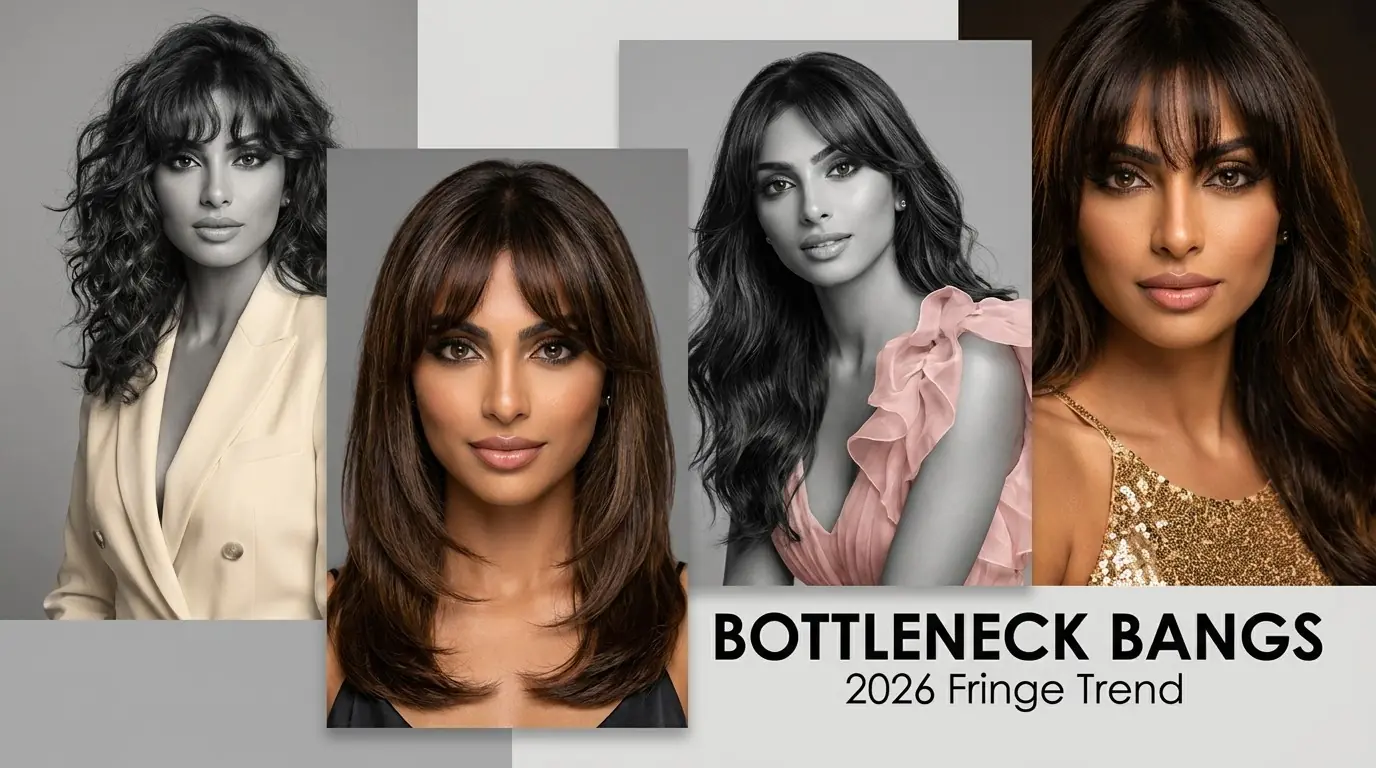
Bottleneck bangs have become one of the most requested fringe shapes. Picture a fringe that sits narrow and slightly piecey across the brow, then flar
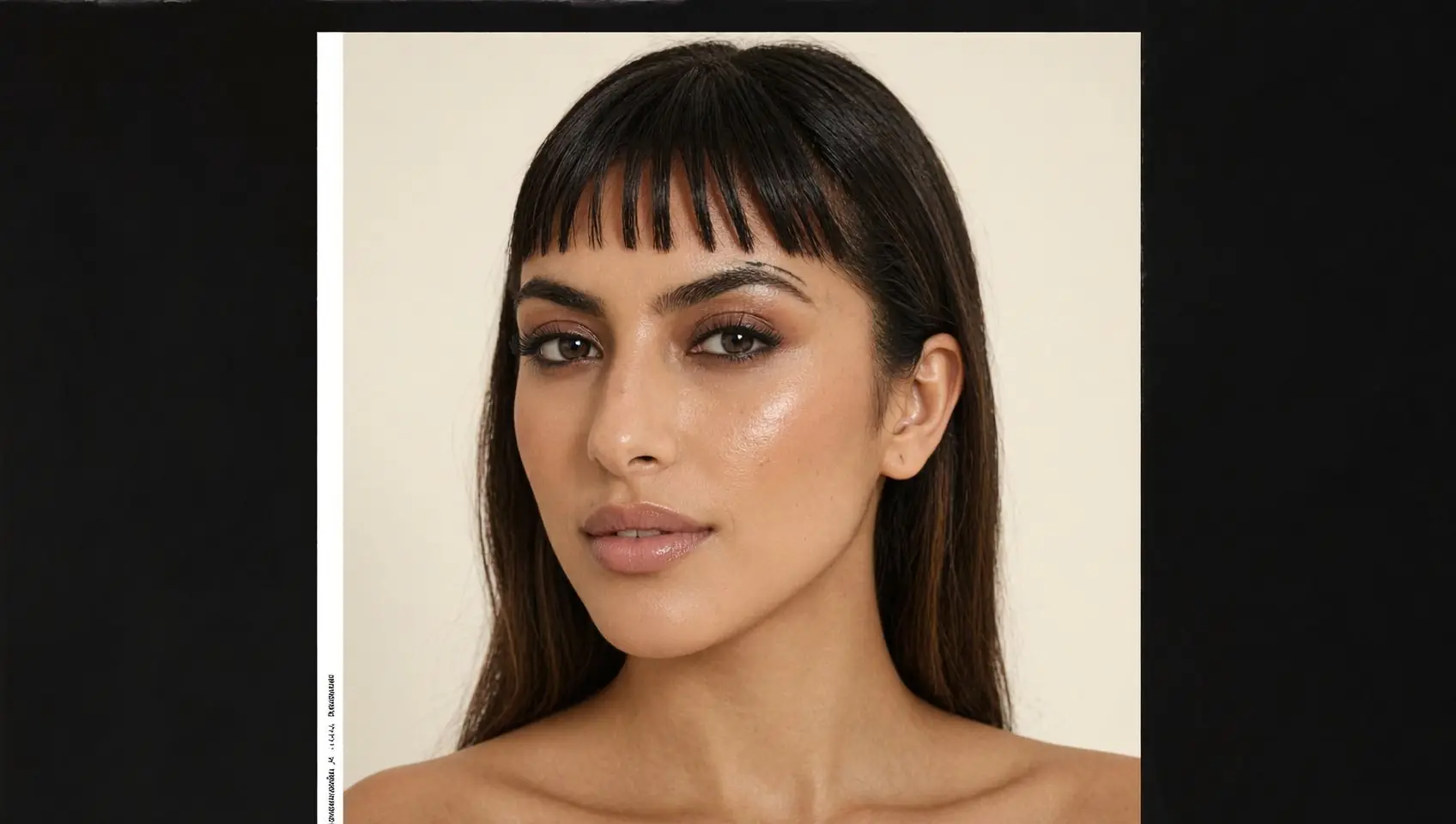
Bottleneck bangs have become one of the most requested fringe shapes. Picture a fringe that sits narrow and slightly piecey across the brow, then flares wider at the cheekbone like the silhouette of an upside-down bottle neck. Short in the centre, longer at the sides, swept softly out at the ends. It frames the face without the full-curtain commitment, softens square jaws, and narrows wide foreheads. This guide walks through what bottleneck bangs actually are, who they flatter, how to cut and style them at home or at a salon, the mistakes that ruin the shape, products that hold it, and the six questions everyone asks before booking the chair.
Published · Updated
What Bottleneck Bangs Actually Are (and Why They’re Trending in 2026)
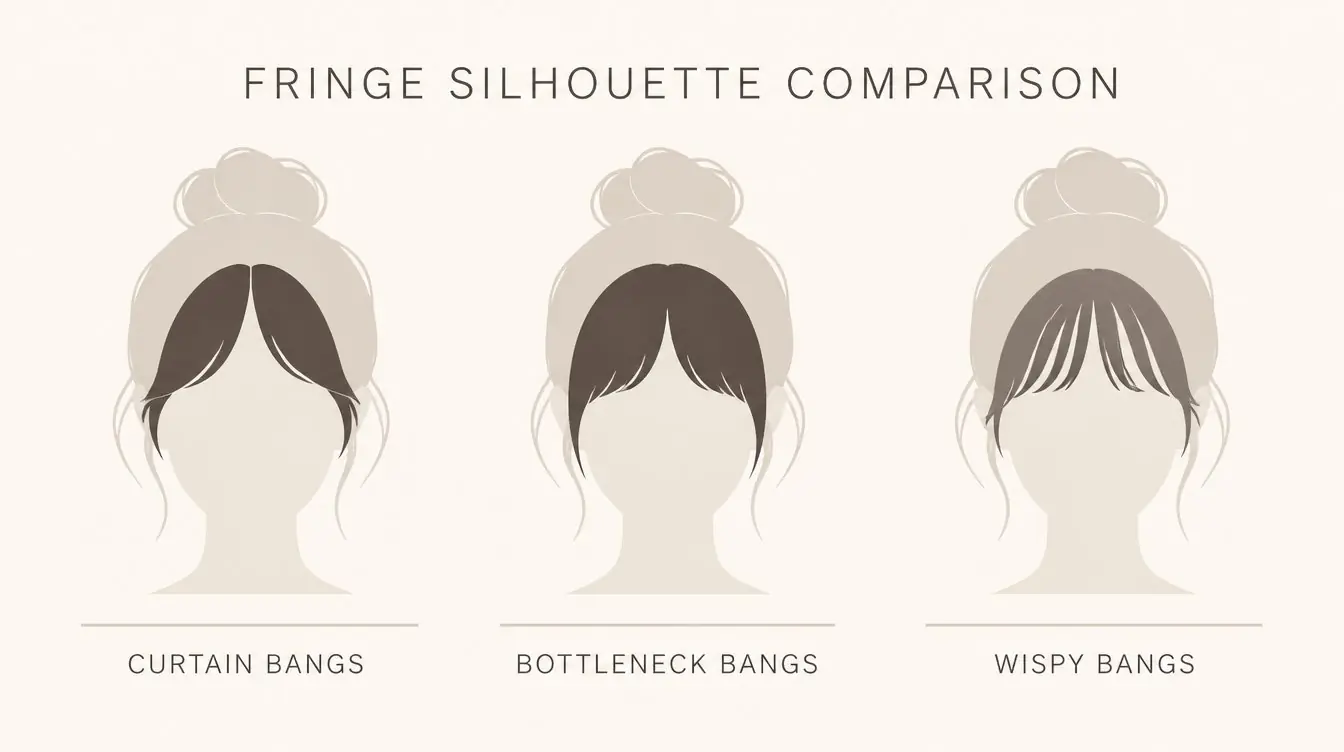
Bottleneck bangs are a face-framing fringe shaped like the neck of an upside-down bottle. The hair is shortest in the centre, usually grazing just above the brow, then extends progressively longer as it travels outward, finishing at the cheekbone or jaw with a soft outward curve. The middle stays piecey and slim. The sides fan wider and sweep away from the face. That widening silhouette is what gives the cut its name, and it is the single feature that separates it from every other fringe on the moodboard.
The cut was named by stylist Tom Smith after Margot Robbie wore it on the cover of British Vogue in 2021, and it has seen renewed interest on social media since. Hailey Bieber, Kaia Gerber, and Hyein from NewJeans have all worn versions on red carpets and in pap shots, and salon menus from Seoul to Los Angeles now list it by name.
Why Bottleneck Bangs Have Staying Power
Bottleneck bangs are softer than a blunt fringe and easier to grow out, because the curved sides blend into face-framing layers. That flexibility helps explain why the cut has stayed popular since it was named in 2021.
Who Bottleneck Bangs Flatter (and Who Should Adapt the Look)
Bottleneck bangs read as particularly flattering on square, round, and heart-shaped faces. On a square jaw, the outward sweep at the cheekbone softens the corners and visually rounds the lower face. On a round face, the vertical pieces in the centre add length, while the side flare draws the eye outward at the brow line rather than the cheek. Heart-shaped faces gain a counter-curve at the chin from the longer side pieces, which balances a narrow lower face against a wider forehead.
Long and oval faces can wear the cut too, but the proportions need adjusting. On a long face, the centrepiece should be cut a touch longer so it brushes the brow rather than sitting above it. That stops the bangs from making the forehead read as taller. Oval faces, the easy default for almost any cut, can pick whichever length feels right.
Hair texture is where things get interesting. Straight and lightly wavy hair holds the shape with minimum effort. Type 2C and looser 3A waves can do it with a quick round-brush blow-out at the front. Tight curls and coils need a careful conversation with a stylist because the cut relies on a smooth outward sweep, which, on coily hair, means either silk-pressing the fringe daily, accepting a curlier interpretation of the shape, or skipping the look entirely. Fine, thin hair benefits most from this fringe because the piecey centre adds movement without adding weight. Thick or coarse hair needs internal texturising so the bangs do not sit as a solid block across the forehead.
How to Get Bottleneck Bangs at Home: Step by Step
Cutting your own bottleneck bangs is possible if you have steady hands, sharp shears, and a willingness to start conservatively. The cut is forgiving in the sense that you can always remove more, but it is unforgiving in the other direction. Here is the safe sequence.
- Start with dry, clean, naturally dry hair. Wet hair shrinks up when it dries, and bottleneck bangs go from soft to severe with two centimetres of bounce. Dry cutting gives you the length you actually see in the mirror.
- Section the fringe area. Use a fine-tooth comb to part off a triangle from the centre of your hairline, with the point at the crown and the base spanning from the outer corner of one eye to the outer corner of the other. Clip the rest of your hair back so it is out of the way.
- Comb the section straight down. Hold it between two fingers, pinch lightly, and let it fall along the natural shape of your face. Do not pull. Pulling adds tension and shortens the cut.
- Mark the centre length. The centre should sit just above the brow, with eight to ten millimetres of clearance for a soft version, touching the brow for a bolder version. Snip vertically into the hair with the tips of the shears, not horizontally across. Vertical point-cutting gives you the piecey, broken edge the trend depends on.
- Cut the diagonal. From the centre point, work outward toward the cheekbone, lengthening as you go. The longest pieces at the outer edge should land somewhere between the top of the cheekbone and the jawline. Use vertical snips the whole way. Resist the urge to make a clean diagonal line, because that produces curtain bangs, not bottleneck bangs.
- Texturise the centre. Take small vertical snips into the bottom inch of the centre pieces to break up any blunt edge. This is what makes them read as piecey rather than chunky.
- Sweep and check. Run a round brush under the front, blow the heat in an outward direction for ten seconds, and look in the mirror. If anything looks too long, trim no more than two millimetres at a time.
The Salon / Pro Version
A trained stylist brings two things to bottleneck bangs that a home cut cannot match: an internal layered foundation under the visible fringe and a precise angle on the side sweep that matches your specific cheekbone position. Expect the consultation to start with face-shape mapping, where the stylist marks where your cheekbone sits in relation to your nose and chin and uses that to set the outer edge of the cut. The centre length is set from your eyebrow line. The transition between the centre and side is layered internally with point-cut sections, so the fringe moves rather than swings as one piece.
Pricing varies by market. In India, expect a chain salon to charge between 800 and 2,500 rupees for a fringe cut as an add-on to a haircut and up to 4,000 rupees at a creative-director-level chair. In the US, the band runs roughly 35 to 90 dollars at a mid-tier salon and 100 to 200 dollars at an editorial stylist’s. In the UK, 25 to 60 pounds is typical. The cut itself takes 20 to 40 minutes, and any decent salon will dry-cut and re-check after a blow-dry, so book a slot that allows for both.
Common Bottleneck Bangs Variations to Try in 2026
The long bottleneck is the easiest version to wear and grow out. The centre still sits above the brow, but the side pieces stretch down to the jaw or even past it, which makes the fringe almost merge with face-framing layers. It works well if you are growing out a previous fringe and want a halfway stage.
The micro-bottleneck shortens everything by roughly three centimetres. The centre brushes the upper lash line, and the side pieces stop at the top of the cheekbone. It reads younger and bolder. The trade-off is more upkeep because micro-lengths grow into the eyeline within two weeks.
The curly bottleneck adapts the shape for type 2C to 3B textures. Because curls retract, the cut is taken roughly two centimetres longer than the equivalent straight cut, then defined wet with a light gel so the spiral pattern stays. The outward sweep happens through the natural curl direction rather than through a brush.
The split bottleneck is the only version with a defined centre part. The two innermost pieces fall on either side of a thin middle parting, with the outward sweep starting immediately. It looks almost like a baby’s curtain, but the shape stays narrow in the centre, not wide. This version photographs particularly well, which is why most editorial shoots use it.
The shadow bottleneck blends balayage or money-piece highlights into the longest side pieces, so the outer sweep catches more light. It is the version most often requested alongside a colour appointment, and it amplifies the framing effect on darker base hair.
What to Avoid: Mistakes That Kill the Look
Cutting wet is the most common mistake. The fringe will dry shorter than you intend by up to three centimetres on wavy hair, and once it is too short, you have to wait six to eight weeks to get the shape back. Always dry-cut bottleneck bangs.
Using horizontal scissor strokes flattens the edge into a blunt line, which kills the piecey texture. Vertical point-cutting is non-negotiable. If you cut straight across, you have a 1970s feathered fringe, not a 2026 bottleneck.
Sectioning too wide pulls in hair that belongs to your length, and the cut starts to look like a half-set of face-framing layers rather than a fringe. The triangle base should span from eye corner to eye corner, no wider.
Skipping the internal texturising leaves a solid block of hair across the brow that does not move when you turn your head. Take at least one pass of point-cutting up into the body of the fringe, especially on thick hair.
Over-styling with a curling iron forces a tight curve that fights the natural fall of the cut. The shape is meant to sweep, not curl. A round brush and a few seconds of warm air do the job; the curling iron does not.
Letting the fringe grow past the cheekbone without trimming. Bottleneck bangs are defined by the cheekbone landing point. Once the longest pieces drop past the jaw, the silhouette stops looking like a bottleneck and starts looking like long layers.
Products That Actually Work for Bottleneck Bangs
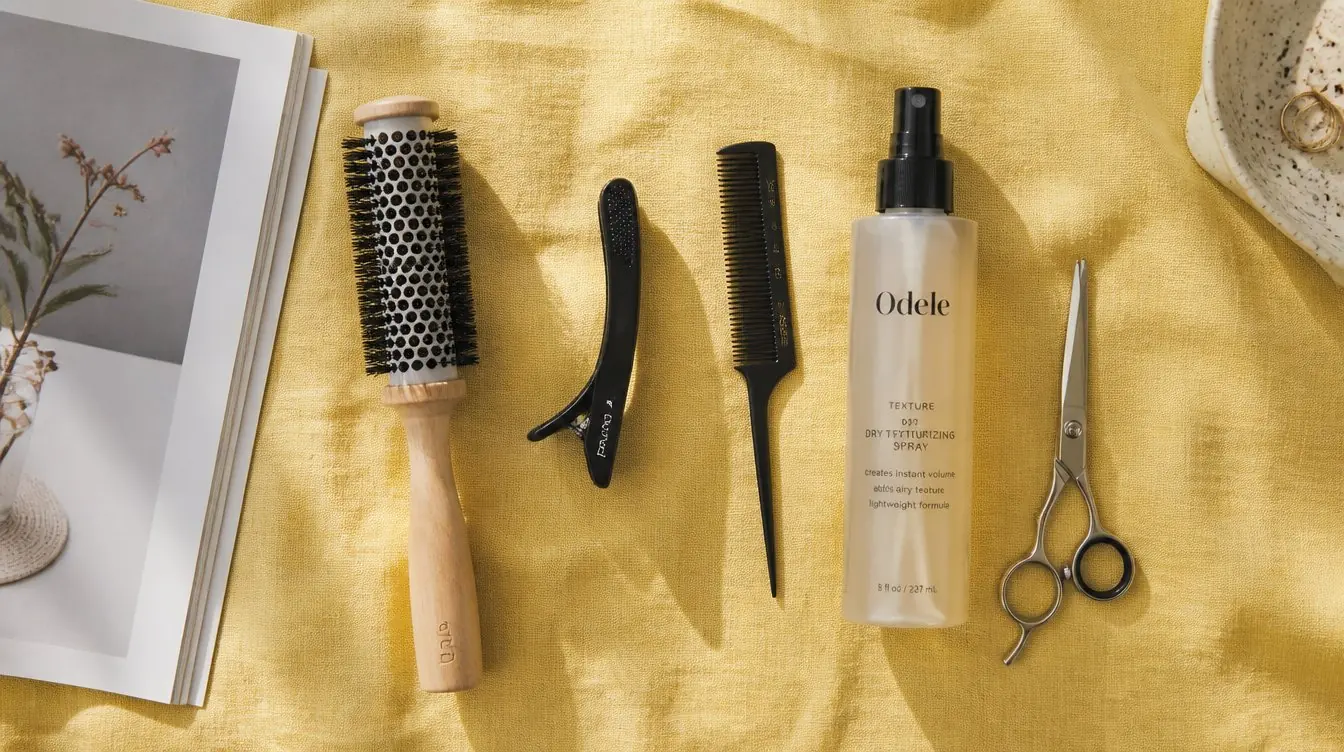
A lightweight texturising spray is the single most useful product for this fringe. Look for ingredient lists that name sugar-based polymers or rice protein, and avoid anything with heavy silicones or styling waxes. The spray should add grip without weight. Two pumps from root to mid-length, scrunched and dried, set the piecey separation that defines the centre of the cut.
A small round brush in the 25 to 35 millimetre range is the right size for the fringe section. Boar bristle is the classic pick because it grips fine hair well and adds shine. Anything wider than 45 millimetres pulls the fringe into curtain-bang territory.
A lightweight heat protectant, preferably a spray rather than a cream, keeps the fringe from going greasy by lunchtime. Cream and serum formulas are too heavy for a section that sits this close to forehead skin. Look for a label that lists “heat protection up to 230 degrees” and a water-based first ingredient.
A finishing oil is optional and should be used sparingly. One drop, rubbed between palms, then patted only on the very ends of the longest side pieces, gives the polished editorial look. Apply more than that and the fringe goes flat within an hour.
Dry shampoo is the maintenance product that makes the cut viable between washes. The fringe sits against forehead skin and absorbs oil quickly, often within 24 hours. A starch-based dry shampoo, sprayed at the roots and brushed through, resets the cut without water.
Bottleneck Bangs vs Curtain Bangs: How to Choose
The two cuts get confused constantly, but they are mechanically different. Curtain bangs part down the middle and curve outward in a long, gentle sweep. The shape is U-like when viewed straight on. Bottleneck bangs do not part in the middle. The centre is a single narrow column of hair, and the widening happens away from the centre, giving an upside-down bottle silhouette. Curtain bangs need length to look right, usually grazing the cheekbone at their shortest. Bottleneck bangs are shorter in the centre than any curtain version.
For a flattering effect, curtain bangs lengthen a round face and soften a forehead. Bottleneck bangs do that plus add the framing pop at the cheekbone, which curtain bangs cannot do. For maintenance, curtain bangs are easier to grow out because they blend into face-framing layers naturally. Bottleneck bangs grow out as a noticeable block, so the trim schedule matters more. For styling, curtain bangs need a round brush and a clear outward direction every wash. Bottleneck bangs need slightly less effort, because the cut itself does most of the shaping work.
If you are deciding between the two, the rule of thumb is that bottleneck bangs sit closer to a true fringe, while curtain bangs sit closer to long layers. Pick a bottleneck if you want a defined fringe statement. Pick curtains if you want softness with no real commitment.
How Long the Bottleneck Bangs Trend Will Stay Relevant
Bottleneck bangs follow the trajectory of a structural fringe trend rather than a costume trend, which matters for longevity. Costume trends, the kind that depend on a single celebrity or a single song, tend to peak within six months and disappear within twelve. Structural fringe trends, the kind that flatter a wide range of face shapes and require a real haircut rather than a styling trick, tend to last between two and four years before they cycle into the next shape.
The closest historical parallel is the original curtain-bangs revival, which started gaining serious Pinterest traction in late 2019, peaked in 2021 and 2022, and is only now slowly receding. Bottleneck bangs have been around since 2021 and have seen a fresh wave of interest recently. If the curve is even roughly similar, the look should hold its place at the centre of fringe culture through at least 2027, with editorial relevance probably lasting into 2028.
The trend will likely evolve into longer and curlier interpretations as it matures. Salons in Seoul are already pushing a version that blends bottleneck shaping with side-swept layers all the way to the collarbone. Expect that to be the 2027 conversation and a shorter, blunter micro-bottleneck to be the late 2027 reaction.
Frequently Asked Questions About Bottleneck Bangs
What are bottleneck bangs, and how are they different from curtain bangs?
Bottleneck bangs are a face-framing fringe shaped like an upside-down bottleneck, narrow and piecey at the centre above the brow, widening outward to longer pieces that sweep softly at the cheekbone. Curtain bangs part down the middle and curve outward in a long U-shape with no narrow centre. The key difference is the silhouette. Bottleneck bangs have a defined narrow column in the centre and a flare at the side. Curtain bangs are uniformly long and split into two halves around a central parting.
Who do bottleneck bangs look best on by face shape and hair texture?
Bottleneck bangs flatter square, round, and heart-shaped faces most reliably because the outward sweep at the cheekbone softens square jaws, lengthens round faces vertically, and balances heart-shaped faces with a countercurve near the chin. Long and oval faces can wear the look with a slightly longer centrepiece. The fringe works on straight, wavy, and lightly curly hair without complication. Tighter curls need either a daily silk press or a curlier interpretation, because the shape relies on a smooth outward sweep that coily textures naturally resist.
How short should bottleneck bangs be cut?
The centre should sit between eight and ten millimetres above the brow for a soft version or touch the brow line for a bolder version. The side pieces should land at the top of the cheekbone for a classic bottleneck or stretch down to the jaw for a longer version. Anything shorter than the upper lash line at the centre tips into micro-bottleneck territory, and anything longer than jaw level at the sides stops looking like a fringe and starts looking like face-framing layers. Always measure from a dry, naturally fallen section.
Can I get bottleneck bangs at home, or do I need a salon?
Home cutting is possible with sharp shears, dry hair, and a willingness to start conservative. The cut depends on vertical point-cutting rather than horizontal strokes and on a triangular section that spans only eye-corner to eye-corner. A salon does it better in two ways: the internal layering under the visible fringe gives the cut movement, and a stylist sets the side angle to match your specific cheekbone position. For a first attempt, a salon visit is the safer call. For maintenance trims between visits, home trimming is reasonable.
How often do bottleneck bangs need trimming?
Every four to six weeks for the centrepieces and every six to eight weeks for the longest side pieces. The centre grows into the eyeline quickly, often within three weeks on average growth hair, and once it reaches the upper lash line, the cut stops holding the bottleneck silhouette. The sides grow more forgivingly. A maintenance trim takes five to ten minutes, and many salons offer free fringe trims between full appointments if you booked the original cut there. Skip more than two trims in a row and the shape disappears.
How do I style bottleneck bangs day-to-day to keep the shape?
Mist the dry fringe with a light texturising spray, then use a small round brush in the 25 to 35 millimetre range to sweep the side pieces outward while blowing warm air for ten to fifteen seconds. Keep the centre flat against the forehead rather than lifting it at the root. A single drop of finishing oil patted on the very ends of the longest pieces adds polish without weight. On non-wash days, dry shampoo at the roots and a quick re-sweep with the round brush reset the cut in under two minutes.
Sources
- Bottleneck Bangs are the Laid-Back Alternative to Curtain Bangs, Stylist
- I Got Bottleneck Bangs & It's My Favourite Hairstyle, Refinery29
Related Articles
- Fringe Haircut Trends: A Quick Guide
- Bixie Haircut: The Bob-Pixie Hybrid Explained
- How to Sleep With Bangs Without Ruining Them
About The Author

COMMENTS