
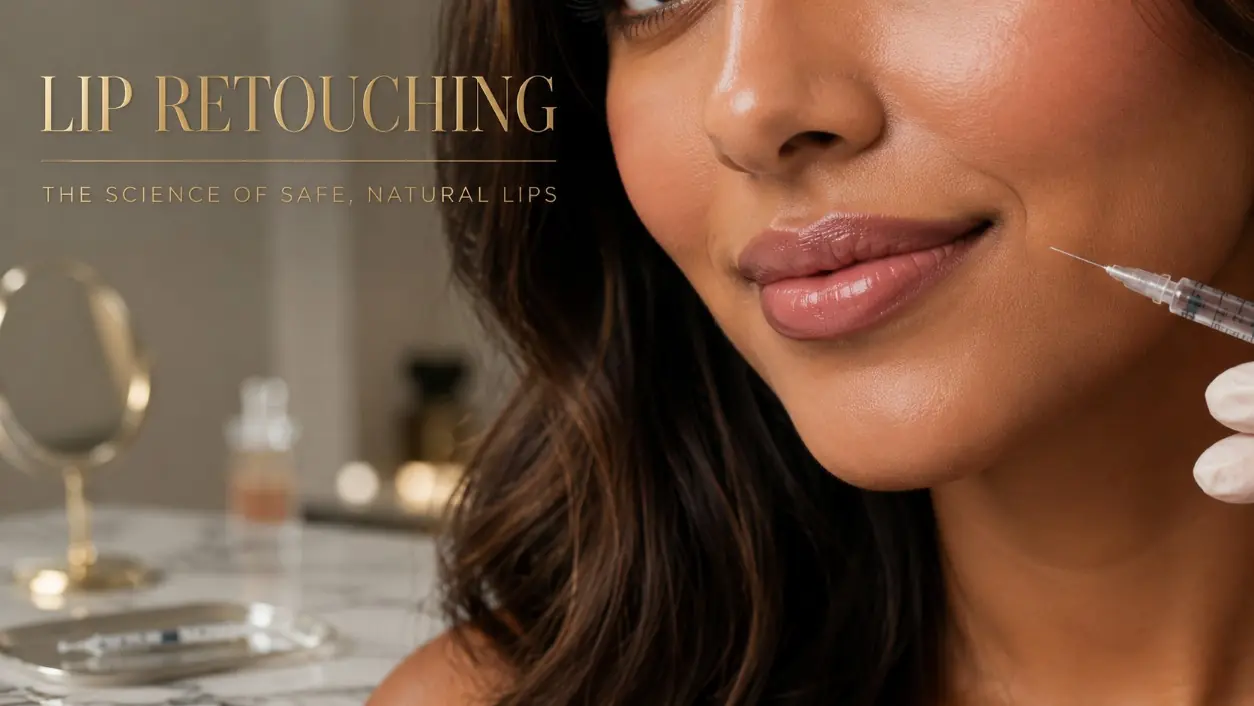
Lip retouching is a subtle, hyaluronic-acid approach to fuller lips that prioritises natural results over dramatic volume. Beauty standards keep shift
Lip retouching is a subtle, hyaluronic-acid approach to fuller lips that prioritises natural results over dramatic volume. Beauty standards keep shifting, and today’s filtered images set ideals that are impossible without lighting tricks or injectables, so it helps to understand how safe lip retouching really works, who it suits, and which trends to avoid.
Beauty standards have always shifted with the times, but the past decade has accelerated those changes at a pace no previous generation experienced. Today, women scroll through thousands of filtered images daily, absorbing ideals that are technically impossible without either lighting tricks or injectable treatments. Against this backdrop, lip retouching has surged to the top of aesthetic medicine request lists across Spain, the United Kingdom, and the United States. Clinics report consistent demand, with patients ranging from their early twenties to their mid-fifties, each arriving with different goals but a shared desire: lips that look healthier, more defined, and more youthful. This article examines everything behind that trend. It covers the science of lip anatomy, the safest and most effective treatment options available today, the dangerous extremes that reputable doctors consistently reject, and the daily care habits that extend and protect every result. Whether you are considering your first consultation or simply want to understand what qualified specialists actually do, every section of this guide is grounded in clinical evidence, expert opinion, and honest assessment of risk and reward.
Why Lip Retouching Has Become So Popular
Reviewed by the BeautynFacts editorial team. Last updated: May 2026.
Demand for lip treatments did not appear overnight. It grew steadily over more than a decade, driven by a combination of cultural, technological, and psychological forces. Understanding those forces helps explain who seeks these treatments and why.
The Role of Social Media in Lip Beauty Standards
Instagram launched in 2010. Snapchat introduced face filters in 2015. TikTok reached global dominance by 2020. Each platform built its user base on visual content, and each one rewarded images that conformed to a narrow and heavily filtered aesthetic. Lips featured prominently in that aesthetic. Filters designed for selfie cameras routinely enlarge the lips, smooth the skin around the mouth, and add a subtle gloss effect. Users began to see a filtered version of themselves as a more appealing baseline, and the gap between that filtered image and their real reflection created dissatisfaction.
Research published in JAMA Facial Plastic Surgery identified a phenomenon called ‘Snapchat dysmorphia’, in which patients bring filtered self-portraits to consultations and request procedures to match their digital images rather than to address genuine anatomical concerns. Aesthetic medicine specialists across Europe and North America have reported seeing this pattern with increasing frequency. The lips are the most commonly targeted feature in these requests, largely because lip volume and shape respond visibly to even minor filler adjustments.
Social platforms also spread extreme aesthetic trends with extraordinary speed. A style that might once have remained confined to a niche subculture can reach millions of followers within days. This exposure creates the false impression that a particular look is mainstream when it is, in clinical terms, disproportionate and anatomically inappropriate for most faces.
Who Is Seeking Lip Treatments Today
The Spanish Society of Aesthetic Medicine has documented a notable rise in patients under the age of 25 requesting lip augmentation. This is a demographic shift. A generation ago, cosmetic injectable treatments were associated primarily with women in their forties and fifties addressing signs of ageing. Today, younger patients form a significant and growing portion of clinic appointments.
These younger patients generally cite a different motivation from their older counterparts. They are less concerned with reversing age-related changes and more focused on enhancement: achieving fuller, more symmetrical lips that they feel match their best online presentation. Many report that their confidence in social and professional settings improves following treatment, which is a genuine and measurable benefit when the procedure is performed impressively.
Older patients, typically women between 35 and 55, seek lip retouching for a different cluster of reasons. Volume loss, the deepening of the lip border, the appearance of vertical lines above the upper lip, and reduced hydration are all natural consequences of ageing, and all of them can be addressed effectively with modern injectable techniques. For this group, the goal is restoration rather than augmentation, and results that appear natural and age-appropriate are consistently reported as the most satisfying outcomes.
Psychological Motivations Behind Lip Enhancement
Aesthetic medicine exists at the intersection of physical change and psychological wellbeing. Studies consistently show that patients who undergo correctly indicated cosmetic procedures with realistic expectations report improved self-esteem, greater social confidence, and higher satisfaction with their appearance. These are real quality-of-life benefits and should not be dismissed.
The concern arises when the motivation is driven by body dysmorphic disorder (BDD), a clinical condition in which a person perceives severe flaws in features that others would consider normal or attractive. Patients with BDD rarely benefit from cosmetic procedures because no physical change satisfies the underlying psychological distress. Ethical practitioners screen for this condition during consultation and refer affected patients to psychological support rather than proceeding with treatment.
Most patients, however, sit well outside this clinical concern. They have a specific, proportionate goal. Perhaps one lip is noticeably thinner than the other. Perhaps they feel their lip border has become less defined over time. Perhaps they simply want a subtle boost in volume that brings their lips into better balance with the rest of their face. These are rational, achievable goals, and addressing them with precise, conservative treatment is exactly what evidence-based aesthetic medicine is designed to do.
Understanding Lip Anatomy Before Any Treatment
Any skilled practitioner begins with anatomy. The lips are not a single structure. They are a complex assembly of muscle, fat compartments, mucosa, and skin, all of which behave differently when a needle introduces filler. Understanding this structure is the foundation of every safe and beautiful result.
The Structure of the Lips
The upper lip is bounded superiorly by the philtrum, the vertical groove that runs from the base of the nose to the peak of the Cupid’s bow. The Cupid’s bow itself forms two peaks that define the upper lip’s characteristic shape. The white roll, a subtle ridge of tissue that separates the lip skin from the vermilion (the red portion of the lip), provides definition and is a critical landmark during any profiling treatment.
The lower lip is generally fuller than the upper lip in most naturally proportioned faces. A classical guideline suggests that the lower lip should account for roughly 60 percent of total lip volume, with the upper lip providing the remaining 40 percent. This is a guideline, not a rule, and skilled practitioners adapt the target ratio based on each patient’s unique facial architecture.
Beneath the skin, the orbicularis oris muscle encircles both lips and controls their movement during speaking, kissing, and expressions. Any injectable treatment must account for this muscle’s function. Overfilling the lip or placing filler too deep can restrict natural movement and produce a result that looks and feels unnatural.
How Lips Change With Age
Ageing affects the lips through several simultaneous processes. Collagen production declines from the mid-twenties onwards. Fat compartments around the mouth thin and shift positions. Bone resorption in the jaw and mid-face reduces the structural support beneath the lips. Muscle activity over decades creates dynamic lines around the mouth. Ultraviolet exposure breaks down the connective tissue that keeps the lip border sharp and defined.
The result of these combined processes is predictable. The white roll becomes less pronounced. The Cupid’s bow flattens. The upper lip loses projection and appears to thin. Vertical lines form above the upper lip. The corners of the mouth may begin to turn downward. These changes can begin earlier than most people expect, sometimes becoming noticeable in the early thirties, particularly in patients with significant sun exposure histories or in those who smoke.
Prevention-focused treatments, which address these changes before they become pronounced, have become one of the most requested approaches in modern aesthetic medicine. Rather than waiting until the lip has lost significant volume and definition, patients in their late twenties and early thirties now seek treatments that maintain their existing lip quality and slow the visible progression of age-related changes.
What Makes a Lip Look Proportionate
Facial proportionality is assessed using a set of classical ratios that aesthetic practitioners study extensively. The neoclassical canons, originally described by Renaissance artists studying ideal facial geometry, provide a useful starting framework. The lips should occupy a specific vertical portion of the lower face. The width of the mouth should align roughly with the distance between the pupils. The oral commissures (the corners of the mouth) should not extend beyond the inner edges of the irises.
These proportions are not absolute standards, and ethnicity, individual facial structure, and personal aesthetic preference all influence what looks balanced on a specific face. A practitioner who applies identical treatment to every patient, regardless of their individual anatomy, will consistently produce results that look wrong even if each individual element appears technically correct in isolation.
This is precisely why experienced specialists emphasise facial harmony over feature-specific enhancement. The goal is never to create an impressive lip in isolation. The goal is to create a lip that makes the entire face look better, more balanced, and more expressive.
Hyaluronic Acid: The Gold Standard in Lip Retouching
Among all available lip enhancement methods, hyaluronic acid filler has become the dominant choice in evidence-based aesthetic medicine. Its safety profile, versatility, and reversibility make it uniquely suited to the demands of lip treatment.
What Makes a Good Hyaluronic Acid Filler
Not all hyaluronic acid fillers are equivalent. The manufacturing process, the degree of cross-linking, and the rheological properties (how the product flows and integrates with tissue) all determine how a filler behaves once injected. Dr Morales Raya, one of Spain’s leading dermatologists, identifies three essential criteria for a quality lip filler: it must use cross-linked technology, be fully biosimilar to the body’s own hyaluronic acid, and integrate into the tissue without forming visible or palpable lumps.
Cross-linking refers to the chemical process that bonds individual hyaluronic acid chains together into a three-dimensional gel network. This process determines how long the filler lasts, how firm or soft it feels, and how it moves with the lip during expression. Lip fillers require a specific degree of cross-linking: firm enough to provide structure and longevity but soft enough to move naturally with tissue that is in near-constant motion.
The most widely used pharmaceutical-grade lip fillers in clinical practice include products from the Juvederm and Restylane families, both of which have extensive safety data accumulated over more than two decades of use. These products are approved by both the European Medicines Agency and the United States Food and Drug Administration, providing practitioners and patients with a meaningful level of regulatory assurance.
How Hyaluronic Acid Works in the Lips
Hyaluronic acid is a naturally occurring polysaccharide found in the skin, connective tissue, and eyes. Its primary biological function is to bind and retain water molecules. A single molecule of hyaluronic acid can hold up to 1,000 times its own weight in water, which is what makes it so effective as both a tissue hydrator and a volume-providing filler.
When injected into lip tissue, cross-linked hyaluronic acid integrates with the existing extracellular matrix. It attracts and retains water, creating a soft, hydrated volume that mimics the feel of natural lip tissue. Over time, the body gradually metabolises the filler through enzymatic breakdown, and the volume diminishes at a rate that varies by product, injection depth, and individual metabolism.
The injection technique is as important as the product itself. Practitioners use either a fine-gauge needle or a blunt-tipped cannula to deliver filler precisely to the target tissue layer. Cannula techniques carry a lower risk of bruising and vascular injury because the blunt tip deflects around blood vessels rather than piercing them. Needle techniques allow more precise placement in specific anatomical landmarks, particularly for defining the white roll and Cupid’s bow. Many experienced practitioners use both instruments during the same appointment, selecting the appropriate tool for each area of the lip.
Reversibility and Safety Profile
One of the most significant advantages of hyaluronic acid over permanent fillers is its complete reversibility. The enzyme hyaluronidase dissolves hyaluronic acid rapidly and reliably. If a patient is unhappy with their result, if filler has migrated to an undesired location, or if a serious complication such as vascular occlusion occurs, hyaluronidase can be injected immediately to dissolve the filler and restore the pre-treatment anatomy.
This reversibility is not merely a convenience feature. It is a critical safety mechanism. Vascular occlusion, in which filler inadvertently compresses or enters a blood vessel, is a rare but serious complication that can cause tissue necrosis if not treated immediately. The ability to dissolve the offending filler with hyaluronidase has prevented significant harm in cases where prompt recognition and treatment occurred. This is one reason why practitioners trained in managing complications are genuinely safer to use than those who lack this training, regardless of their injecting skill level.
Hyaluronic acid is also biocompatible, meaning the immune system does not recognise it as foreign material. Allergic reactions to purified, pharmaceutical-grade hyaluronic acid are extremely rare, occurring in less than one in 2,000 treatments by most clinical estimates. This compares favourably with every other category of injectable filler currently available.
The Most Requested Lip Treatments Right Now
Patients arrive at lip aesthetic consultations with a diverse range of goals. Understanding which treatments address which concerns helps set accurate expectations before any appointment.
Lip Profiling and Definition
Lip profiling is the most requested lip treatment across multiple surveys of aesthetic medicine practitioners. The goal is to restore or enhance the visible border of the lip, particularly the white roll and Cupid’s bow, without significantly increasing the overall volume. This treatment is especially popular among patients in their thirties and forties who notice that their lip border has softened or blurred, even though their lips retain reasonable volume.
The technique involves placing small, precise deposits of a relatively firm hyaluronic acid filler along the vermilion border. This creates a sharp, defined edge that catches light differently from the surrounding skin, creating the impression of fuller, more youthful lips without the dramatic volume change that patients often fear. The result is subtle enough that most observers cannot identify what has changed, only that the patient looks fresher and more well-rested.
Profiling also addresses the asymmetry that affects the majority of lips to some degree. Most people have one side of the Cupid’s bow that sits slightly higher than the other, or one corner of the mouth that turns slightly more than its counterpart. Careful, asymmetric placement of filler can correct these imbalances and create a more harmonious appearance.
Lip Hydration Treatments
Hydration-focused treatments use low-viscosity, lightly cross-linked hyaluronic acid to restore the plump, moist quality of the vermilion tissue. The lips are among the most exposed areas of the face and lack the sebaceous glands that help keep surrounding skin moisturised. They are therefore particularly vulnerable to environmental dehydration, especially in cold or dry climates.
Profhilo, Juvederm Volite, and similar products designed for skin biostimulation are increasingly used in the lips for pure hydration rather than structural augmentation. These products contain high concentrations of hyaluronic acid but with minimal cross-linking, allowing them to spread through the tissue and provide widespread hydration rather than focal volume. Patients report that their lips feel softer, look more luminous, and hold topical lip balm more effectively after these treatments.
Hydration treatments also stimulate collagen and elastin synthesis in the treated tissue. This biostimulatory effect means that results continue to improve for several weeks after the injection as new structural proteins are produced. For patients whose primary concern is lip quality rather than size, this category of treatment often provides the most natural and progressive improvement.
Lip Volume Enhancement
Volume enhancement remains in demand, but the clinical approach has shifted significantly toward conservative, phased treatment. Rather than attempting to achieve a dramatic result in a single session, experienced practitioners now typically recommend a staged approach: a first treatment that adds modest volume and assesses how the patient’s tissue responds, followed by a review appointment and a second treatment if the patient desires more change.
This approach produces better outcomes for several reasons. Lip tissue varies considerably between individuals in its response to filler. Some patients find that even a small amount of product creates significant visible change. Others have denser tissue that absorbs filler without dramatic surface change. Beginning conservatively avoids overcorrection in the first group and calibrates the volume strategy accurately for the second.
The most commonly treated area for volume enhancement is the body of the lower lip, followed by the philtral columns (the raised edges of the philtrum on the upper lip), which add projection to the upper lip without requiring filler to be placed in the body of the upper lip itself. Careful enhancement of the philtral columns creates the appearance of a naturally voluminous upper lip without the risk of creating a sausage-like protrusion.
The Danger of Extreme Lip Trends
Not all lip-aesthetic trends are equally valid. Some represent genuine innovations in technique and product. Others represent a departure from anatomical reality that responsible practitioners consistently and firmly decline to reproduce.
Russian Lips and Why Most Specialists Avoid Them
The Russian lip technique became widely circulated on Instagram and TikTok between 2019 and 2022. In its original, moderate form, the technique involves placing filler vertically through the lip to create a flat, heart-shaped upper lip with significant height but minimal forward projection. In its extreme form, which spread virally through social media, the result is a dramatically protruding, pillow-like lip that bears little resemblance to natural human anatomy.
Dr Cristina Eguren, a respected Spanish aesthetic medicine specialist, publicly addressed the spread of this look, describing it as “an absolutely disproportionate and deformed lip model” that was gaining circulation through social media at a speed that outpaced clinical scrutiny. Her concern was not with the underlying technique, which has legitimate applications when performed conservatively, but with the extreme version being presented as an aspirational standard.
The clinical objections to extreme Russian lips extend beyond aesthetics. The vertical injection technique used to create this look carries a higher risk of vascular injury than horizontal injection approaches because it passes through tissue planes that contain a higher density of small vessels. Additionally, the lip structure it creates does not move naturally during speaking or eating, because the excessive volume in the upper body of the lip is incompatible with normal orbicularis oris function. Patients who pursue this look often find that the results look progressively less natural as the filler settles and as the face moves through everyday expressions.
Celebrity Influence and Unrealistic Standards
Celebrity culture has always influenced beauty standards, but the mechanisms of influence have changed. A generation ago, a celebrity’s appearance was mediated through professional photography, magazine editing, and the physical distance between star and audience. Today, celebrities interact directly with audiences through social media, sharing images that appear candid and unfiltered even when they have been extensively edited.
The result is a narrowing of the perceived gap between celebrity appearance and ordinary aspiration. When a celebrity with heavily augmented lips appears in a seemingly informal social media post, followers process that image as a representation of how that person naturally looks. This perception creates unrealistic templates for lip enhancement requests, because the celebrity’s appearance is often the product of significant augmentation combined with professional lighting, photography, and post-processing, none of which translate to a clinic consultation room.
Aesthetic practitioners consistently report that patients who arrive with celebrity reference images requesting exact replications of a specific lip shape have the least satisfying outcomes. This is because no two faces share identical anatomy. A lip shape that harmonises with one person’s facial structure can look dramatically wrong on a different face with different proportions. The most successful consultations involve practitioners who help patients articulate what they find appealing about a reference image, then translate that aesthetic goal into a treatment plan designed specifically for the patient’s own anatomy.
What Ethical Aesthetic Medicine Looks Like
The International Society of Aesthetic Plastic Surgery and equivalent national bodies have established ethical frameworks for practitioners. These frameworks include requirements for thorough consultation, informed consent, honest assessment of realistic outcomes, and the willingness to decline requests that the practitioner believes would cause harm or produce disproportionate results.
Dr Morales Raya’s commitment to naturalness and ageing with dignity reflects a philosophy shared by the majority of board-certified aesthetic medicine practitioners. This philosophy holds that the patient’s long-term facial harmony is the primary clinical goal and that any treatment that achieves short-term satisfaction at the expense of long-term proportionality is not good medicine regardless of how enthusiastically a patient requests it.
Patients selecting a practitioner should actively seek out this philosophy rather than treating it as a limitation. A practitioner willing to decline an extreme request demonstrates the clinical judgment that protects patients from outcomes they will later regret. A practitioner who agrees to any request without pushback may be prioritising revenue over patient welfare.
What to Expect During a Lip Retouching Appointment
Knowing what happens during a lip treatment appointment reduces anxiety and helps patients engage more productively in the consultation process.
The Consultation Process
The consultation precedes any treatment and should be treated as a standalone appointment, not a formality before injections begin. During this meeting, the practitioner takes a thorough medical history. Relevant factors include a history of cold sores (as lip injections can trigger herpes simplex outbreaks in susceptible patients), autoimmune conditions, blood-thinning medications, pregnancy or breastfeeding status, and any prior lip procedures, including permanent filler, which significantly change the treatment approach.
The practitioner then assesses the patient’s lips in repose and during movement, examines the surrounding facial anatomy, and discusses the patient’s goals. Good consultation technique involves asking open-ended questions about what the patient wants to achieve rather than jumping immediately to treatment recommendations. Photographs are taken from multiple angles as a baseline record and as a reference point for reviewing results at follow-up.
A treatment plan is presented with options, expected outcomes, likely longevity, and associated costs. The patient should leave the consultation with sufficient information to make an informed decision and should feel no pressure to commit to treatment on the same day.
The Treatment Procedure Step by Step
On the day of treatment, topical anaesthetic cream is typically applied to the lips for 20 to 30 minutes before the procedure begins. Most modern lip fillers also contain lidocaine (a local anaesthetic) within the filler itself, which provides additional comfort during and after injection. Some practitioners offer dental block anaesthesia for patients with lower pain tolerance, which numbs the lips completely but requires additional time and expertise to administer safely.
The actual injection process typically takes between 15 and 30 minutes. The practitioner marks key anatomical landmarks before beginning. Filler is delivered in small, controlled increments using either a needle, a cannula, or both. After each deposit, the practitioner massages the filler gently to ensure even distribution and checks the result visually and by palpation before proceeding to the next area.
Patients are shown their results in a mirror periodically throughout the treatment. This allows real-time communication about whether the evolving result matches the patient’s goals and allows adjustments before the appointment concludes. Minor swelling at this stage is normal and expected. The final result should not be judged until swelling has fully resolved, which takes between 48 hours and two weeks depending on the individual.
Recovery and Aftercare
The immediate post-treatment period involves predictable side effects. Swelling is universal and peaks within the first 24 to 48 hours. Bruising occurs in approximately 20 to 30 percent of patients and typically resolves within 7 to 10 days. The lips may feel slightly firm or lumpy in the first few days as swelling obscures the filler’s final distribution.
Practitioners provide specific aftercare instructions that typically include avoiding vigorous exercise for 24 to 48 hours; avoiding excessive heat (saunas, hot baths, and direct sun exposure) for the first 48 hours; avoiding alcohol for 24 hours; not applying pressure to the lips (including sleeping face-down); and avoiding dental procedures for two weeks. Gentle lip massage may be recommended by some practitioners to smooth the filler distribution, while others advise against touching the area during the first 48 hours.
A follow-up appointment at two to four weeks post-treatment allows the practitioner to assess the final result and address any concerns. At this visit, minor touch-up adjustments can be made if needed. Most practitioners include a review appointment in their treatment fee as standard practice.
Risks, Side Effects, and How to Minimize Them
No injectable procedure is entirely risk-free. Honest communication about both common side effects and rare but serious complications is an essential part of informed consent.
Common Side Effects After Lip Fillers
The most common side effects are swelling, bruising, tenderness, and redness at injection sites. These are predictable tissue responses to needle penetration and filler placement. They are not complications. They resolve without intervention within days to weeks and do not indicate that anything has gone wrong with the treatment.
Some patients develop small, palpable nodules in the treated area during the first few weeks. These most often represent uneven filler distribution or focal areas of swelling and resolve spontaneously in the majority of cases. If they persist beyond four weeks, the practitioner can dissolve them with a targeted injection of hyaluronidase.
Cold sore outbreaks are a known risk in patients with a history of herpes simplex infection. The trauma of injection can trigger viral reactivation. Patients with a known history are typically prescribed a prophylactic antiviral medication (such as acyclovir or valacyclovir) to take in the days surrounding treatment, which significantly reduces this risk.
Rare but Serious Complications
Vascular occlusion is the most serious complication associated with lip filler. It occurs when filler is inadvertently injected into or compresses a blood vessel, which reduces blood flow to the tissue supplied by that vessel. In the lip region, the condition can cause tissue blanching, pain, and, in severe or untreated cases, necrosis of the lip tissue.
Prompt recognition is critical. Experienced practitioners recognise the warning signs (blanching, livedo reticularis, and disproportionate pain) and act immediately by injecting hyaluronidase to dissolve the filler and restore blood flow. This is why it is essential to seek treatment only from practitioners trained in complication management and who have hyaluronidase available in the clinic at all times.
The Tyndall effect, in which filler placed too superficially creates a blue-grey discolouration visible through the overlying skin, is another uncommon but recognised complication. It occurs most frequently when high-viscosity filler is placed at too shallow a depth. It can be corrected with hyaluronidase in the majority of cases.
How to Choose a Qualified Practitioner
Regulatory frameworks for aesthetic medicine vary between countries, which creates significant variation in practitioner qualifications. In Spain, physicians with postgraduate training in aesthetic medicine perform aesthetic medicine procedures, including lip fillers. In the United Kingdom, the regulatory environment has historically been less prescriptive, but legislative changes recently have tightened requirements for practitioners performing non-surgical cosmetic procedures.
Patients should verify that their chosen practitioner holds a relevant medical or dental qualification, has undergone specific training in facial anatomy and injectable techniques, carries professional indemnity insurance for aesthetic procedures, and practises in a clinical environment capable of managing complications. Before-and-after portfolios showing results on patients with similar baseline anatomy provide useful evidence of a practitioner’s aesthetic sensibility but should be interpreted alongside a thorough consultation rather than used as the sole basis for a decision.
Long-Term Lip Care: Combining Treatments with Daily Routines
Injectable treatments produce their best and longest-lasting results when combined with consistent daily lip care. The two approaches are complementary, not alternatives.
How Long Results Last
The longevity of lip filler varies considerably based on the product used, the injection technique, the depth of placement, and the individual patient’s metabolic rate. As a general guide, most hyaluronic acid lip fillers last between six and twelve months. Softer, lightly cross-linked products used for hydration tend to metabolise more quickly (four to six months) than firmer, more structured products used for volume and definition (nine to twelve months).
The lips are a high-movement area of the face, which accelerates filler breakdown compared with lower-movement areas such as the cheeks or temples. Patients who smoke metabolise filler more quickly, as do those who exercise intensely and regularly. Sun exposure without adequate UV protection also accelerates the breakdown of both the filler and the surrounding collagen matrix, reducing the quality and longevity of results.
With repeated treatments over time, some patients find that their intervals between appointments can extend. This is thought to occur because filler stimulates collagen production in the treated area, and the accumulated structural improvement provides a longer-lasting foundation between sessions. This effect is not universal, but it is a clinically recognised pattern.
Complementary At-Home Lip Care
Daily lip care extends the results of clinical treatment and improves the baseline quality of lip tissue between appointments. The most important daily habit is sun protection. The lips are highly susceptible to ultraviolet damage, which breaks down collagen and causes the loss of definition that makes lip treatments necessary in the first place. A broad-spectrum SPF applied to the lips daily, whether through a dedicated lip SPF product or a tinted SPF balm, significantly slows this process.
Hydration is the second pillar of daily lip care. The vermilion has no oil glands and loses moisture rapidly, particularly in cold, dry, or air-conditioned environments. A high-quality lip balm containing humectants (such as glycerin or sodium hyaluronate) to attract moisture and occlusive ingredients (such as shea butter, beeswax, or petrolatum) to seal it in should be applied throughout the day. Fragrance-free formulations are preferred, as fragrance in lip products is a common cause of contact sensitivity.
Retinol applied to the skin above the upper lip can help reduce vertical lines and maintain the structural integrity of the surrounding tissue over time. The perioral area is sensitive, so a low-concentration retinol or retinal product applied every other evening is a reasonable starting point. Direct application to the lip itself is generally avoided, as the vermilion does not tolerate retinol as well as the surrounding skin.
When to Consider Repeat Treatments
The appropriate time for a repeat treatment is when the patient notices that their results have diminished to a point where they no longer feel satisfied with their appearance. This is a subjective threshold that varies between individuals. Some patients return as soon as they notice any reduction in volume. Others prefer to let the filler fully metabolise before retreating.
There is no clinical harm in waiting for complete filler breakdown before retreating. There is also no harm in maintaining results with regular top-up appointments before complete breakdown occurs. The choice depends on personal preference and individual lifestyle priorities.
Annual or biannual clinic reviews, even in years when no treatment is performed, allow the practitioner to assess how the patient’s anatomy is changing over time and to adapt the treatment plan accordingly. Ageing is a continuous process, and a treatment approach that was appropriate at 35 may need adjustment at 45 to account for the structural changes that occur in the surrounding face during that decade.
Frequently Asked Questions About Lip Retouching
Is lip filler painful?
Most patients describe the experience as mildly uncomfortable rather than genuinely painful. Topical anaesthetic cream applied before treatment numbs the surface of the lip significantly. Modern hyaluronic acid fillers designed for lip use contain lidocaine within the formula, which provides progressive anaesthesia as the treatment proceeds. Patients who are particularly sensitive to discomfort can discuss dental block anaesthesia with their practitioner, which numbs the lips completely. Post-treatment tenderness typically resolves within 24 to 48 hours and responds well to cold compresses and, if needed, paracetamol.
How young is too young for lip retouching?
Most reputable practitioners decline to treat patients under the age of 18 for cosmetic lip procedures. Between 18 and 25, the approach depends heavily on the individual’s motivation, psychological maturity, and clinical presentation. A 20-year-old with a genuinely asymmetrical lip caused by a structural issue is a different candidate from a 20-year-old whose motivation is driven entirely by comparison with social media imagery. The Spanish Society of Aesthetic Medicine acknowledges the rising number of under-25 patients and urges practitioners to apply thorough clinical and psychological assessment to every young patient before proceeding. There is no single correct age threshold. There is a correct standard of assessment that should apply regardless of age.
Can lip filler look completely natural?
Yes, when performed by a skilled practitioner with appropriate products and conservative volumes, lip filler can produce results that are completely undetectable to observers. The most natural-looking outcomes come from treatments that improve the lips’ existing best qualities rather than dramatically altering their fundamental shape. Subtle enhancement of the Cupid’s bow, restoration of hydration in a lip that has become dry and flat, or minor volume correction of a visibly asymmetric lip can all be achieved with results that friends and colleagues attribute to the patient simply looking particularly well rather than to any specific treatment.
What happens if I stop getting lip filler?
If filler is allowed to fully metabolise without replacement, the lips return to their pre-treatment appearance. Hyaluronic acid does not cause any lasting structural change to the lip tissue, and there is no credible clinical evidence that the lips appear worse after filler than they did before treatment once the product has fully broken down. The persistent myth that lips “deflate” or “shrivel” after filler is not supported by evidence. Patients sometimes feel that their lips look worse post-filler because they have become accustomed to enhanced volume, but this is a perceptual change rather than a physical one.
How do I know if I have had too much filler?
The most reliable indicator is whether the lips look proportionate to the rest of the face when seen from a normal conversational distance. If the lips are visually dominant and the observer’s eye is drawn immediately and distractingly to the mouth rather than taking in the face as a whole, the volume is likely excessive for that individual’s anatomy. A less obvious but equally important indicator is function: if the lips do not close comfortably at rest, if speaking requires visible muscular effort, or if the lips do not move naturally during expression, these are signs that filler volume exceeds what the underlying structure can accommodate. The appropriate response in either case is to consult with a qualified practitioner about dissolving some or all of the filler with hyaluronidase and reassessing from a revised baseline.
Conclusion
Lip retouching sits at a genuinely interesting crossroads of science, aesthetics, psychology, and culture. When approached thoughtfully, with qualified practitioners, appropriate products, and realistic expectations, it offers real and meaningful improvements in lip quality, definition, and harmony. When driven by extreme trends and performed without adequate clinical judgment, it produces results that look wrong and can cause lasting dissatisfaction.
The key takeaways from every section of this guide point toward the same principles. Proportionality matters more than volume. Individual anatomy must guide every treatment decision. The most requested and most satisfied outcomes come from profiling, hydration, and conservative volume enhancement rather than dramatic augmentation. Hyaluronic acid remains the safest and most versatile tool available because of its biocompatibility and reversibility. Daily lip care with SPF, hydration, and, where appropriate, a targeted retinol is the foundation on which every injectable result is built.
Choose your practitioner based on qualifications, anatomical knowledge, and honest communication rather than price or willingness to deliver exactly what you request. The practitioner who asks good questions, takes time to understand your goals, and sometimes gently redirects an extreme request is the practitioner most likely to give you a result you will still appreciate five years from now. Consult, research, take time to decide, and approach every appointment as an investment in your long-term facial harmony rather than a quick fix for a fleeting trend.
RELATED ARTICLES:
What lip colour suits you best based on your hair tone? Find Out!
Milk Tea Lips & Blurred Edges 2025: The Work-Ready Lip Care Look That Lasts Through Coffee
Lip Oils vs Lip Gloss: Which One is the Best for You?
How to Keep Your Lips Looking Young: Anti-Aging Lip Care Tips
The 10 Most Common Lip Care Mistakes: How to Fix Them
About The Author

COMMENTS