
Beef tallow skincare is the most divisive natural trend of 2026, racking up millions of views for and against it. This guide cuts through the hype, ex
Beef tallow skincare is the most divisive natural trend of 2026, racking up millions of views for and against it. This guide cuts through the hype, explaining what beef tallow skincare actually does for skin, who should avoid it, and whether it works.
Beef tallow for skin is the most divisive natural skincare trend of 2026, with millions of views stacking up under videos of people slathering rendered beef fat on their faces and calling it the only moisturiser they need. Tallow is nothing more than the fat from around a cow’s kidneys and organs, gently heated until it melts, strained clean, and set into a firm white balm. Supporters say it mirrors the oils human skin already makes, sinks in without residue, and calms dryness that expensive creams never touched. Sceptics point out that it is animal fat, that it can clog pores, and that most of the claims run far ahead of the evidence. This guide breaks down what beef tallow actually is, why it went viral, what the science supports versus the hype, who should try it, who should skip it, and how to use it without wrecking your skin.
Reviewed by the BeautynFacts editorial team. Last updated: July 2026.
What Beef Tallow Actually Is
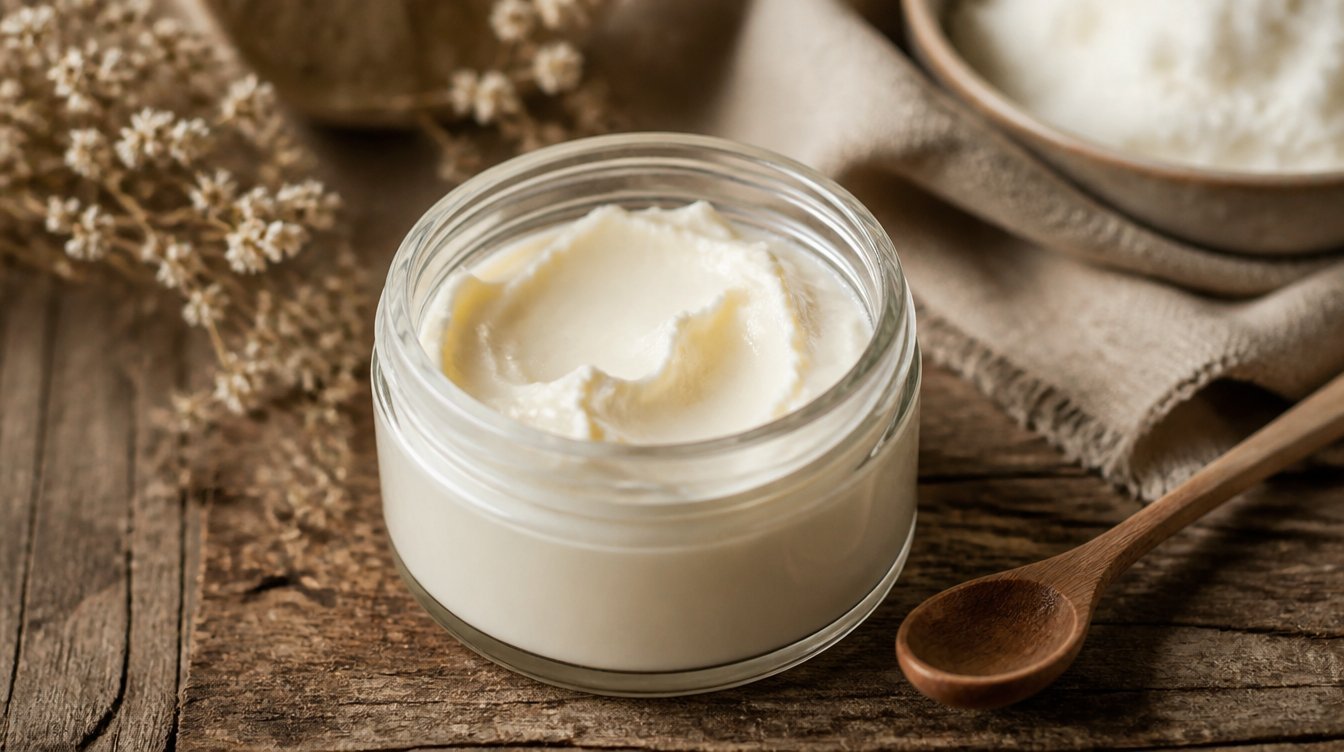
Beef tallow is rendered beef fat, usually taken from the hard fat around the kidneys, which is known as suet. Rendering means melting that fat over low heat, straining out any solids, and letting the clean liquid cool into a firm, waxy, off-white balm. At room temperature, it has a texture somewhere between coconut oil and soft candle wax.
The version people put on their faces is cosmetic-grade tallow, ideally made from grass-fed cattle and rendered slowly to keep the smell mild. It is often whipped with a light carrier oil to make it easier to spread. There is nothing high-tech about it. Humans have used animal fats on their skin for thousands of years, long before the moisturiser aisle existed.
Tallow versus other animal fats
Tallow comes from cattle. Lard, which comes from pigs, is softer at room temperature. Both are triglyceride fats, but tallow is firmer and higher in saturated fat, which is part of why it sets into a stable balm that resists going rancid quickly. For skincare, tallow is the one that took over the conversation.
Why Beef Tallow Went Viral
The trend was part of two larger movements. The first is the pushback against long, chemical-heavy routines and the appeal of a single natural ingredient that does one job well. The second is the wider clean-eating and ancestral-living movement, where people who already cook with tallow started asking why they were not putting it on their skin too.
The short video did the rest. Before-and-after clips of dry, flaky cheeks turning soft and calm are precisely the kind of content that spreads. Add a low price, a two-ingredient label, and a story about going back to how our grandparents cared for skin, and the trend had everything a viral beauty moment needs.
The appeal of a short ingredient list
A jar of tallow balm often lists two or three things: tallow, a carrier oil, and maybe a drop of essential oil. For anyone burnt out on serums with forty ingredients they cannot pronounce, that simplicity is the selling point, not a side note.
The Claims People Make for Beef Tallow
The marketing around tallow leans on a handful of repeated claims. It’s worth listing them plainly before weighing them, as the gap between claim and evidence is where most confusion lives.
- Its fatty acid profile is close to the oils human skin naturally produces
- It is deeply moisturizing and seals water into the skin
- It supports and repairs a damaged skin barrier
- It carries fat-soluble vitamins like A, D, E, and K
- It is a natural, minimally processed alternative to synthetic creams
Some of these hold up better than others. The honest picture is that tallow is a genuinely good occlusive moisturiser for the right skin, but it is wrapped in a lot of claims that outrun what anyone has actually measured.
What the Evidence Actually Supports
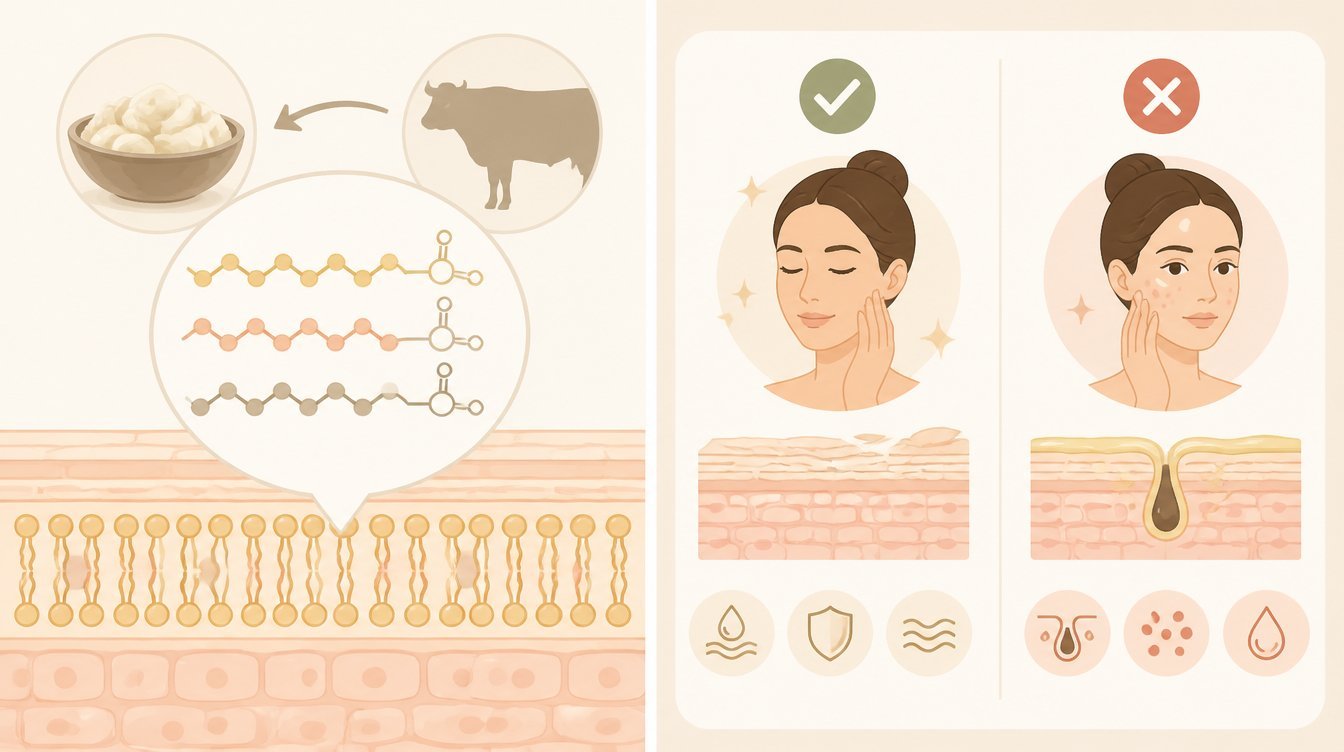
Start with what is solid. Tallow is a fat, and fats sit on top of the skin and slow water loss. This is what we mean by an occlusive moisturiser, and tallow does it well. If your skin is dry and losing water through a weakened surface, a layer of tallow will trap moisture, and the skin will feel softer. This part is not controversial.
The fatty acids in tallow, mainly oleic, palmitic, and stearic acid, do appear in human sebum and in the skin’s own lipid layer. So the claim that tallow contains fats similar to skin is partly true. The leap occurs when this is stretched into tallow, which is uniquely absorbable or a perfect match, a claim that no study has substantiated.
Where the science thins out
Published clinical research on beef tallow as a facial skincare product is scarce. Most of the confident claims are extrapolated from what we know about fats and occlusion in general, or from personal testimony. That does not make tallow useless. The strongest claims, such as barrier repair or delivering meaningful vitamins through skin, lack direct evidence and should be considered marketing rather than fact.
The vitamin claim, examined
Grass-fed tallow does contain small amounts of fat-soluble vitamins. Whether those survive rendering and whether the skin absorbs them in any useful quantity from a topical fat is not established. Treat the vitamin angle as a nice-to-have footnote, not as a reason to choose tallow over a proven moisturiser.
The Comedogenic Concern
This is the single most important caveat, and it is where a lot of the negative experiences come from. ‘Comedogenic’ means pore-clogging. Tallow is high in oleic acid and is a heavy, occlusive fat, which is precisely the profile most likely to trap dead skin and oil inside pores and trigger breakouts on skin that is already oily or acne-prone.
People with dry skin often love tallow because that same heaviness is what their skin was missing. People with oily or combination skin, or anyone who breaks out easily, are the ones most likely to end up with congestion, whiteheads, or full breakouts after a week or two of use.
Why reactions are so split
The wildly different reviews are not contradictions. They reflect different skin types using the same product. Tallow is close to ideal for very dry skin and close to a worst-case scenario for oily, acne-prone skin. Knowing which camp you fall into predicts your result better than any review does.
How Beef Tallow Compares to Common Moisturizers
Tallow does not exist in a vacuum. It competes with plant oils, standard creams, and barrier-focused formulas, and each has clear trade-offs. The table below lines them up on the points that actually decide whether a moisturiser is right for you.
| Option | Texture and feel | Best for | Main drawback |
|---|---|---|---|
| Beef tallow | Heavy, occlusive, waxy balm | Very dry, resilient skin | Can clog pores, has a smell, animal-derived |
| Plant oils (jojoba, squalane) | Lighter, faster to absorb | Normal to combination skin | Less occlusive, some oxidize faster |
| Standard cream moisturizer | Blended water and oil spread easily | Most skin types | Longer ingredient list, added preservatives |
| Barrier cream (ceramides) | Medium, cushiony | Sensitive, reactive skin | Costs more and is less occlusive than tallow |
Tallow wins on raw occlusive power and simplicity. It has lower absorbability and cosmetic elegance, and it carries a higher risk for oily skin. Jojoba and squalane are the plant oils people usually reach for when they want a lighter feel without the pore-clogging worry.
Who Might Actually Benefit
The best candidate for beef tallow is someone with genuinely dry, tight, flaky skin that tolerates rich products well and does not break out easily. On that skin, tallow can be a cheap, effective overnight balm or a barrier layer over a lighter moisturiser.
People in cold, dry climates, those with weathered hands, and anyone whose skin drinks up heavy creams without complaint tend to report the best results. If your usual problem is that nothing feels moisturising enough, tallow is worth a careful trial.
Better as a targeted balm
Even people with normal skin can use tallow smartly by treating it as a spot balm for dry patches, chapped lips, elbows, or cracked heels rather than an all-over face cream. Used that way, the occlusive strength is a feature, and the pore-clogging risk barely matters.
Who Should Avoid Beef Tallow
Oily and acne-prone skin sits at the top of the avoid list. The heavy, occlusive nature of tallow is the exact thing that tends to worsen congestion and breakouts on skin that already produces plenty of its own oil.
In addition to skin type, tallow is an animal product, so it is not suitable for vegans and anyone avoiding animal-derived ingredients for personal or religious reasons. People with known sensitivities to animal fats, as well as anyone with active, inflamed acne, will also benefit from lighter, non-comedogenic options.
A note on very sensitive skin
Sensitive skin is a maybe, not a hard no. Pure, well-rendered tallow with no fragrance can be gentle, but tallow balms scented with essential oils are a common source of irritation. If your skin reacts easily, choose the plainest formula you can find and patch test carefully.
How People Use Beef Tallow
Most users warm a small amount, about the size of a rice grain to a pea, for the whole face, between clean fingers until it melts, then press it onto slightly damp skin at night. Applying over-damp skin helps because the tallow seals in the water already sitting on the surface.
A little goes a long way. The most common beginner mistake is using too much, which leaves a greasy film, transfers onto pillowcases, and can overwhelm the skin. Start with less than you think you need and add only if it is not enough.
Nighttime versus daytime
Tallow is best as a night treatment because of its weight and slight shine. If you want to use it during the day, layer a tiny amount as the last step over a lighter moisturiser, and remember it offers no sun protection, so sunscreen still comes first in the morning.
Patch Testing Before You Commit
Because reactions vary so much, a patch test is not optional with tallow. It is the step that separates a smart trial from a two-week breakout you could have avoided.
- Apply a small amount to your inner forearm or behind the ear for three to four nights in a row.
- Watch for redness, itching, or small bumps before it ever touches your face.
- If your forearm stays clear, move to a small area on the jaw or cheek for another week.
- Only expand to the full face once that test area stays calm and breakout-free.
This slow rollout matters more with tallow than with a gentle cream, precisely because the pore-clogging risk shows up over days, not minutes.
Sourcing and Quality
Not all tallow is equal. Grass-fed, cosmetic-grade tallow that has been slowly and cleanly rendered is the version worth using on your face. It tends to have a milder smell, a smoother texture, and fewer impurities than cheap cooking-grade fat.
Seek products that are whipped or blended with a light carrier oil for spreadability, and be cautious with heavily fragranced balms if your skin is reactive. If you render your own at home, filter it well and store it sealed and cool to prevent rancidity.
Shelf life and storage
Tallow is fairly stable due to its high saturated fat content, but it is still a fat and can eventually go rancid. Keep it in a sealed jar away from heat and light, and trust your nose. A sour or off smell means it is time to toss it, not smear it on your face.
The Smell Factor
Even good tallow has a faint animal scent. Well-rendered grass-fed tallow smells mild and slightly nutty or beefy, while poorly made batches can smell strongly of cooked meat. Whipping with a carrier oil softens it, and a drop of essential oil can mask it, though that reintroduces an irritation risk for sensitive skin.
The smell usually fades within a few minutes of application as it absorbs, but it is the number one reason people abandon tallow even when it works for their skin. If you are scent-sensitive, sample a small jar before committing to a big one.
Common Mistakes to Avoid
Most tallow disappointments trace back to a few avoidable errors rather than the ingredient itself. Getting these right decides whether tallow helps or backfires.
- Using it on oily, acne-prone skin and blaming the product when pores clog
- Applying too much and ending up with a greasy, transferring film
- Skipping the patch test and going straight to full-face use
- Buying cheap cooking-grade fat instead of clean cosmetic-grade tallow
- Expecting it to replace sunscreen, active treatments, or a full routine
Treated as one tool among several, a rich occlusive for dry skin and dry patches, tallow behaves predictably. Treated as a miracle cure-all for every skin type, it disappoints exactly the people it was never going to suit.
The Balanced Verdict
Beef tallow is neither the natural miracle its loudest fans claim nor the dangerous mistake its critics warn about. It is a heavy, effective occlusive moisturiser that genuinely helps very dry skin and reliably causes problems for oily, acne-prone skin. Its fatty acids overlap with human sebum, which is rather intriguing, but the bigger claims about barrier repair and vitamin delivery run well ahead of any real evidence. Match it to the right skin, patch test it properly, and use it as a targeted balm, and it earns a place. Expect it to do everything for everyone, and it will let you down.
Frequently Asked Questions About Beef Tallow Skincare
Is beef tallow good for your skin?
Beef tallow for skin can be genuinely beneficial for one specific group: people with very dry, flaky, resilient skin that tolerates rich products. As a heavy occlusive, it traps water and softens dryness that lighter creams miss. It is far less suitable for oily or acne-prone skin, where its weight tends to clog pores and trigger breakouts. So the honest answer depends on your skin type. It is a solid moisturiser for dry skin and a poor choice for oily skin, not a universal miracle for everyone.
Does beef tallow clog pores?
It can, and this is the main reason to be cautious. Tallow is high in oleic acid and is a heavy, occlusive fat, exactly the profile most likely to trap oil and dead skin inside pores. On oily or acne-prone skin, that often shows up as whiteheads, congestion, or breakouts after a week or two. On very dry skin, the same heaviness is usually a benefit rather than a problem. Patch testing over several days before full-face use is the best way to see which way your skin will go.
How do you use beef tallow on your face?
Warm a very small amount, about the size of a rice grain to a pea, between clean fingers until it melts, then press it onto slightly damp skin at night. Applying over damp skin helps seal in the water already on the surface. Use it as a night treatment because of its weight and slight shine, and start with less than you think you need since too much leaves a greasy film. Always patch test first, and never treat it as a replacement for daytime sunscreen.
Is grass-fed beef tallow better for skincare?
Grass-fed, cosmetic-grade tallow is generally the better pick for the face. It tends to have a milder smell, a smoother texture, and fewer impurities than cheap cooking-grade fat, and it carries slightly more fat-soluble vitamins. That said, we still don’t know how much those vitamins do through the skin, so the main advantages are practical: better feel and less odour. Look for tallow that has been slowly and cleanly rendered, ideally whipped with a light carrier oil so it spreads easily on the skin.
Can beef tallow help with acne?
For most acne-prone skin, tallow is more likely to worsen breakouts than help them. Its heavy, occlusive nature tends to clog pores on skin that already produces plenty of oil, which is the opposite of what acne needs. Some people with dry, occasionally breaking-out skin tolerate it, but active, inflamed acne is a clear reason to avoid it. Lighter, non-comedogenic options are a safer choice if breakouts are your main concern. If you still want to try tallow, patch test on the jaw first and stop as soon as you notice any congestion.
What does beef tallow smell like?
Even good tallow has a faint animal scent. Well-rendered grass-fed tallow smells mild and slightly nutty or beefy, while poorly made batches can smell strongly of cooked meat. Whipping it with a carrier oil softens the odour, and a drop of essential oil can mask it, though that adds an irritation risk for sensitive skin. The smell usually fades within a few minutes as the balm absorbs, but it is the top reason people abandon tallow, so sample a small jar before buying a large one.
RELATED ARTICLES:
- Best Foods for Skin Health: What to Eat for a Clear Complexion
- Glowing Skin: The Habits and Ingredients That Actually Work
- Slow Beauty: The Minimalist Skincare Routine for 2026
About The Author

COMMENTS