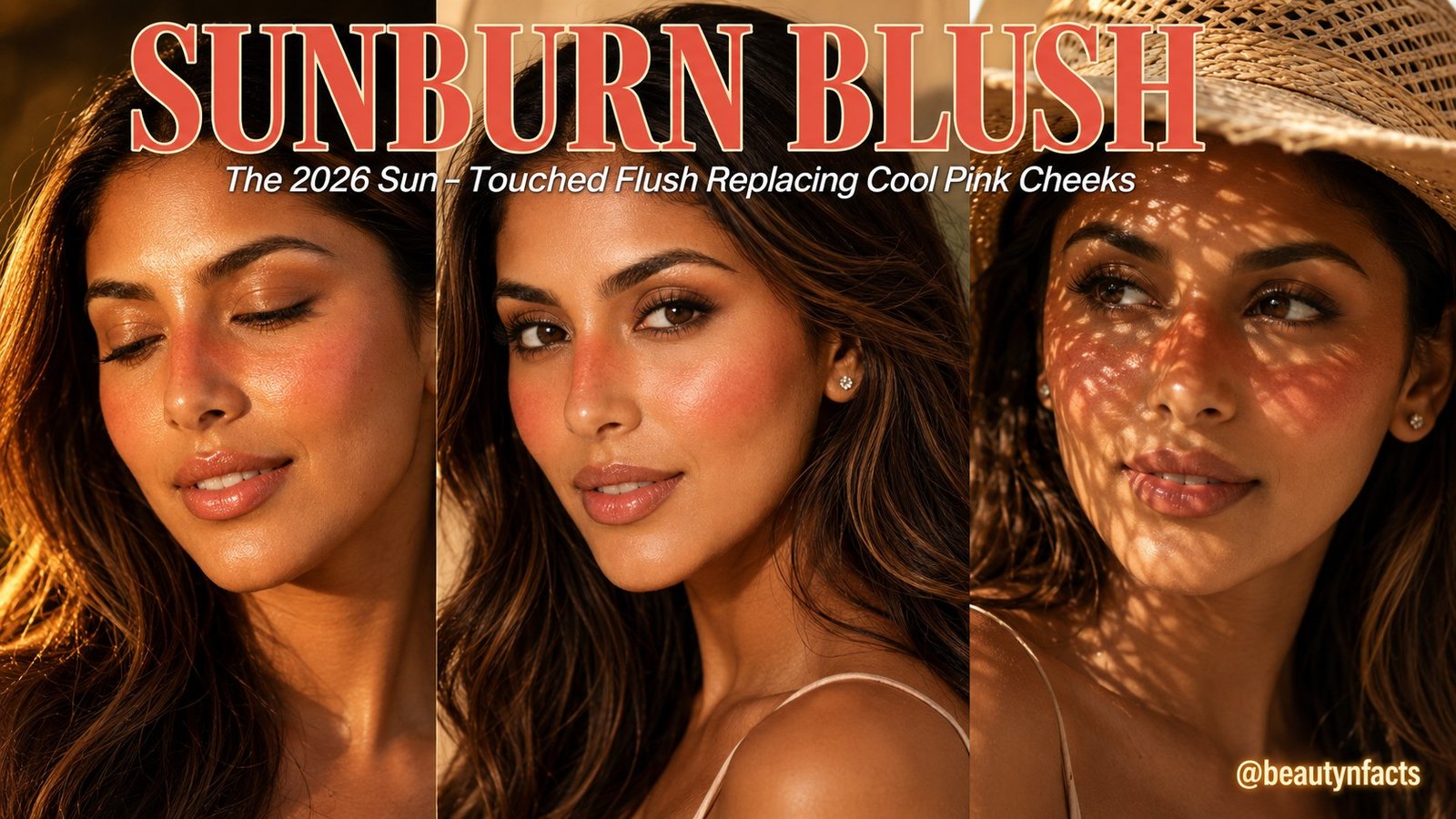
Sunburn blush is the warm, sun-touched flush that has officially knocked cool pink cheeks off the 2026 makeup map. Instead of two neat circles on the
Sunburn blush is the warm, sun-touched flush that has officially knocked cool pink cheeks off the 2026 makeup map. Instead of two neat circles on the apples, this placement sweeps diagonally across the nose bridge and up onto the upper cheekbones, like the path real sun catches first on your face after an afternoon at the beach. Hailey Bieber, Sofia Richie, and Sydney Sweeney all wore it through spring; TikTok tutorials hit nine-figure view counts in March; and Sephora’s blush category swung hard toward terracotta and coral within a single quarter. This guide covers what the look actually is, who it flatters, how to do it at home, the salon version, what to avoid, and six of the questions readers keep asking.
This guide was reviewed by the BeautynFacts editorial team. Last updated: June 2026.
What Sunburn Blush Actually Is (and Why It’s Trending in 2026)
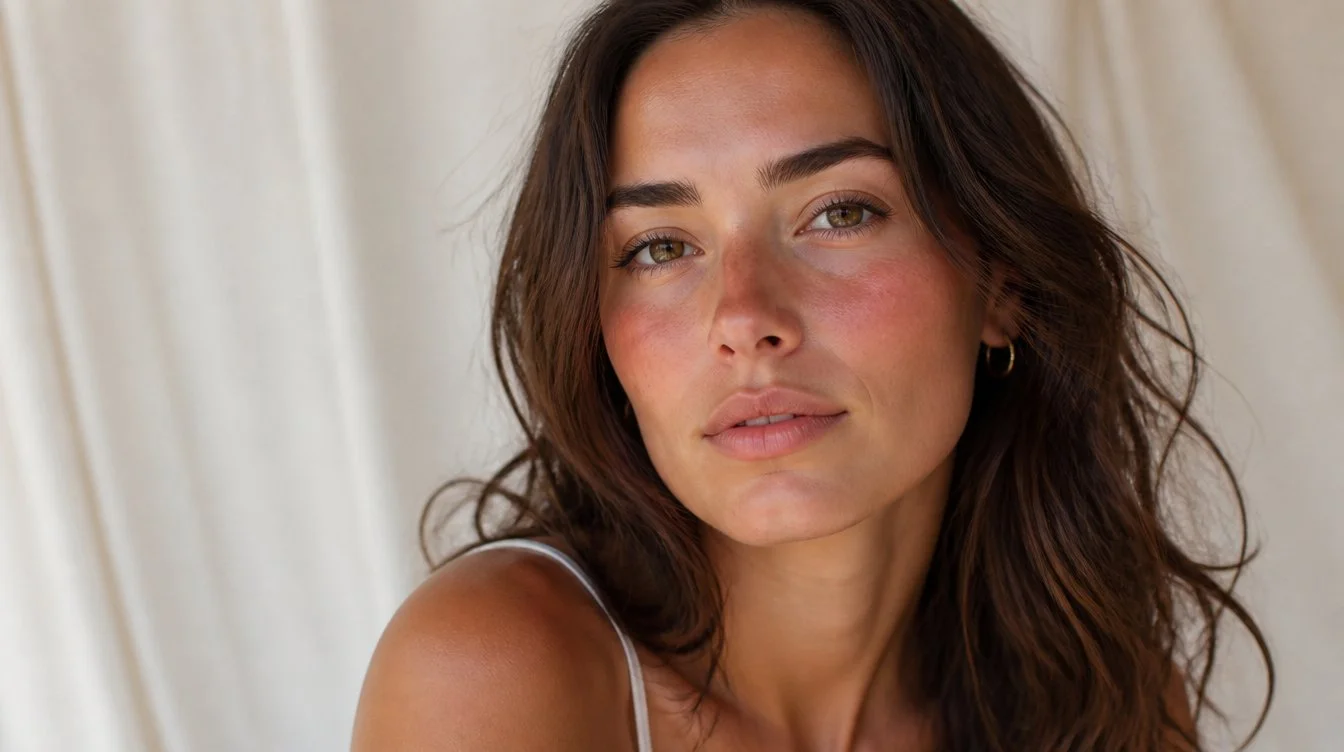
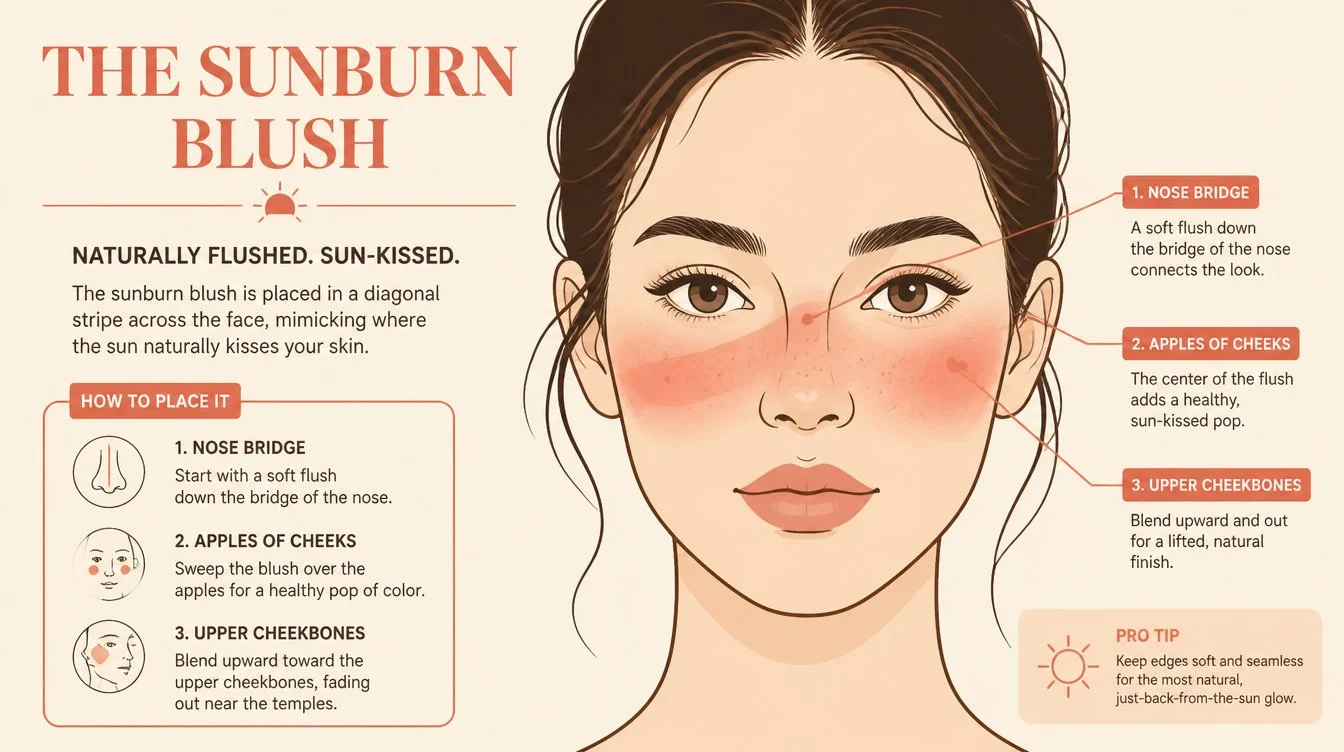
Sunburn blush is a placement technique more than a product. You sweep a warm coral, terracotta, or red-orange blush diagonally across the apples of the cheeks, over the bridge of the nose, and up onto the upper cheekbones, tracing the natural T-shape where sunlight hits first. The colour is warmer than the cool millennial pink that dominated 2018 to 2023, and the placement is far higher and longer than the classic apple-of-the-cheek pop most of us were taught.
The look reads as a real day-on-the-beach flush, not a polished evening blush. That casual, just-came-back-from-Malibu quality is exactly why it caught on. After three years of clean-girl restraint and barely-there cheeks, makeup wanted warmth again, and sunburn blush delivers it without crossing into 1980s circus rouge. It also reads beautifully on camera, which is a big part of why every front-facing creator picked it up at once.
The Numbers Behind the Sunburn Blush Boom
Search interest for “sunburn blush” rose roughly fivefold between January and April 2026, with the steepest climb in the two weeks after Hailey Bieber posted a no-filter selfie wearing the look in late February. Pinterest saw saves for “sun-kissed blush placement” cross into the top ten beauty queries by March, and TikTok tagged variations of the trend (sunburn cheeks, beach flush, and holiday blush) accumulated north of a billion combined views by late spring.
Beauty retailers responded fast. Coral and terracotta shades that had been quietly discontinued at major brands suddenly reappeared in limited editions. Sephora reported that warm-toned blushes outsold cool pinks for the first time in five years during Q1 2026. Salon menus added “sun-kissed makeup” as a standalone service in major cities, and bridal makeup artists fielded a flood of requests for sunburn-finish bridal looks throughout spring wedding season.
Which Sunburn Blush Flatters (and Who Should Adapt the Look)
The short answer: almost everyone, but the shade has to match the skin. Sunburn blush flatters warm and neutral undertones immediately because the coral and terracotta family lives in the same temperature range as warm undertones. If your wrist veins read olive or green, or your jewellery looks better in gold than silver, the standard coral version of this look will sit on your face like it grew there.
Cool undertones can absolutely wear sunburn-blush shades, but the shade choices matter. Skip pure orange and reach for a coral with a slight pink lean or a warm rose that still photographs as sun-kissed but does not fight your natural temperature. On medium to deep skin, terracotta, brick, and warm red-orange shades melt into the skin and read as a genuine flush rather than a chalky overlay. On the deepest skin tones, true brick and burgundy applied with a heavier hand give the same sun-warmed effect that a sheer coral gives on lighter skin.
Face shape matters less than you would think. The diagonal placement actually flatters long faces (it adds horizontal width across the centre of the face) and round faces (the upward sweep onto the cheekbones lifts and lengthens). The one group that should adapt: anyone with active rosacea or persistent cheek redness. For those readers, swap the cheek-to-cheek stripe for a softer dusting only on the apples and bridge so the underlying redness is not amplified.
How to Get Sunburn Blush at Home: Step by Step
Sunburn blush takes about three minutes once you know the placement. Here is the sequence that holds up under daylight and on camera.
- Prep with a dewy base. Skin tint or a sheer foundation works better than full-coverage anything. The look depends on a little of your real skin showing through, so resist piling product on the cheeks first.
- Mark the apples. Smile gently and tap a cream or liquid blush onto the highest point of the apple on each side. Use your ring finger, not a brush, for this first deposit so the pigment grabs the skin.
- Connect across the nose. Drag the same product lightly across the bridge of your nose to link the two cheeks. Keep the line soft and slightly uneven, not a perfect stripe.
- Carry it up the cheekbone. From the apple, sweep the product diagonally upward toward the temple, stopping at the top of the cheekbone where it meets the eye socket. This upward angle is what separates sunburn blush from the older apple-only application.
- Layer powder if needed. If the cream finish looks too wet, press a matching powder blush on top with a dense, fluffy brush. Only do this on the apples and nose bridge, not the cheekbone, so the highest planes keep their natural sheen.
- Add a touch under the eye. A whisper of the same shade tapped just under the lash line (not in a full underline) sells the burnt-by-the-sun effect. Stay sheer here.
- Finish glossy, not powdered. Skip setting powder on the cheeks entirely. A satin or dewy setting spray is the right finish for a flush that should look real.
The Salon and Pro Version
A professional makeup artist will build sunburn blush in two or three sheer layers rather than in one heavy pass. The first layer is usually a liquid tint pressed in with fingers or a damp sponge, the second a cream stick worked into the same shape, and the third a soft powder pressed on top only where the sun would actually intensify (the very tops of the cheekbones and the bridge of the nose). That layering is what gives editorial sunburn blush its depth and prevents it from sliding off through a long day.
For a full sun-kissed makeup service in a major city, expect to pay roughly 2,500 to 6,000 INR in India or 80 to 200 USD in the US, depending on whether it is part of a fuller look or a quick targeted service. Bridal-grade sunburn blush, which has to survive both tears and a reception, sits in the 8,000 INR and 250 USD+ range because of the prep and the long-wear products involved.
Common Sunburn Blush Variations to Try in 2026
The base technique branches into a handful of looks worth knowing. Each one tweaks either the shade temperature or the placement angle.
Beach Flush. The sheerest version, designed to look like a half-day of sun rather than a full afternoon. Use one thin layer of cream blush in coral, stop short of the cheekbone, and add a faint sweep across the forehead. Best on no-makeup makeup days.
Sunset Blush. A warmer evening version using a deeper terracotta or brick shade, with the diagonal sweep carried further toward the temple. Pair with a glossy nude lip and bronzed eyelid for a 1970s-leaning take.
Tomato Cheeks. The most saturated cousin, popular with younger creators. A true red-orange was applied heavier on the apples and nose bridge, almost cartoonish in saturation but still placed diagonally. Works best with bare eyes and clean brows.
Freckled Sunburn. Sunburn blush layered over hand-drawn faux freckles across the same diagonal stripe. The freckles read as sun damage in the best possible way and double down on the outdoorsy story.
Monochrome Sunburn. The full look in one shade family, where the same coral or terracotta turns up on the eyes and lips at lighter dilutions. This version is the easiest to repeat day after day because it removes shade-matching from the equation.
What to Avoid: Mistakes That Kill the Look
Sunburn blush is forgiving, but a few specific errors push it from sun-kissed into sunburnt-and-peeling territory. Avoid these, and the look stays expensive.
Mistake: Using a cool pink shade. A blue-pink blush on the same diagonal placement just looks like irritation. Fix: Stay in the coral, peach, terracotta, brick, and warm red-orange families. If your only blush is cool, warm it with a coral lip oil pressed on top.
Mistake: A perfect, sharp stripe. A crisp line across the nose reads as bad clown makeup, not a real flush. Fix: Blur the edges with a clean finger or a fluffy brush, especially where the blush crosses the nose bridge and where it ends at the temple.
Mistake: Too much product at once. Cream blushes are pigment dense. One pump or one swipe per cheek is plenty for a first layer. Fix: build in thin layers, set with a satin spray between coats if needed.
Mistake: Heavy contour underneath. Sunburn blush dies under a dramatic contour because the warmth fights the cool shadow. Fix: skip powder contour for this look. If you need structure, use a soft bronzer in the same warm family as your blush, placed at the temples and along the jaw, not under the cheekbone.
Mistake: Powdery setting on top. A heavy translucent powder dulls the warmth and erases the sun-touched finish. Fix: set only the T-zone and leave the cheeks alone. A light mist of dewy setting spray locks the look in.
Mistake: Skipping the under-eye whisper. Without a hint of warmth under the lash line, the placement reads as a stripe rather than a flush. Fix: tap a tiny amount of the same shade right under the inner two-thirds of the lower lash line. Stop well short of a full under-line blush.
Products That Actually Work for Sunburn Blush
The look does not need a specific brand, but it does need specific formulas. Here is what to look for on the label rather than which name to chase.
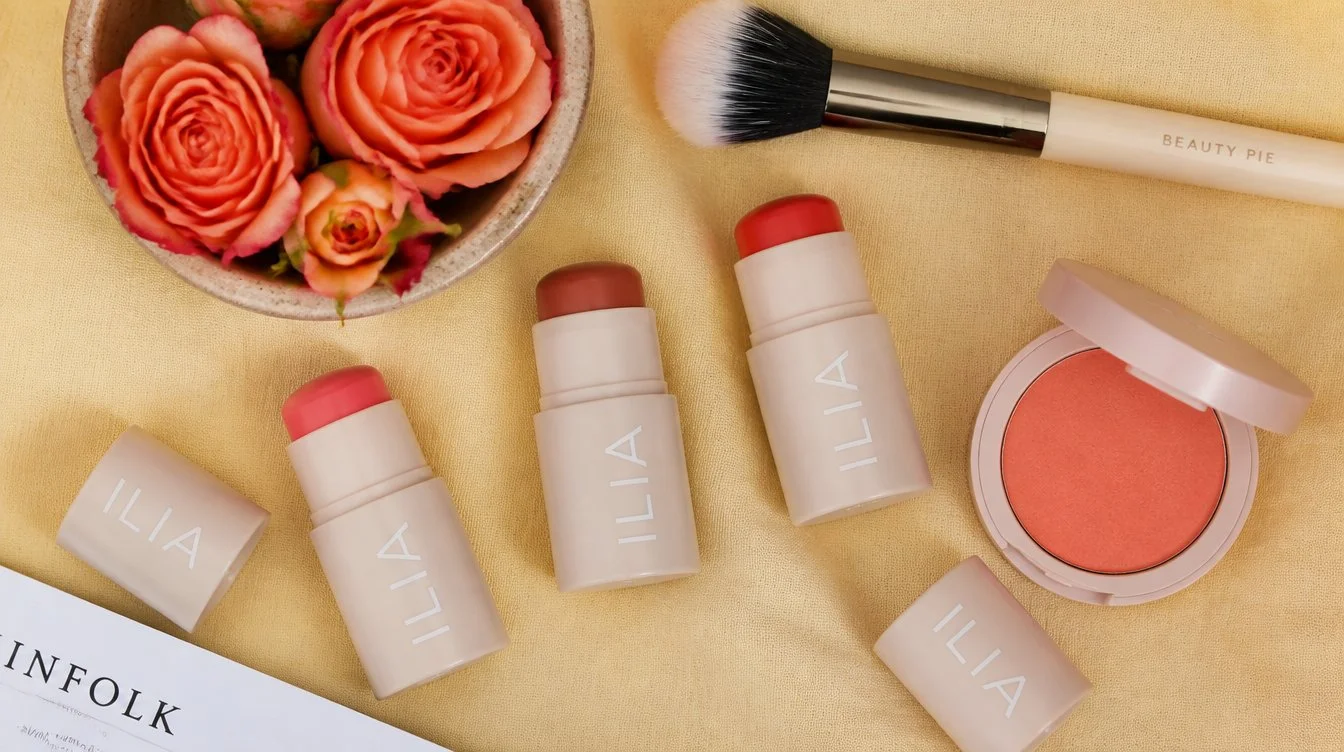
Cream blush sticks. The fastest route to the look. Look for words like “creamy”, “buildable”, or “balm” on the packaging and shades described as coral, terracotta, brick, papaya, or warm peach. Avoid anything labelled “berry”, “rose”, or “plum” for this specific look.
Liquid tints. A water-based or gel cheek tint gives the most natural finish because it stains the skin slightly rather than sitting on top. Look for “tint”, “ink”, or “stain” in the product name and apply with fingers or a damp sponge, never a dry brush.
Powder blushes for layering. If you want longevity, a finely milled powder blush in the same warm family pressed on top of a cream base locks the colour for hours. Avoid metallic or heavily shimmery powders on the cheeks; reserve any shimmer for the very tops of the cheekbones.
Brushes. A small duo-fibre or stippling brush is the right tool for layering powder over cream without lifting the base. A fluffy diffuser brush is useful for blurring the edges. Avoid dense, flat blush brushes for this placement because they deposit too much pigment in one spot.
Setting spray. A dewy or satin setting spray (not matte) keeps the finish believable. Look for “dewy”, “glow”, or “satin” on the bottle. Skip anything that promises a matte or filter finish for this particular look.
Sunburn Blush vs Underline Blush: How to Choose
The two trends are often confused but solve different problems. Underline blush sits in a low band directly under the eye, almost like soft eyeshadow placed below the lash line. It reads as romantic, slightly tired (in a good way), and pairs well with a smoky eye. Sunburn blush sits higher on the apples and runs diagonally up to the temple and across the nose bridge. It reads as healthy and outdoorsy and pairs best with bare or soft eyes.
If your makeup story is “I spent the weekend outside and forgot to reapply sunscreen on my nose”, sunburn-blush is the answer. If your story is “I stayed up too late at a candlelit dinner”, underlining “blush” is the better choice. The shade families overlap (both can use coral and terracotta), but the underlying blush also accepts pinks and mauves that would feel wrong in the sunburn placement. You can also combine them: a heavy sunburn placement on the cheeks with a whisper of the same shade as a subtle underline ties the look together.
How Long the Sunburn Blush Trend Will Stay Relevant
Sunburn blush is not a six-week fad. The shift toward warm, sun-touched makeup mirrors a longer cycle that started with bronzed skin coming back in late 2024 and accelerated through 2025. Coral and terracotta blushes will stay in heavy rotation through at least the end of 2026, and the diagonal placement specifically will likely remain dominant through summer 2027. Past comparable cheek placements, like the under-eye draping blush of 2022 or the high cheekbone pop of 2018, both held the top spot for roughly eighteen to twenty-four months before softening into a more general technique.
Expect the saturated tomato-cheek version to fade first, probably by autumn 2026, because the most saturated take always burns brightest and shortest. The sheerer beach-flush and sunset variations will linger longer because they sit closer to a universally flattering placement and not just a trend. By 2028, sunburn blush will probably stop being a named trend and simply become how most people apply blush, which is the quiet measure of a technique that actually worked.
Frequently Asked Questions About Sunburn Blush
What is sunburn blush, and where do I apply it?
Sunburn blush is a warm-toned blush placed diagonally across the face to mimic the natural flush you get after a day in the sun. You apply it across the apples of the cheeks, over the bridge of the nose to link the two sides, and up along the upper cheekbones toward the temples. The shape traces the T-zone where real sunlight hits first. The shade is warm coral, terracotta, or red-orange rather than cool pink, and the finish should be dewy or satin, not powdery, so it reads as a genuine flush.
What blush shade works best for the sunburn look?
Warm shades only: coral, peach, terracotta, brick, papaya, and warm red-orange are the core family. On fair to light skin, sheer coral and peach read most natural. On medium skin, a deeper coral or terracotta sits beautifully. On deep skin, brick, burnt sienna, and warm berry shades give the same sun-warmed effect. Avoid cool pinks, mauves, plums, and any shade described as berry or rose, because those temperatures fight the outdoorsy story the placement is trying to tell.
Does sunburn blush work on deep skin tones?
Absolutely, and arguably better than on lighter skin once the shade is right. The trick is reaching for genuinely pigmented warm shades rather than sheer pastels that disappear. Brick, burnt sienna, warm burgundy, and deep terracotta read as a real flush on deep skin and photograph as warmth rather than ash. Apply with a slightly heavier hand than you would on lighter skin, layer cream and powder for staying power, and skip any cool-toned bronzer underneath. A warm-toned highlighter on the very tops of the cheekbones finishes the look.
How is sunburn blush different from regular blush placement?
Classic blush sits in two contained circles on the apples of the cheeks. Sunburn blush ignores those boundaries and sweeps diagonally across a much larger area, linking the two cheeks across the nose bridge and carrying the colour up onto the upper cheekbones. The shape is roughly a soft T or a wide diagonal stripe rather than two dots. The shade family also skews warmer, and the finish is intentionally a little uneven and blurred at the edges so it reads as a real flush rather than a deliberately placed circle of pigment.
Can I wear sunburn-blush every day?
Yes, with one adjustment. The fully saturated version, including the tomato-cheek variation, is too much for the office or daytime errands. For everyday wear, use the beach-flush variation: one thin layer of cream blush in a sheer coral, stopped short of the temple and kept light across the nose bridge. That dialled-back version reads as healthy skin, photographs well in office lighting, and pairs with almost any other makeup choice. Save the saturated terracotta and red-orange versions for evenings, events, or any setting where you want the look to actually announce itself.
What products are best for sunburn blush, cream, powder, or liquid?
Cream and liquid blushes win for this look because they melt into the skin and leave a dewy finish, which is what makes the flush look real. Powder blush works as a second layer on top of cream for longevity, but powder alone tends to read as deliberately applied rather than naturally flushed. A liquid or gel tint is the most foolproof starting point because it stains the skin slightly and blends without effort. If you only own powder blush, mix one pump of a sheer liquid highlighter with it on the back of your hand before applying.
Related Articles
- Peach Makeup: The Warm Soft Look That Flatters Everyone
- Boyfriend Blush: The Soft Imperfect Cheek Trend
- Hailey Bieber Date Night Makeup: Recreate the Glow
About The Author

COMMENTS