






Rejuran skincare is a polynucleotide-based regenerative treatment that combines PDRN and exosomes, and it is quickly moving from Seoul aesthetic clini
Rejuran skincare is a polynucleotide-based regenerative treatment that combines PDRN and exosomes, and it is quickly moving from Seoul aesthetic clinics into mainstream dermatology because it does something neither of those alternatives does as well: it repairs and rebuilds skin quality from the inside without adding volume or using a fully synthetic ingredient. If you have heard about salmon DNA facials, glass skin injections, or the regenerative skin booster trend, you have heard about Rejuran. This guide covers what Rejuran actually is, how it compares to PDRN and exosomes, who it suits, what a session feels like, and the questions readers are asking right now.
Reviewed by the BeautynFacts editorial team. Last updated: June 2026.

What is Rejuran Skincare? Actually Is
Rejuran is a clinic-grade skin booster built around polynucleotides, which are short chains of DNA fragments purified from the milt of wild Pacific salmon. It was developed by the Korean biotech company PharmaResearch and launched in South Korea in 2014 as a medical-grade injectable, then expanded into a topical line for clinic aftercare and home use. The ingredient helps fix damaged skin from the dermal layer, supports fibroblast activity, calms inflammation, and gradually improves elasticity over a series of treatments. It is one of the few aesthetic treatments that targets skin quality directly rather than adding volume or relaxing muscle.
The brand name itself has become a category. When most people say Rejuran, they mean the injectable skin booster, but the lineup includes Rejuran Healer (the original), Rejuran HB (hydration-focused), Rejuran S (for scarring and texture), and Rejuran I (for the under-eye area). Each variant uses the same polynucleotide platform, but with a different molecular weight or supporting ingredient that is adjusted for a specific concern.
How Rejuran Works on the Skin
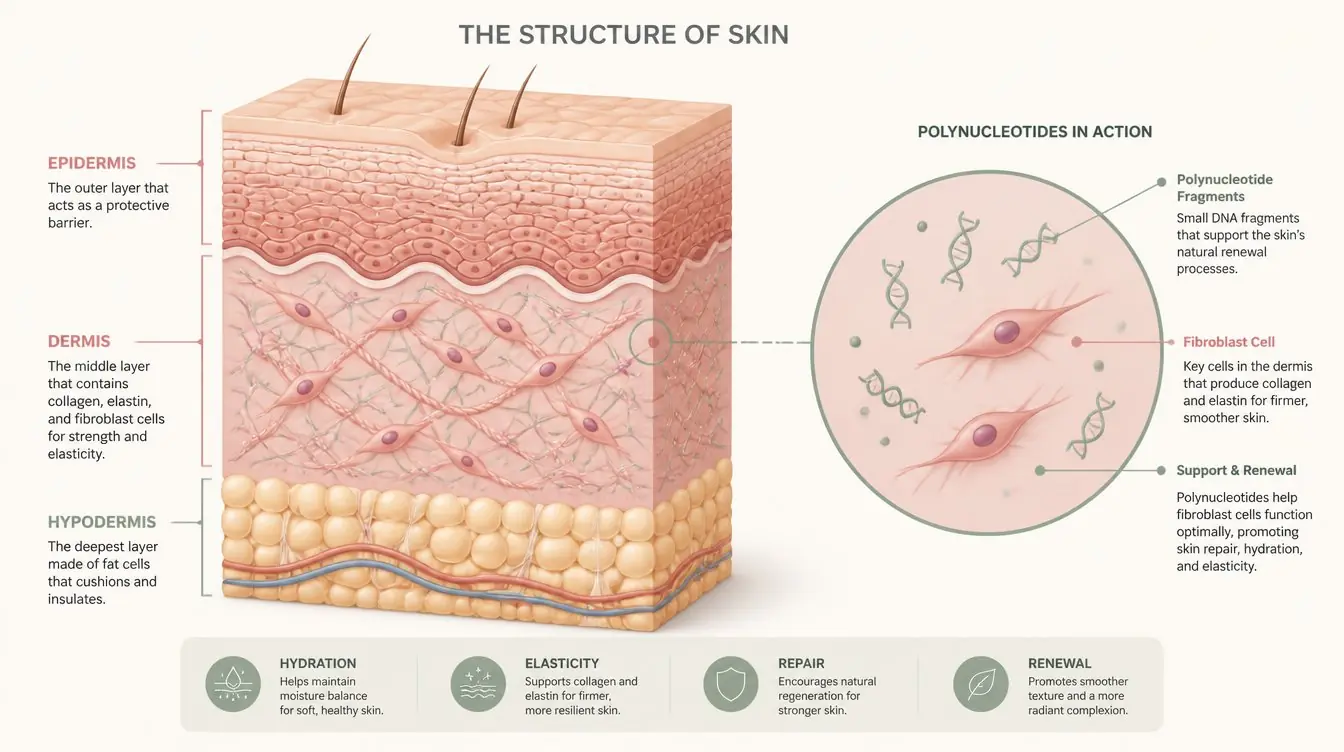
The polynucleotides in Rejuran act as biological signalling molecules. Once injected into the upper dermis, they recruit fibroblasts (the collagen-producing cells), modulate inflammatory messengers, and improve microcirculation in the area. The skin responds the way it would to a controlled wound-healing event without the actual wound, which is why the visible result is plumper, smoother, more even-toned skin rather than a single dramatic change.
The mechanism matters because it explains why Rejuran is a series treatment rather than a one-and-done. Each session deposits a fresh dose of signalling molecules; the skin takes about four weeks to translate this signal into a visible quality improvement. A standard course is three sessions spaced two to four weeks apart, with most patients seeing meaningful change by the second session and the cumulative result peaking around eight to twelve weeks after the third.
Rejuran Versus PDRN: What Is Actually Different
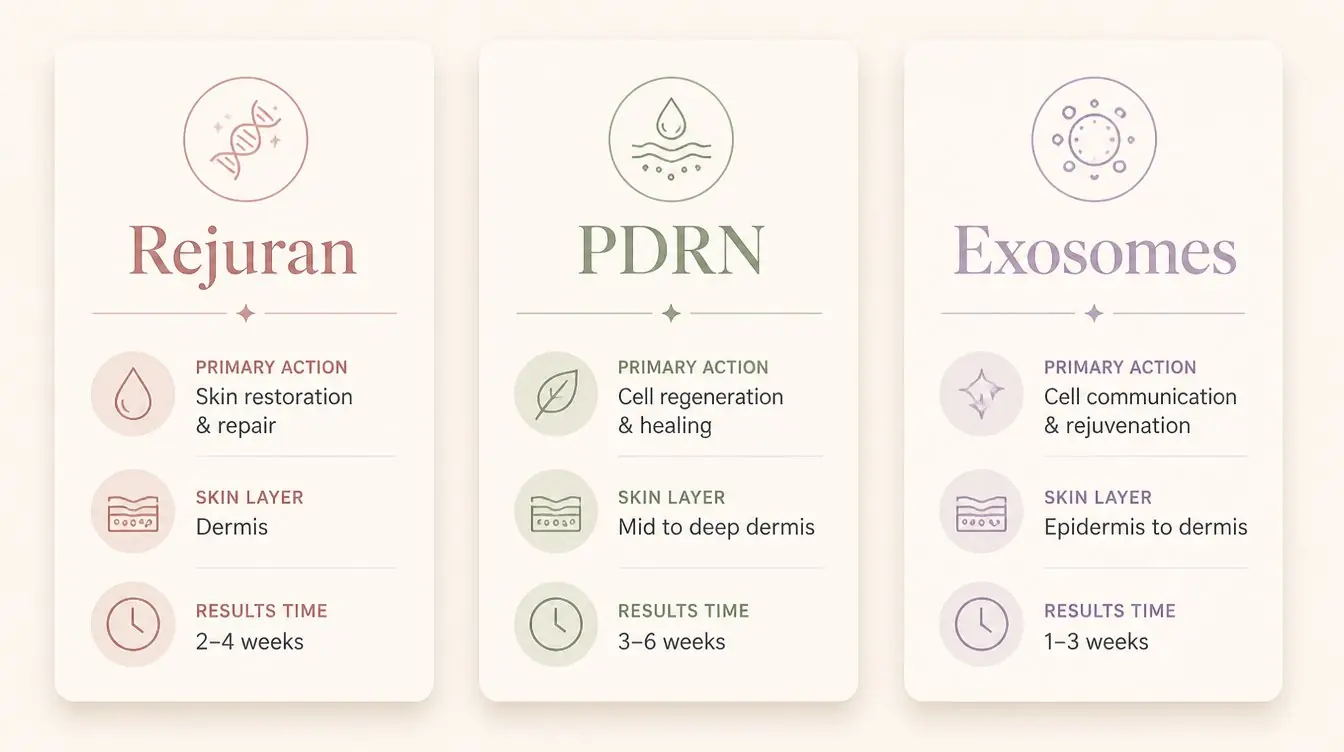
This is the question every reader brings to the topic, and the answer matters because the two terms get used interchangeably in marketing. PDRN (polydeoxyribonucleotide) is a single specific molecule. Polynucleotides (PN), which Rejuran uses, is a broader category that includes PDRN but also longer DNA chains with slightly different properties. The clinical distinction: PDRN molecules are shorter and act more on inflammation control and microvascular repair, while polynucleotides in Rejuran are longer chains that act more on tissue structure and elasticity.
For the patient, this difference translates to slightly different best uses. PDRN serums and injections are often chosen first for redness, post-procedure recovery, and inflammation-driven skin issues. Rejuran is more often chosen for elasticity loss, fine wrinkles, acne scarring, and overall skin quality. The two are not in opposition. Many clinicians use them in sequence or combination, depending on what the patient walks in with.
Rejuran Versus Exosomes
Exosomes are tiny, membrane-bound packets that carry growth factors, signalling proteins, and genetic material between cells. They are the newest entry in the regenerative skincare conversation, and they work at a different level than Rejuran. Where Rejuran sends a structural repair signal, exosomes deliver a complete cocktail of growth factors at once. The trade-off is that exosomes are still earlier in the clinical evidence cycle, and the ingredient quality between brands varies more than it does for polynucleotides.
The practical guidance most dermatologists give: Choose Rejuran when the goal is steady, predictable skin quality improvement over a few months. Choose exosomes when your goal is faster, more dramatic rejuvenation and you are willing to pay a premium. Choose both, sequenced under a doctor’s guidance, when the budget allows and the concern is significant.
What Concerns Rejuran Actually Helps
The published clinical and aesthetic experience points to four areas where Rejuran has the strongest track record. The first is fine lines and early loss of elasticity, particularly around the eyes, cheeks, and lower face. The second is acne scarring, especially the soft, rolling type rather than deep, pitted ice-pick scars. The third is post-inflammatory texture irregularities after acne, sun damage, or aggressive in-clinic procedures. The fourth is hydration and barrier resilience in skin that looks dull, dehydrated, or chronically stressed.
Where Rejuran is not the answer
Rejuran does not relax muscles, so dynamic frown lines and forehead lines respond better to botulinum. It does not add volume, so cheek hollowing and deep folds still call for hyaluronic acid fillers or biostimulators like Sculptra. It does not significantly fade deep pigmentation, so melasma and stubborn dark spots still need targeted topical and light-based protocols. Setting these expectations correctly is the difference between satisfied and underwhelmed Rejuran patients.
Who Is a Good Candidate
The strongest candidates are adults in their late twenties to early fifties who have started to notice early elasticity loss, mild texture irregularities, dullness, or fine acne scarring and who want a long-term skin quality investment rather than a quick fix. Sensitive skin and reactive skin types often respond particularly well because the polynucleotide platform calms rather than provokes the skin. People recovering from aggressive lasers or peels are also excellent candidates, because Rejuran accelerates the rebuilding phase.
The cautious-or-decline group: active infections in the treatment area, autoimmune flares, pregnancy or breastfeeding (not enough safety data), severe salmon or fish allergy, and unrealistic expectations about a single session producing visible change. Anyone on blood thinners should disclose their condition at consultation so the practitioner can adjust technique to minimise bruising.
What a Rejuran Session Looks Like
A standard session runs about thirty to forty-five minutes from arrival to leaving the clinic. After a cleanse and topical numbing cream applied for twenty minutes, the practitioner injects the Rejuran solution in a grid pattern across the treatment area using fine needles. The injection feels like tiny stings; most patients describe it as more uncomfortable than painful. The depth is shallow, in the upper dermis, which is part of why downtime is limited.
What recovery looks like
The immediate appearance is dozens of small bumps at each injection point. These usually settle within one to four hours, and sometimes up to twenty-four hours on more sensitive skin. Mild redness lasts a day. Pinpoint bruising is possible, especially around the cheeks and under the eyes. Most patients return to work the next day with light makeup. Strenuous exercise, alcohol, and hot baths should be skipped for the first forty-eight hours to provide the skin a calm window to start the repair signal.
Cost and Session Planning
Rejuran pricing varies widely by market. In South Korea, where the treatment originates, a single session runs roughly equivalent to a hundred to two hundred US dollars. In India, expect twelve to twenty-five thousand rupees per session in major cities, depending on the clinic and the variant used. In the United States and the United Kingdom, where the treatment is newer and supply chains are tighter, sessions can run three to six hundred US dollars or two hundred to five hundred pounds.
The full course is three sessions, so plan for three times the per-session cost up front. Touch-up sessions every four to six months keep the results stable. Patients often combine Rejuran with a topical skincare routine that includes a gentle cleanser, sunscreen, and a barrier-supportive moisturiser to extend the benefits between sessions.
The Topical Rejuran Line
For people who want the brand without the injection, Rejuran sells a topical line of cleansers, toners, serums, and ampoules that use the same polynucleotide platform at concentrations safe for surface application. The honest assessment: topical polynucleotide products help with hydration, barrier resilience, and surface texture, but they cannot match the depth of the injectable result because the molecules are too large to pass through intact skin in meaningful amounts. Treat the topical line as a supportive add-on, not a substitute.
How Long Results Last
Most patients see the results of a full three-session course held for nine to twelve months before their skin gradually returns to its pre-treatment baseline. A single maintenance session at the six- to nine-month mark extends the benefit by several months. The skin does not become dependent on the treatment in the way some myths suggest; the result simply fades because skin turnover is continuous and the signalling effect tapers off.
What 2026 Has Changed About Rejuran
Three updates in the past year are worth knowing. First, more clinics outside Korea are now carrying authentic product through verified distributors, which has reduced counterfeit risk in markets where it was previously a concern. Second, the under-eye variant (Rejuran I) has gained traction as a non-filler option for the tear trough, a position previously held by hyaluronic acid. Third, clinical comparisons between Rejuran and exosomes have started appearing in the dermatology literature, giving practitioners better data to choose between or combine the two.
Frequently Asked Questions About Rejuran Skincare
What is the difference between Rejuran and PDRN?
PDRN (polydeoxyribonucleotide) is a single specific molecule, while polynucleotides as used in Rejuran are a broader category of slightly longer DNA chains. PDRN tends to act more on inflammation control and microvascular repair, while Rejuran’s polynucleotides act more on tissue structure and elasticity. In practice this means PDRN is often chosen first for redness and post-procedure recovery, while Rejuran is more often chosen for elasticity loss, fine wrinkles, and acne scarring. Many clinicians use them in sequence rather than treating them as competitors.
How many Rejuran sessions do I actually need to see a result?
A standard course is three sessions spaced two to four weeks apart. Most patients notice the first visible change after the second session, with the cumulative result peaking around eight to twelve weeks after the third. Touch-up sessions every four to six months keep the results stable. A single session can produce a soft glow and short-term hydration boost, but the structural and elasticity benefits compound across the full series. Skipping sessions or stretching the gap beyond a month reduces how much the skin builds on the signal.
Is Rejuran safe during pregnancy or breastfeeding?
Rejuran has not been formally studied in pregnant or breastfeeding patients, which is true of most newer aesthetic ingredients. Because the published safety data does not cover those groups, virtually every dermatology practice will decline to administer it during pregnancy and breastfeeding. The cautious default is to pause Rejuran and stick to pregnancy-safe topical options like hyaluronic acid, niacinamide, and azelaic acid until after weaning, then resume the course if the original concern is still present.
What does Rejuran cost in India, the US, and the UK?
In India, major metropolitan clinics charge roughly twelve to twenty-five thousand rupees per session, depending on which variant they use and their positioning. In the United States, sessions typically run three to six hundred dollars. In the United Kingdom, prices land around two hundred to five hundred pounds per session. A full course is three sessions, so plan for three times the per-session figure up front. Touch-up sessions every four to six months, at the same per-session cost, maintain the result.
Can topical Rejuran products replace the injections?
Topical Rejuran products help with hydration, surface texture, and barrier resilience, and they are a sensible everyday support layer, but they cannot match the depth of the injectable result. The polynucleotide molecules are too large to pass through intact skin in meaningful amounts, so the topical line works at the surface while the injectable works in the dermis, where the structural change happens. Treat the topicals as an add-on, not a substitute, and combine them with your injection course for the best return.
Rejuran versus exosomes: which one should I choose?
Choose Rejuran when the goal is steady, predictable skin quality improvement over a few months and the concerns are elasticity, fine lines, or acne scarring. Choose exosomes when your goal is faster, more dramatic rejuvenation and you can absorb the higher cost. Rejuran has a longer published track record and more consistent quality between brands, while exosomes deliver a richer growth-factor cocktail per session but with more variability between providers. Many dermatologists now sequence the two rather than picking one, using Rejuran as the foundation and exosomes as a periodic boost.
RELATED ARTICLES:
- PDRN Skincare: The K-Beauty Ingredient Worth the Hype in 2026
- Exosomes for Skin: The Cellular Renewal Treatment Changing Dermatology
- What Are Peptides in Skincare: The Complete Guide
About The Author

COMMENTS