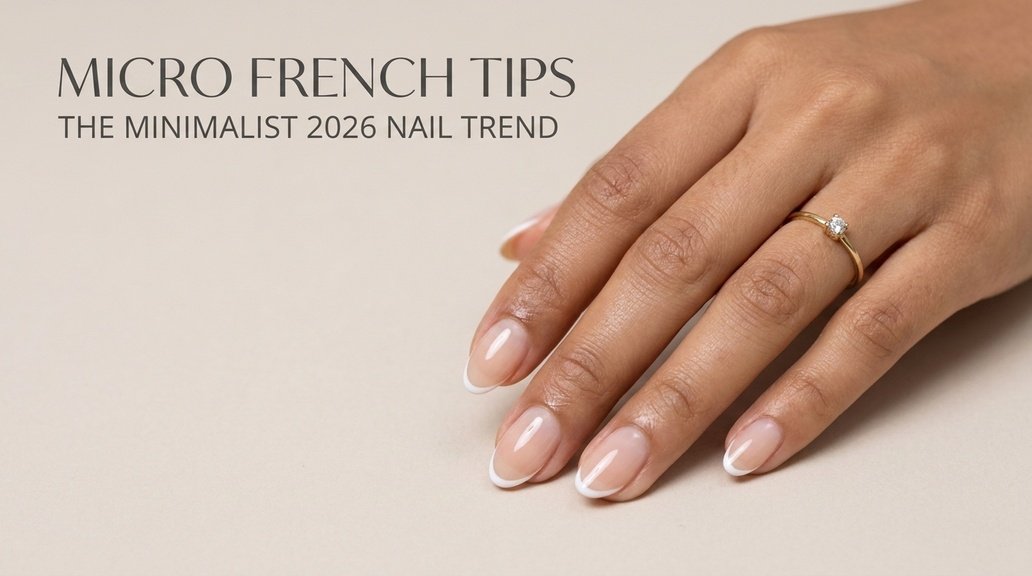
Micro French tips are the minimalist manicure that quietly took over in 2026, trading the thick white smile line for a barely-there edge. This guide s
Micro French tips are the minimalist manicure that quietly took over in 2026, trading the thick white smile line for a barely-there edge. This guide shows you how micro French tips work, who they flatter, and how to get the delicate look at home.
The micro French manicure is the nail look that quietly took over in 2026, trading the thick white smile line of the old French for a whisper-thin stroke drawn right at the very edge of the nail. It is the clean-girl minimalist finish everyone screenshots: barely there, expensive-looking, and so subtle you have to lean in to notice the line at all. Instead of a bold half-centimetre tip, you get a hairline of colour that follows the natural free edge and lets the bare or milky nail do most of the talking. This guide covers what micro French tips actually are, why they became the default minimalist manicure of the year, how they differ from a classic French and a baby-boomer blend, the best colours and shapes, and exactly how to paint that crisp thin line at home without it going wobbly or thick.
Reviewed by the BeautynFacts editorial team. Last updated: July 2026.
What Is a Micro French Manicure?
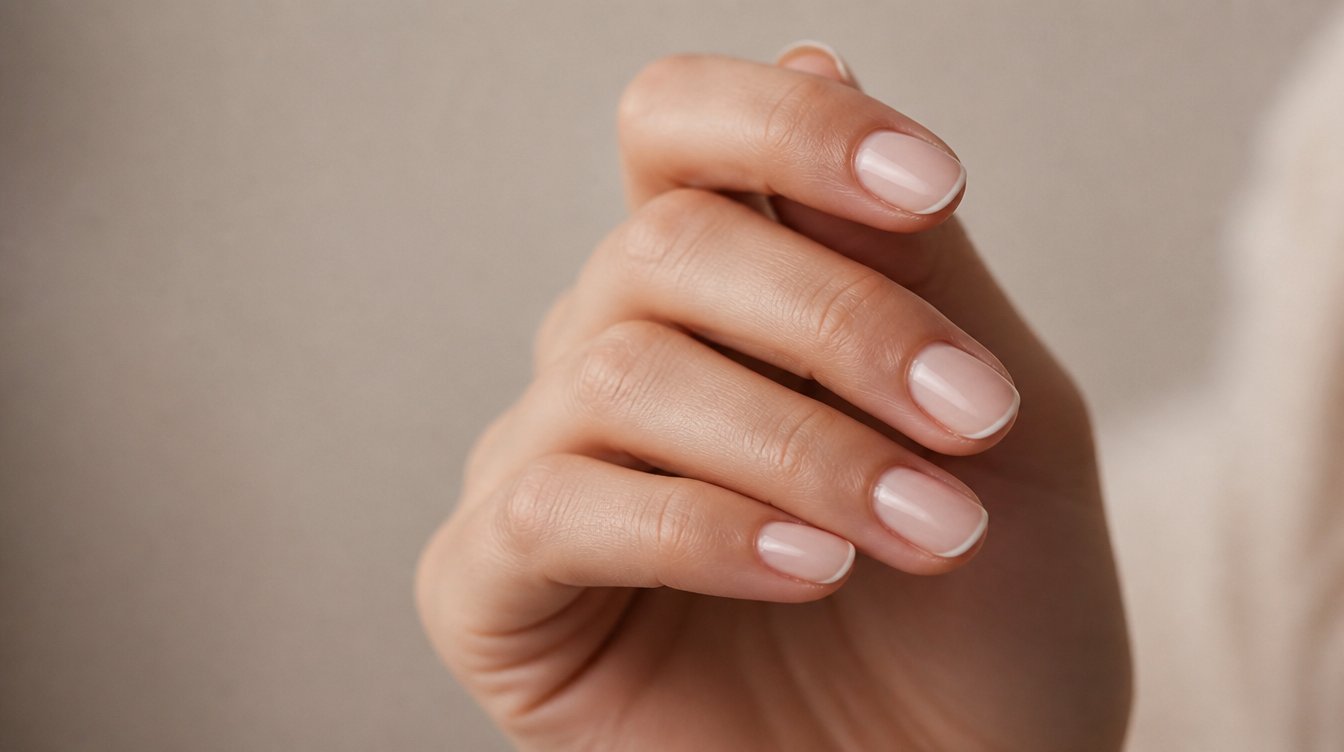
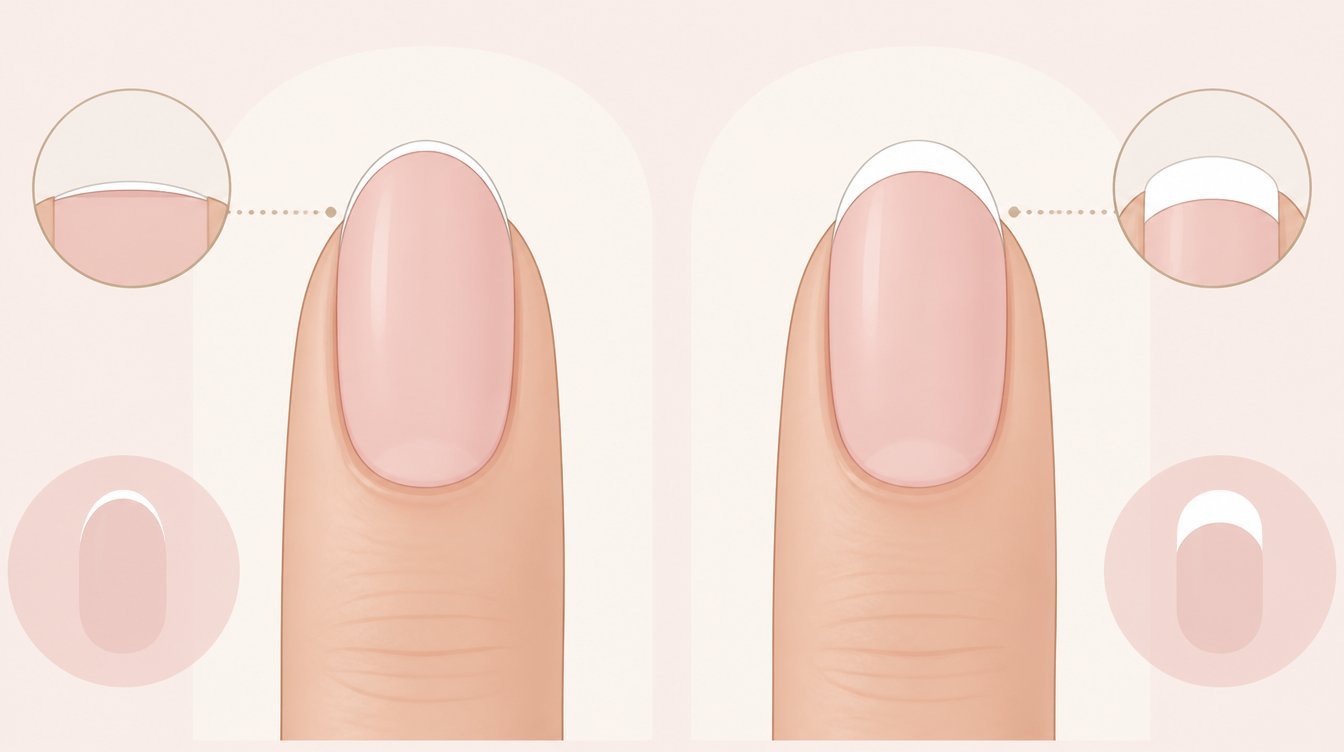
A micro French manicure is a French tip where the painted line at the free edge is deliberately ultra-thin, usually one to two millimetres instead of the classic four to six. The rest of the nail stays bare, sheer, or coated in a milky nude, so the eye reads mostly natural nail with one crisp accent at the tip. It is the smallest possible version of the French, which is exactly why it feels modern.
The look goes by a few names online: skinny French, baby French, micro tip, or whisper French. They all describe the same idea. Take the most recognisable manicure in the world and shrink its defining feature down to a hairline. The result is quiet, precise, and reads as effort without shouting about it.
Why the thin line changes everything
A thick French tip is a statement. A micro-tip is a detail. Shrinking the line changes the whole personality of the manicure from retro and formal to minimal and current. The thin stroke also flatters the nail more because it does not visually chop length off the end the way a heavy white band can. Your nails look longer and cleaner, not shorter and blockier.
Why Micro French Tips Took Over as the Clean-Girl Nail of 2026
The micro-French rode the same wave that made slicked-back buns, minimal gold jewellery, and no-makeup makeup the aesthetic of the moment. The clean-girl look prizes things that appear effortless and polished at once, and a barely there tip fits that brief perfectly. It is neutral enough for work and refined enough for events, and it never competes with an outfit.
The other driver is nail health culture. After years of thick acrylics and heavy gel, the trend swung toward shorter, more natural nails that show off the real nail plate. A micro French flattens that shift because it decorates a natural nail rather than covering it. You get a finished manicure that still looks like your own hands, only tidier.
The social media snowball
Nail artists on TikTok and Pinterest pushed the micro tip hard through late 2025 and into 2026, and the search numbers followed. Salons started listing it by name on menus, and the skinny French became one of the most requested minimalist looks of the year. Its versatility is the reason it stuck rather than fading like louder trends do.
It works on real, short nails
Unlike many editorial looks that only photograph well on long extensions, the micro French looks intentional even on short, natural nails. That accessibility matters. Most people are not wearing inch-long stiletto tips day to day, and a trend that flatters a normal manicure length spreads far faster than one that does not.
Micro French Versus Classic French Versus Baby-Boomer Blend
These three looks get grouped together because they all live at the tip of the nail, but they behave very differently once you understand where the colour sits and how hard the edge is. The classic French has a defined, wider smile line in opaque white. The baby boomer is a soft gradient with no hard line at all. The microFrench is a hairline stroke with a crisp edge. Here is how they compare on the details that decide which one to ask for.
| Feature | Classic French | Baby-Boomer Blend | Micro French |
|---|---|---|---|
| Tip line width | Four to six millimeters | Blended, no set width | One to two millimeters |
| Edge style | Crisp, defined smile | Soft, faded gradient | Crisp, ultra-thin |
| Overall vibe | Retro, formal, bold | Soft, romantic, natural | Minimal, modern, clean |
| Best nail length | Medium to long | Medium to long | Short to medium |
| Difficulty at home | Moderate | Hard, needs sponging | Moderate, needs a steady hand |
The quick rule: choose classic French for a bold traditional look, baby boomer for a soft blended fade, and micro French when you want the idea of French reduced to its most minimal form. The microtip is the only one of the three that reads as current rather than throwback.
The Best Colors for Micro French Tips
The beauty of the micro French is that the thin line lets you use almost any colour without it overwhelming the nail. Because the stroke is so small, even a bold shade reads as a subtle accent. That opens up a much wider palette than the classic white-only French.
Classic white and off-white
A crisp white microtip is the purest version of the trend and the most requested. For a softer, more expensive look, swap bright white for a warm off-white or cream, which reads gentler against most skin tones and avoids the harsh contrast that can make a thin white line look stark. Cream is the quiet luxury pick.
Colored micro tips
Colour is where the microFrench gets fun. A thin black line is sharp and editorial. Chocolate brown reads soft and earthy. Red brings a retro flick of energy. Pastels like baby blue, lilac, and butter yellow keep it playful and springlike. Because the line is so narrow, these colours stay tasteful instead of loud, so you can wear a shade you would never paint across the whole nail.
Metallic and negative-space variations
A hairline of gold or silver chrome gives a jewellery-like finish that photographs beautifully. Some artists skip the base colour entirely and leave the nail fully bare except for the micro tip, which creates a clean negative-space effect. Both are easy evolutions of the core look once you have the thin line technique down.
Nail Shapes That Suit Micro French Tips
The micro French follows the free edge of the nail, so the shape of that edge decides how the line looks. Some shapes make the thin stroke sing, and a couple make it harder to keep even. Picking the right shape is half the battle before you ever pick up a brush.
Shapes that flatter the look
Almond, oval, and squoval are the strongest matches. Their gently curved edges give the thin line a smooth, continuous path to follow, and the curve catches light in a way that makes the tip look intentional. Round short nails also work well and are the easiest for beginners because the arc is forgiving. Coffin and ballerina shapes suit a slightly wider micro line since the flat tip gives more surface to balance.
Shapes that need more care
Sharp stiletto and very square tips are trickier. On a stiletto, the point pulls the line to an awkward apex that is hard to keep symmetrical. On a hard square, any wobble in the line is obvious because the eye has a straight edge to compare it against. These shapes are not off-limits; they just demand a steadier hand and slower work.
Nail Length and the Micro French
Length matters less here than with other French styles because the micro tip does not visually shorten the nail. That is one of its biggest advantages. A thick white French on a short nail can look stumpy, while a micro-tip on the same nail looks neat and lengthening.
Short to medium nails are the sweet spot. They keep the look practical and everyday, which is exactly the clean-girl energy the trend is built on. Long nails work too and give more room for detailed lines, but they are not required. If your nails are very short, keep the tip line at the thinner end of the range, around one millimetre, so it stays in proportion.
How to Do Micro French Tips at Home
Micro French is one of the more achievable trending looks to do yourself because it uses very little product. The whole skill lives in one thing: drawing a clean, thin, even line. Get the right tool, and the rest follows.
The tools that make it possible
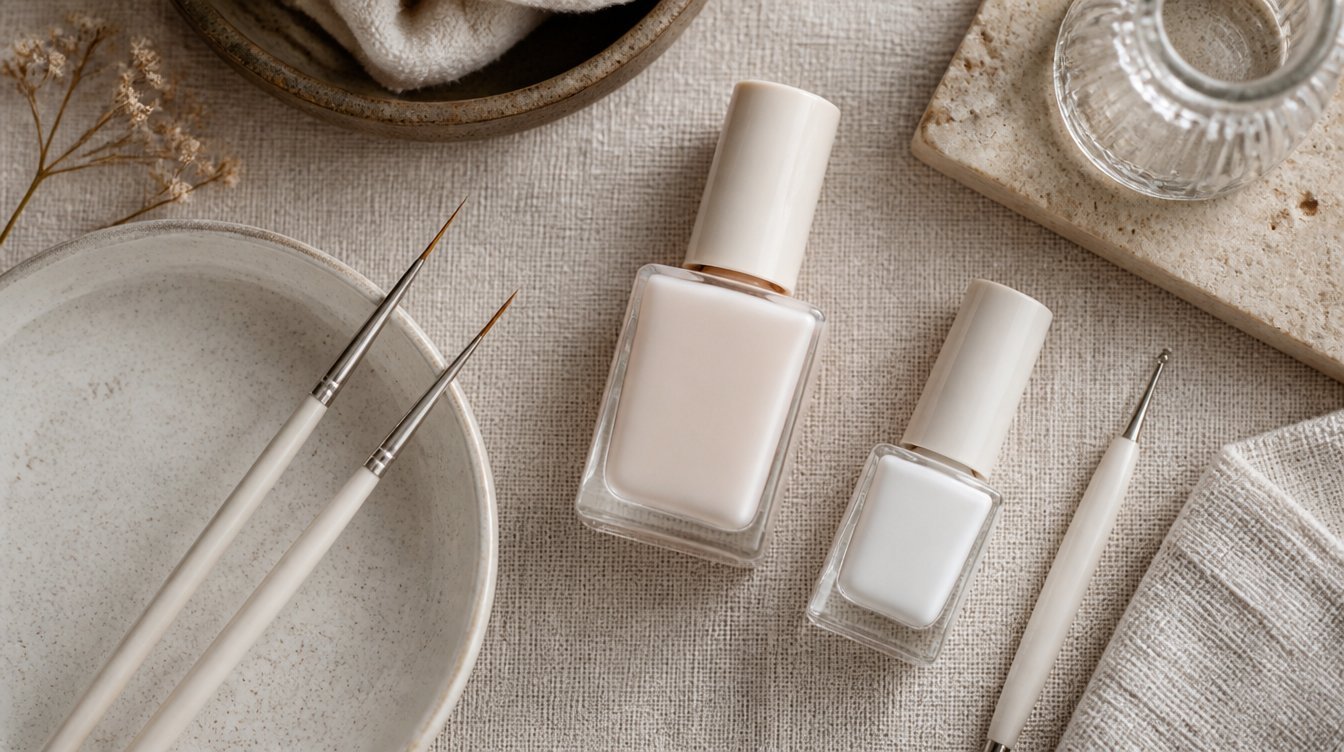
You need a thin brush. A striper brush, which is long and skinny with a fine point, is the classic choice and gives you the most control over a continuous line. A short detail liner brush works too. Freehanding with a standard polish brush is nearly impossible at this scale, so investing a few dollars in a striper is the single biggest upgrade to your result.
Step-by-step for a crisp line
- Prep and buff the nail, then apply a base coat and let it dry fully.
- If you want a milky or sheer base, apply one thin coat now and let it set.
- Load a small amount of polish onto the striper brush and wipe off the excess on the bottle neck.
- Rest your painting hand on a steady surface and drag the brush along the free edge in one smooth motion from one side to the other.
- Do not lift and restart mid-line. One continuous stroke keeps the line even.
- Clean up any stray polish with a small brush dipped in remover before it dries.
- Seal with a top coat, capping the free edge to lock the line in place.
A shortcut for shaky hands
If a freehand line feels out of reach, thin nail tape or striping tape gives you a guide. Lay the tape just below where you want the tip line, paint above it, and peel the tape off while the polish is still wet for a clean edge. It is slower but forgiving, and a good way to learn the proportions before you go fully freehand.
Gel Versus Regular Polish for Micro French Tips
Both work, and the choice comes down to how long you want the line to last and how much control you want while painting. Each has a real advantage for this specific look.
The case for gel
Gel is the better pick for durability and precision. Because gel does not dry until you cure it under a lamp, you have unlimited time to perfect the line, wipe mistakes, and get both hands even before locking it in. Once cured, a gel micro-tip resists chipping for two to three weeks and keeps the crisp edge intact far longer than regular polish. For a look that lives or dies on a clean line, that staying power matters.
The case for regular polish
Regular polish is cheaper, needs no lamp, and comes off with ordinary remover, which suits people who change their nails often. The tradeoff is drying time. You have to work quickly before the polish sets, and the thin line is more prone to chipping at the very tip within a few days. A quality top coat and edge capping narrow that gap considerably.
How to Keep the Micro French Line Crisp and Long-Lasting
A micro French life and death is by its line, so the maintenance is all about protecting that hairline of colour at the most vulnerable part of the nail. A few habits keep it looking freshly done.
- Always cap the free edge with base coat, colour, and top coat to seal the tip against chipping.
- Reapply a thin layer of top coat every two to three days on regular polish to reinforce the line.
- Avoid using your nails as tools, since the tip takes the brunt of any knocks.
- Wear gloves for dishes and cleaning to keep water and detergent from lifting the edge.
- Keep cuticle oil handy, because healthy nails flex less and hold a line better.
The single most important step is capping the free edge. Skipping it is why so many home French manicures chip at the tip within a day, taking the whole micro line with them.
Common Micro French Mistakes and How to Fix Them
Almost every failed micro-French comes down to one of three errors, and all of them are fixable once you know what to watch for.
The line is too thick
The most common mistake is letting the line creep wider than intended, which turns a micro French back into a regular one. Load less polish onto the brush than you think you need, and build the line up in one light pass rather than pressing hard. If it goes too wide, wipe it back with a remover-dipped brush before it dries.
The line is wobbly or uneven
Wobble comes from an unsteady hand and stopping mid-stroke. Brace your painting hand on the table, take a breath, and pull the line in one continuous motion. Uneven lines between nails usually mean you are eyeballing the width, so pick a reference point on the free edge and match it on every finger.
Wrong shape or proportion
A micro-tip on a sharp square nail exaggerates every flaw because the straight edge shows any crookedness. If you are struggling, reshape to a soft squoval or almond first, or keep the line at the thinnest end of the range so small imperfections disappear. Proportion is everything: the thinner and more even the line, the more expensive the manicure looks.
Micro French Variations Worth Trying
Once the core technique is comfortable, the micro French opens into a whole family of looks. A double micro line, one at the tip and a matching thin line at the cuticle, frames the nail top and bottom. A V-shaped microtip meets at a soft point in the centre for a subtle geometric twist. A coloured microtip over a sheer jelly base blends two trends at once. Each keeps the thin-line discipline that defines the look while adding a small signature.
How Long Micro French Tips Will Stay Relevant
Minimalist looks with broad wardrobe range tend to outlast louder trends, and the micro French has that staying power built in. It reads as a refined neutral rather than a novelty, which means it survives past the season that made it popular. Expect the skinny French to remain a salon menu staple through 2026 and well into 2027, evolving through colour and placement rather than disappearing. It has become less a trend and more a modern default, the way the classic French once was.
Frequently Asked Questions About Micro French Tips
What is a micro French manicure?
A micro French manicure is a French tip where the painted line at the free edge is drawn ultra-thin, usually one to two millimetres wide instead of the classic four to six. The rest of the nail stays bare, sheer, or coated in a soft milky nude, so the eye reads mostly natural nail with one crisp hairline accent at the tip. It is the smallest, most minimal version of the traditional French, which is exactly why it reads as modern and clean rather than retro and formal.
How is a micro-French different from a classic French?
The only real difference is the width and feel of the tip line. A classic French manicure uses a bold white smile line four to six millimetres wide, which makes a formal, retro statement. A micro French shrink that same line to one or two millimetres so it becomes a subtle detail rather than the focus. The thin line also flatters length better because it does not visually chop off the end of the nail the way a thick white band can. One shouts, the other whispers.
What colours work best for micro French tips?
Classic white is the purest choice, but a warm cream or off-white reads softer and more expensive on most skin tones. Because the line is so narrow, bolder colours stay tasteful, so black looks editorial, chocolate brown reads earthy, red brings retro energy, and pastels like baby blue and butter yellow feel playful. Metallic gold or silver chrome gives a jewellery finish. The thin stroke lets you wear a shade you would never paint across the whole nail without it looking loud.
Can I do micro French tips at home?
Yes, and it needs very little product. The whole skill is drawing one clean, thin, even line, so the key tool is a striper or fine detail brush rather than a standard polish brush. Brace your painting hand on a steady surface, load a little polish, and drag the brush along the free edge in one continuous stroke without lifting. Beginners can use thin striping tape as a guide. Gel gives you more time to perfect the line before curing, which helps a lot early on.
What nail shape is best for a micro French?
Almond, oval, and squoval shapes are the strongest matches, because their gently curved edges give the thin line a smooth path to follow and catch light nicely. Round, short nails are the most beginner-friendly since the arc is forgiving. Sharp stiletto and hard square shapes are trickier, as the point or straight edge makes any wobble or asymmetry obvious. If you are learning, reshape to a soft squoval or almond first and keep the line at the thinner end of the range.
How do I keep my micro French from chipping?
The single most important step is capping the free edge with your base coat, colour, and top coat, which seals the thin line at the most vulnerable part of the nail. On regular polish, reapply a thin top coat every two to three days to reinforce the tip. Avoid using your nails as tools, wear gloves for dishes and cleaning, and keep the nails moisturised with cuticle oil so they flex less. Gel holds the crisp line longer, resisting chips for two to three weeks.
RELATED ARTICLES:
- Russian Manicure: The Ultra-Clean Cuticle Technique Explained
- Jelly Manicure 2026: The Translucent Look Taking Over Salons
- Butter Yellow Nails: The Soft Neutral Trend of 2026
About The Author

COMMENTS