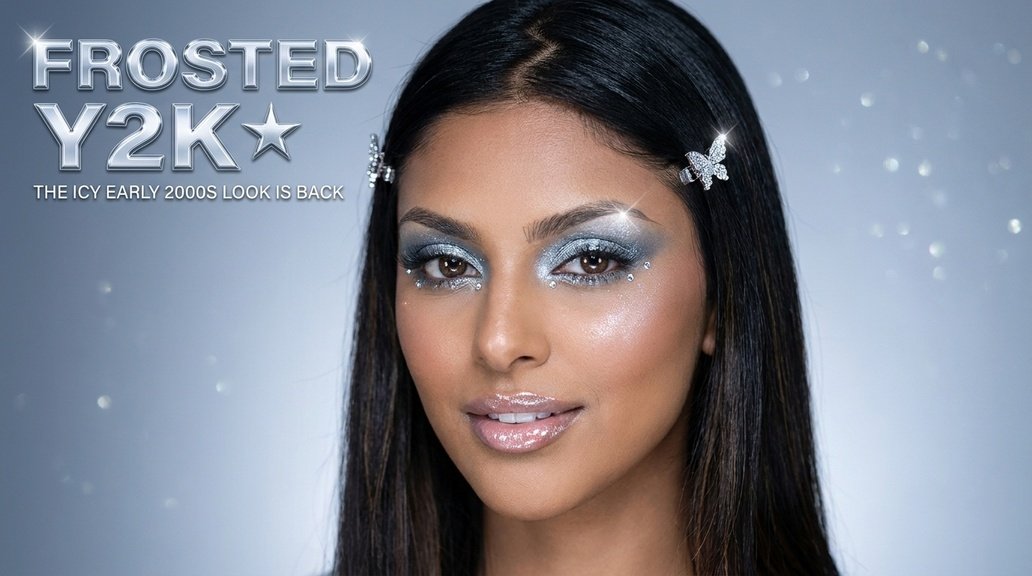
Frosted Y2K makeup is back, bringing the cool-toned, ice-slicked shimmer that ruled the early 2000s into 2026. This guide covers the frosted eyeshadow
Frosted Y2K makeup is back, bringing the cool-toned, ice-slicked shimmer that ruled the early 2000s into 2026. This guide covers the frosted eyeshadow, glossy lids, and pearly finish behind frosted Y2K makeup and how to wear it without looking dated.
Frosted eyeshadow is the anchor of the frosted Y2K makeup revival, the cool-toned, ice-slicked look that ruled the early 2000s and came roaring back in 2026. This is the return of silvery lids, pearl-white highlight, frosted lilac and baby blue shadow, and glossy, cool-toned lips that catch the light like glass. The trend rides a wave of pure nostalgia, pulled straight from the era of butterfly clips and flip phones, but the modern version is sharper and more wearable than the chalky frost most people remember. This guide covers what the frosted Y2K look actually is, why it came back, the key elements that define it, how to wear frost so it flatters instead of ages you, the undertone rules that make or break it, application technique, product picks, and the exact ways modern frost differs from the 2000s original.
Reviewed by the BeautynFacts editorial team. Last updated: July 2026.
What Frosted Y2K Makeup Actually Is
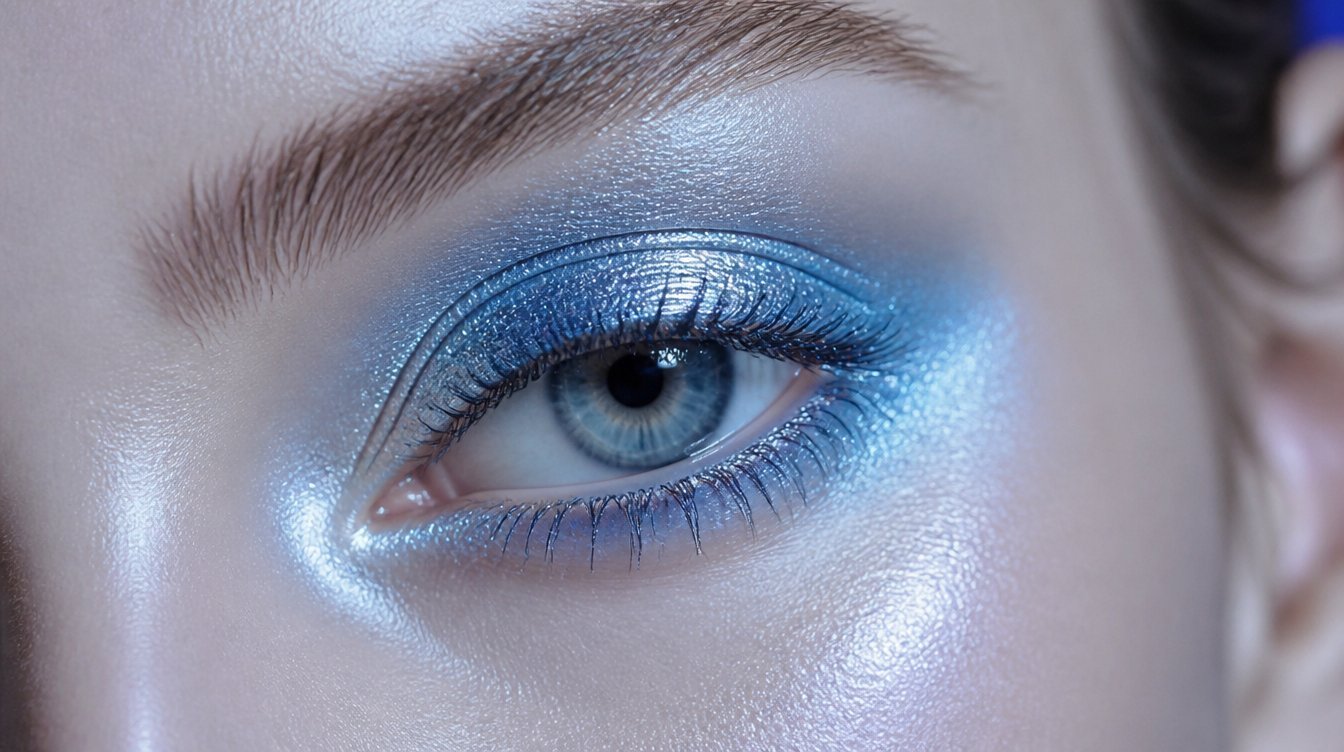
Frosted Y2K makeup is a cool-toned, high-shine look built around frosted eyeshadow, pearl highlight, and glossy pale lips. ‘Frost’ here means a specific finish: a reflective, almost metallic sheen with a whitish, icy cast, different from a warm shimmer or a fine glitter. It catches light and throws it back in a cool, silvery way.
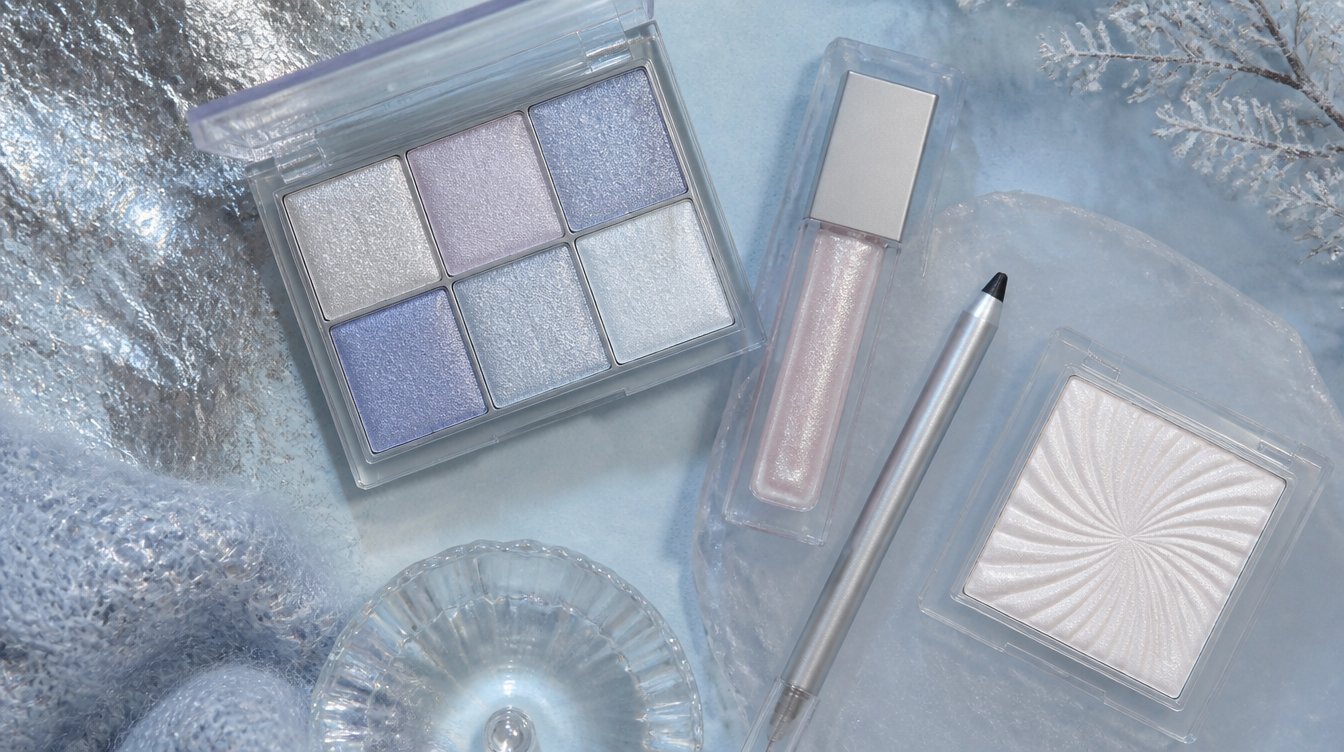
The palette leans cold on purpose. Think silver, pearl white, frosted lilac, baby blue, icy pink, and pale mint. These are the shades that defined the early 2000s, and they are the shades powering the revival now.
The whole face reads chilled and luminous rather than warm and bronzed. Where the bronzed, sun-kissed look pushes heat into the skin, frosted Y2K does the opposite. It leans into a porcelain, lit-from-within coolness that feels deliberately retro.
Why Frosted Y2K Makeup Is Back
Trends run on roughly twenty-year cycles, and 2026 lands squarely on the early 2000s. The people who grew up watching that era on screen are now the ones setting beauty trends, and nostalgia is the strongest driver in the market right now.
The nostalgia cycle
Y2K fashion came back first, with low-rise jeans, baby tees, and rhinestones. Makeup followed, as it always does. Once the clothes returned, the frosted eyeshadow and glossy lips that went with them were never far behind.
A reaction to mat fatigue
The 2010s were dominated by matte everything: matte lips, matte skin, heavily blended matte shadow. Frost is the swing back. After years of flat, velvety finishes, a reflective icy lid feels fresh again simply because it is the opposite of what came before.
Social platforms reward shine
Frosted finishes photograph and film beautifully. Under ring light and phone flash, a cool metallic lid reads as high-impact and eye-catching, which is exactly what short-form video rewards. That visibility keeps pushing the look forward.
The Key Elements of the Look
Frosted Y2K is not one product. It is a coordinated set of cool, reflective finishes across the eyes, cheeks, and lips. Miss the coordination and it falls apart.
Frosted icy eyeshadow
The centrepiece. A silver, lilac, blue, or pearl shadow with a frost finish is swept across the lid so it catches light. This is the single element that signals the trend more than any other.
Silver and pearl highlight
Skip the warm golden glow. Frosted Y2K uses a cool, almost white or silver highlight on the tops of the cheekbones, the browbone, and the inner corners of the eyes for that glassy, reflective finish.
Glossy cool-toned lips
Pale, frosted, or sheer cool-toned lips finish the look. Think of a lip gloss with a pearly white or icy pink shimmer, a frosted mauve, or a sheer lilac balm. High shine is non-negotiable here.
How to Wear Frost Without Aging Yourself
Frost has a reputation for settling into fine lines and looking dated, and that reputation is earned by the 2000s version. The modern approach fixes it. The goal is controlled shine, not a fully chalky lid from the lash line to the brow.
Place frost where you want light, not everywhere. A wash of frosted shadow on the centre of the lid, with a matte or satin shade blended into the crease, gives dimension and stops the flat, aging look. The frost becomes a highlight, not the whole eye.
Prep matters more than product. Frost clings to texture and creasing, so a smoothing primer and a light hand keep it looking sleek rather than powdery. Press the shadow on with a flat brush or fingertip instead of sweeping it, which packs the pigment where you want it and stops fallout.
Keep the rest of the face clean
Frosted eyes want a quiet canvas. Pair a strong frosted lid with skin that looks fresh and mostly matte through the centre of the face, soft brows, and a restrained lip. Loading frost onto the eyes, cheeks, and lips at full strength all at once is what tips the look into costume.
Balance frost with one matt anchor
Give the eye one non-reflective point. A thin line of dark or navy liner along the upper lash line, or a defined matte crease, anchors all that shine and keeps the eye from disappearing into a single flat gleam.
Cool Versus Warm Undertone Considerations
This is where most frosted looks succeed or fail. Frosted Y2K is a fundamentally cool trend, and undertone decides which frost shades flatter you and which wash you out.
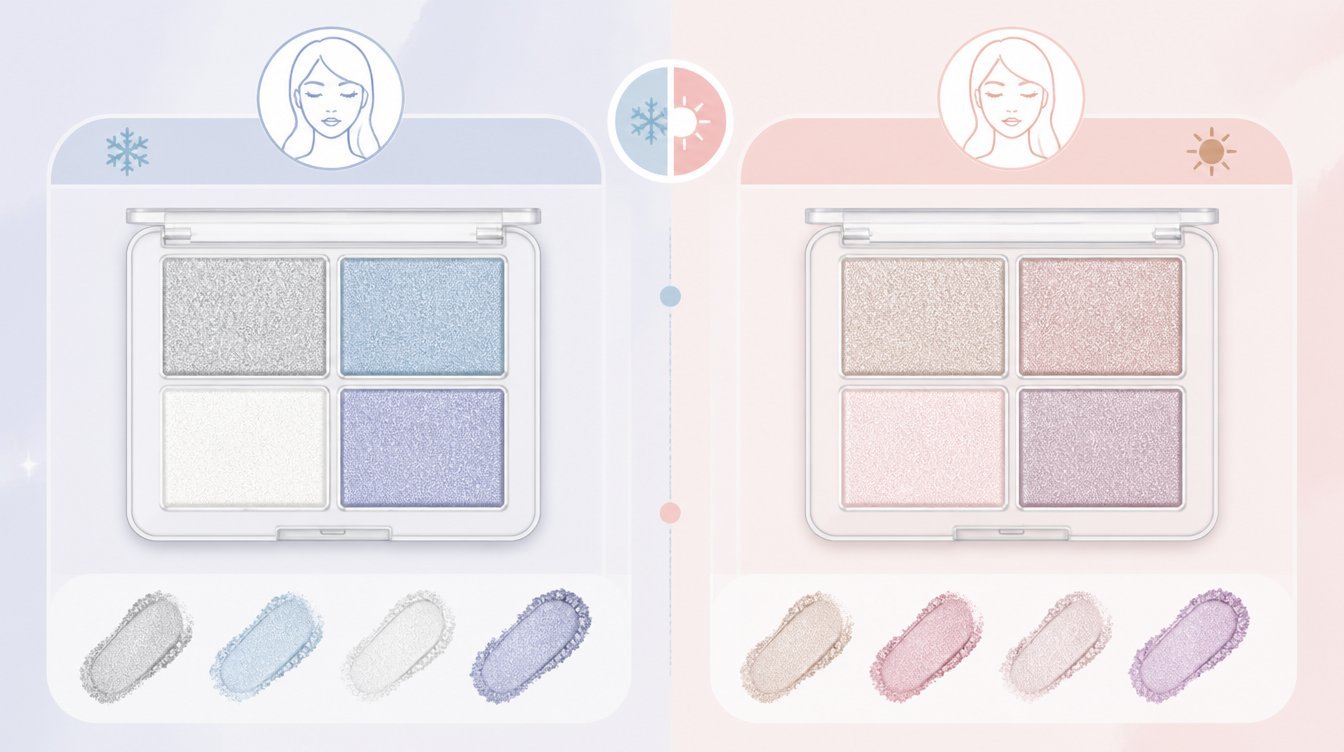
If you have cool undertones, meaning your skin reads pink, red, or blue and your veins look blue or purple, silver, icy blue, and pure pearl will sing on you. These shades echo the coolness already in your skin.
If you have warm undertones, meaning your skin reads golden or peachy and your veins look green, straight silver can look ashy and grey against your skin. You get the frost look through warmer-leaning cool shades instead: frosted champagne, icy rose, soft pearl-lilac, and lavender with a pink lean. These keep the reflective finish without fighting your natural warmth.
Neutral undertones
Neutral skin is the easy case. Most frost shades work, so choose by eye colour and outfit rather than worrying about a clash. Pearl and soft lilac are the safest starting points.
Reading your undertone quickly
Look at the veins on your inner wrist in natural light. Blue or purple points to cool. Green points to warmth. A mix of both usually means neutral. Jewellery is another quick tell: if silver flatters you more than gold, you likely lean cool, and the classic frost palette will love you.
Application Technique for Frosted Shadow
Frost behaves differently from matte or satin shadow. It needs to be applied in a way that maximises reflect and minimises fallout and creasing. The technique below gets the clean, glassy finish that separates modern frost from the chalky version.
- Prime the lid with an eyeshadow primer or a thin layer of concealer set lightly with powder. A smooth base is what lets frost reflect cleanly.
- Lay a soft matte transition shade in the crease first so the frost has depth to sit against and does not read flat.
- Apply the frost with a flat, dense brush or a clean fingertip, pressing it onto the centre of the lid rather than sweeping. Pressing deposits more shine and less fallout.
- Build in thin layers. One press, check the light, and add more only where you want the brightest points.
- Add a dab of the same frost or a pearl shade to the inner corner to open the eye.
- Anchor with liner and a coat of mascara so the shine has a defined edge.
The order matters. Matte first, frost second, liner last. Build the depth, then lay the shine on top, then define the edge.
Product Picks for the Frosted Look
You do not need a full new kit. Three well-chosen products carry the entire trend. Focus your budget on finish quality, because cheap frost is where the chalky, patchy problem starts.
Frost eyeshadows
Look for shadows labelled ‘frost’, ‘metallic’, or ‘foiled’ rather than plain shimmer, and choose finely milled formulas that press on smooth. A small palette with silver, pearl, icy blue, and lilac covers every version of the look. Cream frost shadows tend to be more forgiving on mature lids than loose powders.
Pearly balms and glosses
A sheer gloss or balm with a cool pearl or icy pink shimmer delivers the lips instantly. Balms are the low-effort route and stay comfortable, while a proper gloss gives the glassiest, most authentic Y2K shine.
Silver liner and highlight
A silver or pearl-white liner along the inner rim or lower lash line pushes the look further. Pair it with a cool, near-white highlighter for the cheekbones and brow bone. These two products are what make the finish read as frost rather than ordinary shimmer.
How Modern Frost Differs From 2000s Frost
The single biggest reason people fear this trend is the memory of how frost looked the first time around. The modern take shares the palette but almost nothing else in execution. Formulas, placement, and finish have all moved on.
| Feature | 2000s Frost | Modern Frost |
|---|---|---|
| Formula | Chalky, dry, heavy fallout | Finely milled, creamy, smooth press |
| Placement | Full lid, wall to wall | Center-lid pop with matte depth |
| Finish | Flat, opaque, powdery | Reflective, glassy, dimensional |
| Undertone care | One silver for everyone | Shade matched to undertone |
| Rest of face | Frost everywhere at once | Frost eyes, clean skin, soft lip |
The takeaway is simple. The colours are nostalgic, but the way you wear them is not. Modern frost is about placement and restraint, which is exactly what the 2000s version lacked.
Frosted Looks for Different Eye Colors
Frost shades interact with your iris, and a few pairings punch above the rest. None of this is a rule, but these are the combinations that read most striking.
Blue and gray eyes
Icy blue and silver frost make blue and grey eyes look brighter and more crystalline. Lilac and soft pink frost add contrast that makes the iris pop without competing.
Brown and hazel eyes
Silver and pearl frost create a clean contrast against brown eyes that reads high-impact. Frosted lilac and cool mauve are especially flattering, because the purple family plays off the warmth in brown and hazel irises.
Green eyes
Frosted plum, lilac, and rose bring green eyes forward through contrast. Straight silver works too, but the purple-leaning frosts give green eyes the strongest lift.
Building a Full Frosted Y2K Face
Once the eyes are set, the rest of the face is about support, not competition. The frosted lid is the star, and everything else should keep it that way.
Keep the base skin fresh and mostly natural. A luminous but not glittery foundation, cream blush in a cool pink or mauve, and a whisper of contour keep the face balanced. Then add the cool highlight on the high points and finish with the glossy lip. Brows stay soft and neat, never heavy, so they do not overpower the shine on the lid.
Common Mistakes to Avoid
Frosted Y2K goes wrong in predictable ways. Sidestep these, and the look reads intentional and modern instead of dated.
- Applying frost wall to wall across the whole lid, which flattens the eye and reads aging.
- Ignoring undertone and forcing straight silver onto warm skin, where it turns ashy and grey.
- Skipping primer, so the frost creases and grabs onto fine lines within an hour.
- Stacking full-strength frost on eyes, cheeks, and lips at once, which tips into costume.
- Choosing cheap, chalky shadow that will never reflect cleanly no matter the technique.
- Forgetting a matt anchor, so the whole eye becomes one flat gleam with no definition.
Every one of these is a placement or product problem, not a problem with frost itself. Fix the execution, and the trend flatters far more faces than its reputation suggests.
Where the Frosted Y2K Trend Is Heading
Frosted Y2K has staying power because it plugs into two durable forces at once: the twenty-year nostalgia cycle and the ongoing backlash against years of matte. Neither is fading fast, so the look has room to run through 2026 and into 2027.
Expect it to keep softening into more wearable territory. The full-costume 2000s version stays a statement look for nights out and content, but the toned-down daytime interpretation, one frosted lid and a glossy balm, is the version that sticks. Frost is settling in as a finish people reach for, not just a throwback they try once.
Frequently Asked Questions About Frosted Y2K Makeup
Does frosted eyeshadow make you look older?
It can, but only when applied the old way. Frost swept wall-to-wall across the whole lid, settled into fine lines and looked flat and dated. The modern approach fixes this by placing frost only on the centre of the lid over a matte crease, using a smoothing primer, and pressing rather than sweeping the shadow on. Done that way, frosted eyeshadow reads bright and reflective instead of ageing, and it flatters far more people than its reputation suggests.
What frost colours work for warm undertones?
Straight silver often looks ashy and grey on warm skin, so reach for warmer-leaning cool shades instead. Frosted champagne, icy rose, soft pearl-lilac, and lavender with a pink lean all deliver the reflective frost finish without fighting your natural warmth. The trick is choosing frost shades that still carry a hint of warmth in the base. Check your undertone by looking at your wrist veins: green means warm, and these softer frost tones will flatter you far more than cold silver.
How do I stop frosted eyeshadow from creasing?
Creasing comes down to prep and application. Start with an eyeshadow primer or a thin layer of concealer lightly set with powder, which gives the frost a smooth, grip-free base. Apply it by pressing with a flat brush or fingertip rather than sweeping, and build in thin layers instead of one heavy coat. Powder frost creases more than cream on mature lids, so a cream frost shadow can help. Keep the frost in the centre of the lid rather than loading the whole eye.
What is the difference between frost and shimmer eyeshadow?
Frost and shimmer both reflect light, but they read differently. Frost has a cool, whitish, almost metallic cast that throws light back in a silvery way, and it tends to be more opaque. Shimmer is warmer and finer, giving a soft glow rather than a hard reflective sheen. Frost is the finish that defines the Y2K look specifically, because it delivers that icy, high-shine effect. If a shadow looks warm and glowy rather than cool and reflective, it is shimmer, not true frost.
Can I wear frosted Y2K makeup during the day?
Yes, with a lighter hand. The full 2000s version is a statement best saved for nights out or content, but a toned-down interpretation works beautifully in daylight. Keep it to one frosted lid in a soft pearl or lilac, a clean cool highlight, and a glossy balm on the lips, and then leave the rest of the face fresh. This daytime version is actually the one with the most staying power, reading modern and luminous rather than costume-like or heavy.
Do I need special products for the frosted look?
Not many. Three products carry the entire trend: a frost or metallic eyeshadow in silver, pearl, lilac, or blue, a sheer gloss or balm with cool pearl shimmer, and a silver liner or cool near-white highlighter. Look for shadows labelled ‘frost’, ‘metallic’, or ‘foiled’ rather than plain ‘shimmer’ and prioritise finely milled formulas that press on smoothly. Cheap chalky frost is where patchiness starts, so spend on finish quality over quantity. A smoothing primer rounds out the short list nicely.
RELATED ARTICLES:
- Blue Eyeshadow: How to Wear the Bold Lid Without Looking Dated
- Metallic Shadows: The Guide to High-Shine Eyes That Flatter
- Monochromatic Makeup: One-Shade Looks for Eyes, Cheeks, and Lips
About The Author

COMMENTS