
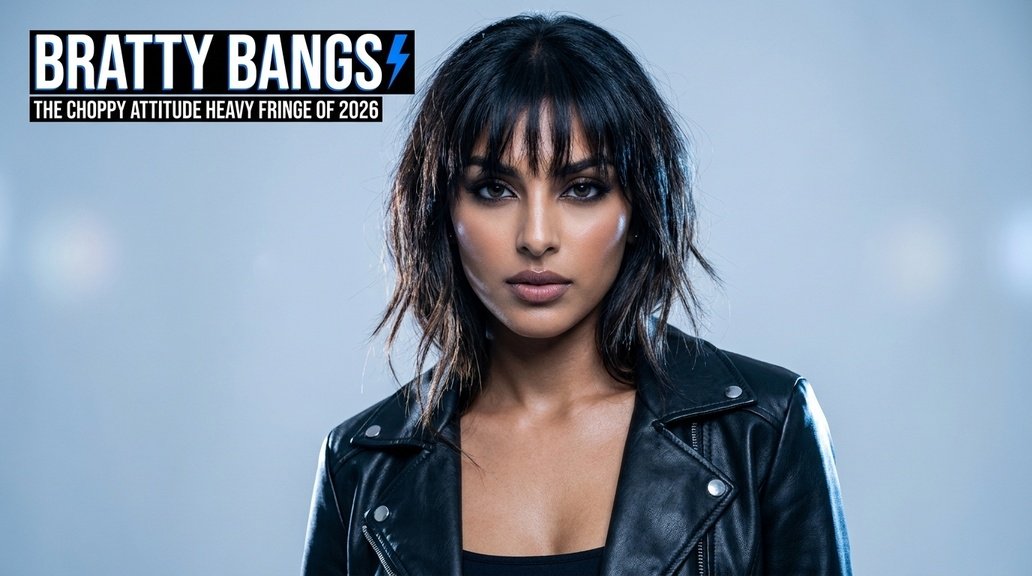
Bratty bangs are the choppy, attitude-heavy fringe that took over in 2026, and the name fits the look exactly: short, high, deliberately undone, and c
Bratty bangs are the choppy, attitude-heavy fringe that took over in 2026, and the name fits the look exactly: short, high, deliberately undone, and cut to give a face edge rather than softness. This is not the sweet, face-framing curtain fringe that dominated the last few years. Bratty bangs sit higher on the forehead, land around the brow or just above it, and break into uneven, separated pieces instead of a smooth sweep. The whole point is intention that reads as carelessness. They look like you cut them yourself in the best possible way, sharp but a little messy, structured but never precious. This guide covers what bratty bangs actually are, how they differ from curtain, bottleneck, and blunt fringe, who they suit by face shape and hair texture, how to style and grow them out, the trims and upkeep they demand, and the mistakes that turn a cool fringe into a regrettable one.
Reviewed by the BeautynFacts editorial team. Last updated: July 2026.
What Bratty Bangs Actually Are
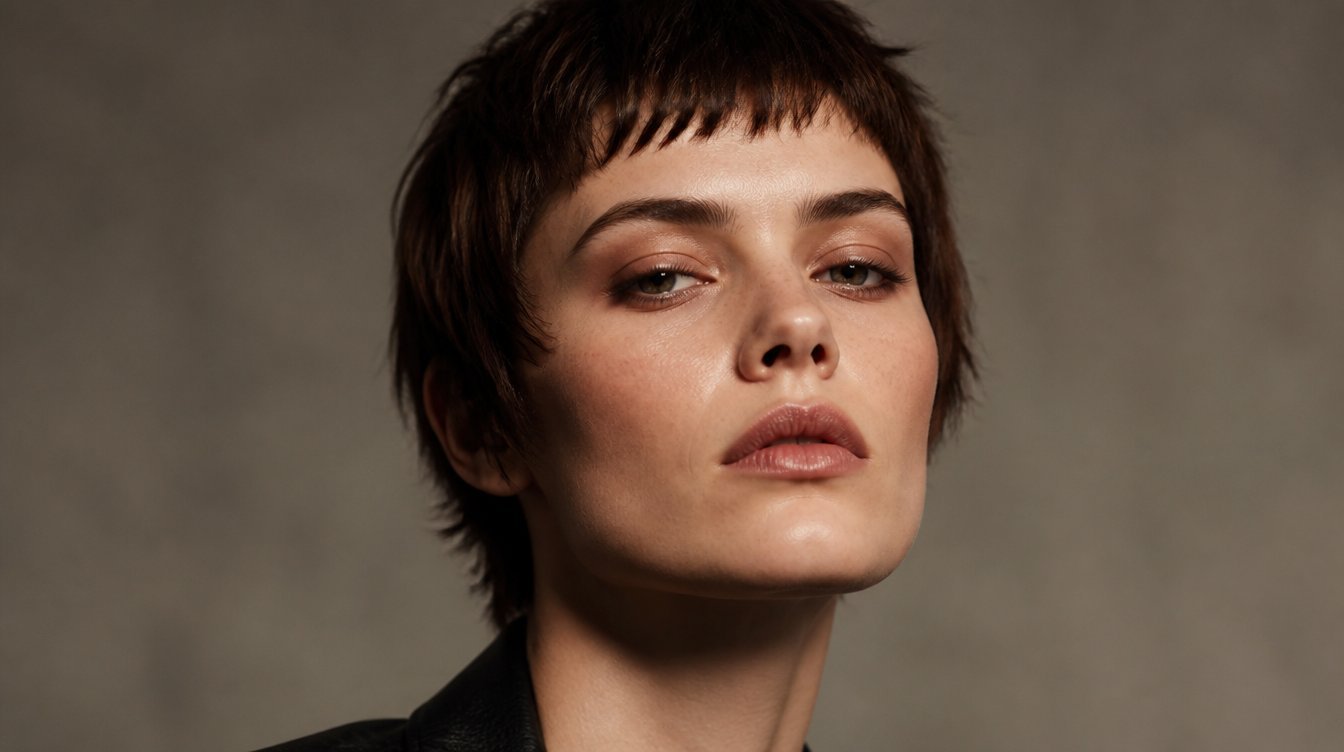
Bratty bangs are a short, choppy, higher-set fringe cut in separated pieces rather than a solid curtain. They sit closer to the brow or above it, and the ends are point-cut so they break apart instead of falling flat. The result has movement, gaps, and a little bit of chaos built in on purpose.
The name describes the mood more than the measurement. A bratty bang has attitude. It is direct and a bit confrontational, the opposite of a soft sweep meant to hide behind. Stylists cut them shorter and higher than a curtain fringe so the eyes and brows stay exposed, which is what gives the look its bold, slightly defiant read.
The defining features
Three things separate a bratty bang from any other fringe. First, height: the bang starts further back on the crown, so it falls with more lift and less weight. Second, texture: the ends are chopped, not blunt, creating jagged separation. Third, attitude in the finish, worn piecey and undone rather than brushed smooth.
Why it reads as intentional
An accidental grow-out looks limp and shapeless. A bratty bang looks styled even when it is messy because the cut has structure underneath. The separation is deliberate, the length is chosen, and the whole thing frames the face on purpose. That gap between planned and careless is the entire appeal.
Why Bratty Bangs Are Trending in 2026
Hair in 2026 swung hard away from soft and polished. The past few years belonged to curtain bangs and glossy blowouts, and the reaction was inevitable. People wanted something with more edge, more personality, and less maintenance theatre.
Bratty bangs answer that mood. They are the directional fringe of the year, a look that signals confidence rather than prettiness. They photograph well, they suit the return of nineties and early two-thousands references, and they give a haircut instant character without a full chop.
There is also a practical driver. A shorter, choppier fringe is more forgiving between salon visits than a precise blunt one. It grows out with attitude instead of falling apart, which suits people who want a strong look without a strict upkeep schedule.
Bratty Bangs Versus Other Fringe Types
The fringe family is crowded, and the differences are easy to miss until you are in the chair asking for the wrong thing. Bratty bangs share DNA with curtain, bottleneck, and blunt fringe, but the placement, length, and finish set them apart. Here is how they compare on the points that decide the look.
| Feature | Bratty Bangs | Curtain Bangs | Bottleneck Bangs | Blunt Fringe |
|---|---|---|---|---|
| Length | Brow or above | Cheekbone or longer | Brow center, longer sides | Brow, solid line |
| Shape | Choppy, separated | Soft center part | Narrow middle, flared sides | Straight, dense |
| Finish | Piecey and undone | Smooth sweep | Rounded frame | Sharp and clean |
| Mood | Edgy, direct | Soft, romantic | Balanced, flattering | Bold, graphic |
| Upkeep | Low to moderate | Moderate | Moderate | High |
Read the table one way, and the pattern is clear. Bratty bangs trade softness for attitude and precision for texture. If you want a fringe that hides and flatters, look elsewhere. If you want one that announces itself, this is the cut.
Bratty versus curtain
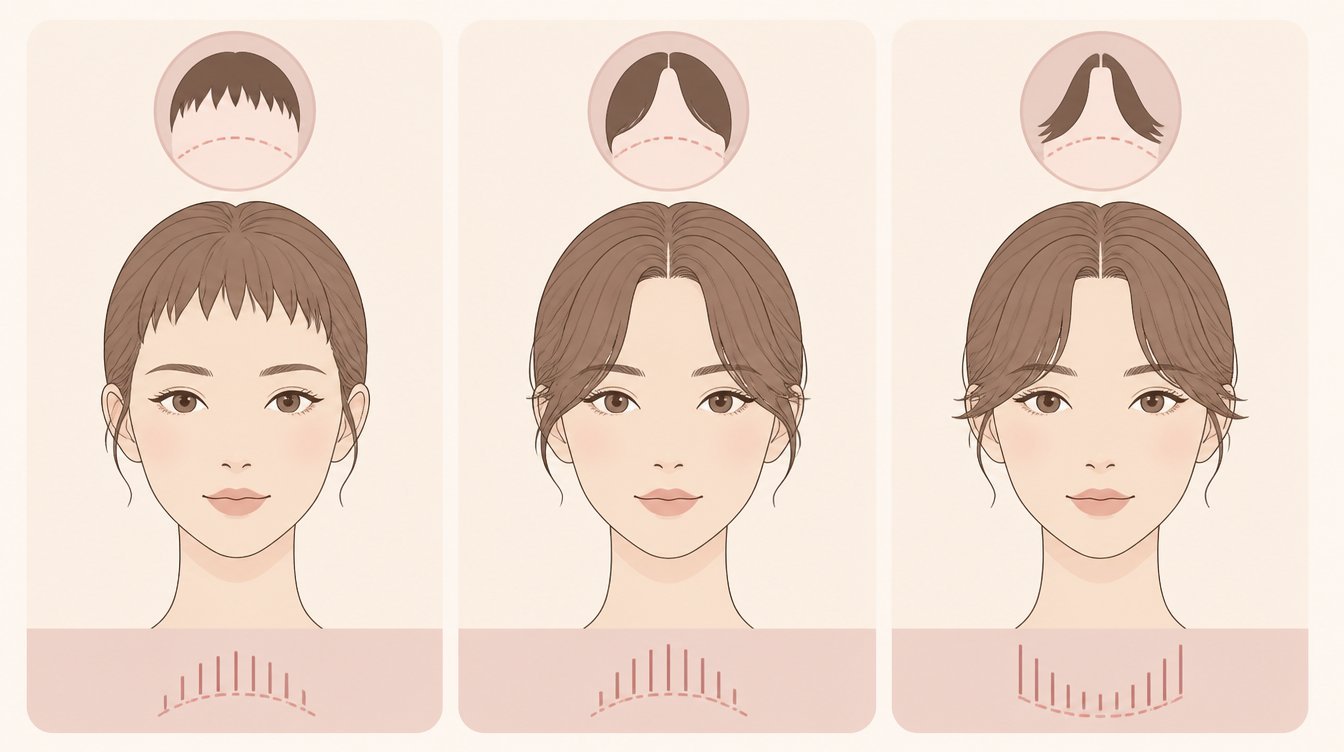
Curtain bangs part in the middle and sweep away from the face in a soft curve, usually hitting the cheekbone. Bratty bangs sit higher, land shorter, and break into pieces instead of curving. Curtain says approachable. Bratty says, ‘Do not mess with me.’
Bratty versus bottleneck
Bottleneck bangs are shorter in the center and longer at the sides, framing the face like the neck of a bottle. They are engineered to flatter. Bratty bangs skip that careful contouring in favour of a blunter, choppier, higher shape that prioritises edge over face-slimming.
Bratty versus blunt
A blunt fringe is a solid, straight, dense line cut clean across the brow. Bratty bangs take that same brow-length starting point and then chop it up, adding gaps and separation so it moves. Blunt is graphic and severe. Bratty is graphic and loose.
Who Bratty Bangs Suit
Bratty bangs are bolder than most fringe, so fit matters more than usual. The good news is that the choppy texture is adaptable, and a skilled stylist can adjust height, density, and separation to work with almost any face. The look flatters when the cut is tailored, not copied off a screenshot.
Two factors decide the outcome: the shape of your face and the texture of your hair. Get both right, and a bratty bang sharpens your features. Ignore them, and it can be overwhelming.
Best face shapes
Oval faces suit almost any version, since the balanced proportions handle a high, choppy fringe without looking crowded. Square and angular faces work well too, because the soft separation offsets a strong jaw. Heart-shaped faces get a flattering result when the bang is kept a touch wider to balance a narrower chin.
Face shapes that need adjustment
Round faces can wear bratty bangs, but a very short, blunt-heavy version can shorten the face further. The fix is a slightly longer, more separated fringe that leaves some forehead visible and adds vertical length. Long faces benefit from a fuller, lower bang that breaks up the vertical line rather than a high, sparse one.
Bratty Bangs by Hair Texture
Texture changes everything about how a bratty bang falls and how much work it takes. The choppy, separated finish that defines the look behaves differently on straight, wavy, curly, and coily hair, and the cut has to account for that from the start.
Straight hair
Straight hair shows the choppy separation most clearly, which makes it the easiest texture for a crisp, bratty bang. The risk is flatness. Fine straight hair can go limp and stringy, so ask for slightly more length to keep body and use a light texture spray to hold the pieces apart.
Wavy hair
Wavy hair takes to bratty bangs naturally because the movement is built in. The waves add their own separation, so the cut can be a little softer and still read piecey. Expect the bang to sit slightly shorter once it dries and springs up, and factor that into the length you ask for.
Curly and coily hair
Curly and coily hair can absolutely carry a bratty fringe, but it needs a stylist who cuts curls dry and understands shrinkage. Cut wet, a curly bang will spring up far shorter than expected. Done right, the curl pattern gives the choppy shape a bold, sculptural quality that straight hair cannot match.
How to Style Bratty Bangs
Styling a bratty bang is about controlled mess. You are not smoothing it into place, you are separating and roughing it up so the pieces read as deliberate. The good news is that it takes less time than a polished blowout, and a little product goes a long way.
- Rough-dry the bang first with your fingers, pushing it in different directions to build lift at the root.
- Use a small round or flat brush only to smooth the base, leaving the ends loose.
- Break the ends apart with a fingertip of texture spray or a matte paste worked between the fingers.
- Pinch and separate individual pieces to exaggerate the choppy gaps.
- Set with a light mist of flexible hairspray, never a stiff hold that flattens the texture.
The finish you are after looks lived-in by mid-afternoon, not freshly styled. If it looks too neat, you have over-worked it. Muss it back up with your fingers.
Products that work
Texture spray is the workhorse. It adds grip and separation without weight, which is exactly what the choppy shape needs. A matt paste or clay helps thicker hair that wants more definition. Skip shiny serums and heavy oils, which glue the pieces together and kill the undone effect.
Tools that help
A small round brush controls the root. A flat paddle brush works for a softer version. A one-inch flat iron can bend a few pieces for extra movement, but use it sparingly. Over-styling with hot tools is the fastest way to lose the bratty character and end up with a tidy, ordinary fringe.

Growing Out Bratty Bangs
Every fringe reaches the awkward stage, and bratty bangs handle it better than most. Because the cut is already choppy and uneven, a grow-out reads as intentional layering rather than a mistake. That built-in forgiveness is one of the reasons the look caught on.
The trick is to let the bang lengthen into face-framing pieces instead of fighting it. As it passes the brow and reaches the cheekbone, it starts to resemble a curtain or bottleneck shape, which many people happily settle into. A few small moves make the transition painless.
Managing the awkward stage
When the bang hits the eyes, resist the urge to cut it yourself. Instead, part it in the centre and tuck the two halves back into the rest of the hair so it blends. A light layer of texture spray keeps the growing pieces from separating in the wrong places.
Blending it into longer layers
Around the eight to twelve week mark, a stylist can soften the grown-out bangs into your existing layers with a quick point cut. This is the cheapest way to keep the shape looking deliberate while you decide whether to recommit to the fringe or grow it all the way out.
Upkeep and Trims
Bratty bangs are lower maintenance than a blunt fringe but not maintenance-free. The choppy shape hides small amounts of growth, so you can stretch the time between trims further than a precise cut allows. Still, the bang grows faster than the rest of your hair and needs attention.
Plan on a trim every three to five weeks if you want the shape crisp, or every six to eight weeks if you like it looser and longer. Many salons offer free or low-cost fringe trims between full cuts, which keeps the upkeep affordable.
How often to trim
The right interval depends on how fast your hair grows and how sharp you want the look. Faster growers and crisper-shape lovers should book more often. If you prefer the bang creeping toward your lashes for a softer, grungier read, you can wait longer between visits without the shape falling apart.
What to ask for at a trim
Ask the stylist to point-cut the ends rather than cut them straight across, which preserves the choppy separation. Tell them how the bang has been sitting and whether you want it shorter, sharper, or left to grow slightly. A good stylist keeps the height and texture consistent with the original cut.
At-Home Cutting Cautions
The bratty bang looks so effortlessly undone that people assume they can recreate it with kitchen scissors. Sometimes that works. Often it does not. The undone finish forgives minor errors, but the underlying structure still relies on the correct height and angle that are hard to judge on yourself.
If you try it at home, the biggest risk is cutting too short. Hair springs up once dry, and a bang that looked right when wet can end up half an inch too high. The second risk is cutting straight across, which produces a blunt line instead of the choppy separation the look depends on.
Rules if you insist on doing it yourself
Cut the bang dry, never wet, so you can see the true length. Use sharp hair scissors, not craft or kitchen scissors, which chew the hair. Point the scissors upward into the ends and snip small vertical cuts rather than a horizontal line. Take off less than you think you need, then reassess.
When to leave it to a professional
The first cut should always be done by a stylist who can set the height, density, and separation correctly. Once the shape exists, small upkeep snips at home are lower risk. Establishing a bratty bang from scratch on yourself is how most fringe regrets begin.
Common Bratty Bang Mistakes
A great bratty bang and a bad one differ by small margins. These are the errors that push the look from cool to unfortunate, and all of them are avoidable.
The first mistake is cutting it too blunt. A solid straight line turns a bratty bang into an ordinary blunt fringe and loses the whole point. The second is over-styling with heat and shine, which smooths away the choppy texture the look lives on. The third is ignoring the height, cutting the bang too low so it flattens against the forehead instead of lifting with attitude.
The fourth is mismatching the fringe to the hair texture, asking for a crisp choppy bang on a curly haircut when wet, which shrinks up into something completely different. The fifth is skipping trims until the bang loses its shape entirely, at which point the intentional look reads as an accidental grow-out.
How Committal Are Bratty Bangs
Any fringe is a commitment, and a shorter one is a bigger commitment than a long sweep. Bratty bangs land in the middle. They are shorter than curtain bangs, so they take longer to grow out, but the choppy shape makes the grow-out far less painful than a blunt fringe.
Realistically, a full grow-out from a high, bratty bang to a length that blends into the rest of your hair takes several months. The upside is that every stage along the way looks intentional, from short and choppy to face-framing to fully grown. You are rarely stuck with a stage you hate for long.
Testing before you commit
If you are unsure, clip-in bangs are the low-stakes way to test the shape against your face before scissors touch your real hair. A stylist can also cut a longer version first, one you can pin back, and take it shorter at the next visit once you know you like it.
Making Bratty Bangs Last Between Washes
Bangs get oily faster than the rest of your hair because they touch your forehead all day. A bratty bang is no exception, and second-day grease is the main reason people over-wash and dry out the rest of their hair. Managing the fringe separately solves it.
Dry shampoo is the key tool. A light mist at the roots on day two revives the lift and separation without a full wash. You can also wash just the bang in the sink between full washes, then rough-dry and re-texture it, which keeps the fringe fresh while the length stays clean.
Bratty Bangs Versus a Full Haircut
One of the reasons bratty bangs spread so fast is that they change a look dramatically without a big commitment to length. A fringe reframes the whole face, adds instant edge, and costs a fraction of a full restyle. For anyone craving change without chopping off inches, it is the efficient move.
The fringe also pairs with almost any length behind it. Bratty bangs work over long layers, a lob, a shag, or a bixie, and they update each of those cuts with the same directional attitude. That flexibility is why stylists reach for the fringe first when a client wants something new but is not ready for a total transformation.
Frequently Asked Questions About Bratty Bangs
What are bratty bangs?
Bratty bangs are a short, choppy, higher-set fringe cut in separated pieces rather than a smooth curtain. They land around the brow or just above it, and the ends are point-cut so they break apart with movement instead of falling flat. The look is deliberately undone, structured but a little messy, and it reads as edgy and direct rather than soft. The name describes the attitude: confident, sharp, and a bit defiant compared with the sweet curtain fringe it replaced.
How are bratty bangs different from curtain bangs?
Curtain bangs part in the middle and sweep away from the face in a soft curve, usually reaching the cheekbone. Bratty bangs sit higher on the forehead, land shorter at or above the brow, and break into choppy, separated pieces instead of curving smoothly. Curtain bangs are designed to flatter and soften. Bratty bangs prioritise edge and attitude, exposing the eyes and brows rather than framing them gently. The finish is the giveaway: piecey and undone versus smooth and swept.
Do bratty bangs suit all face shapes?
Most face shapes can wear bratty bangs with the right adjustment. Oval, square, and angular faces suit them easily, and heart shapes work with a slightly wider bang. Round faces should choose a longer, more separated version that leaves some forehead visible to avoid shortening the face. Long faces do better with a fuller, lower fringe that breaks up the vertical line. The key is tailoring the height, density, and length to your features rather than copying one exact version.
Can I cut bratty bangs at home?
You can maintain them at home, but the first cut is best left to a stylist who can set the correct height, density, and separation. If you attempt it yourself, cut the hair dry so you can see the true length, use sharp hair scissors, and point the blades upward to snip small vertical cuts rather than a straight line. Take off less than you think you need. Cutting too short or too blunt is the most common way at-home fringe regret starts.
How often do bratty bangs need trimming?
Plan on a trim every three to five weeks for a crisp shape, or every six to eight weeks if you prefer the fringe looser and longer. The choppy cut hides small amounts of growth, so you can stretch the interval further than a blunt fringe allows. Ask the stylist to point-cut the ends rather than cut straight across, which preserves the separation. Many salons offer free or low-cost fringe trims between full haircuts, which keeps the upkeep affordable.
How committal are bratty bangs?
They are a moderate commitment. Bratty bangs are shorter than curtain bangs, so they take longer to grow out, but the choppy shape makes the grow-out far less painful than a blunt fringe. A full grow-out to blend into the rest of your hair takes several months, though every stage along the way looks intentional. If you are unsure, clip-in bangs let you test the shape first, or a stylist can cut a longer version you can pin back before going shorter.
RELATED ARTICLES:
- Bottleneck Bangs: The Flattering Face-Framing Fringe Explained
- Italian Bob: The Chic Chin-Length Cut Everyone Is Asking For
- Bixie Haircut: The Bob-Pixie Hybrid Taking Over 2026
About The Author

COMMENTS