Smokey Eye for Beginners: A Step-by-Step Guide to Soft, Blended Color

Learn a smokey eye for beginners in easy steps, from prep and blending to day and evening shades, with FDA eye-safety tips.
This guide at a glance
- 6 min read
- sections
- Published 22 Nov 2026
- By Makeup Desk
Quick answer: A smokey eye for beginners is three shades blended together: a light neutral on the lid, a medium transition shade in the crease, and a deeper shade on the outer third of the lid and along the lash line. Blend until there are no hard edges, smudge a soft line of liner at the lashes, finish with mascara, and you have a soft, hazy look in just a few minutes once you have practiced.
| Key fact | Details |
|---|---|
| What it does | Adds soft, blended depth around the eyes |
| Who it suits | All eye shapes and colors; choose shades to match your eyes and the occasion |
| Best starter shades | Soft browns and taupes for day; charcoal, plum or deep bronze for evening |
| Time | A few minutes once you have practiced |
| Tools | A flat shadow brush, a fluffy blending brush, a small smudge brush, an angled brush or pencil |
| Care line | Use eye-safe products, never share them, and stop if your eyes become irritated |
What do you need for a smokey eye?
You do not need a big kit. Four or five brushes and a small palette of matte and softly shimmering shades are enough. Styling advice below is labeled as such, while the safety points come from the U.S. Food and Drug Administration (FDA).
- Eye primer or concealer: a thin layer on the lid gives shadow something to grip.
- Three shadow shades: a light neutral, a medium transition shade and a deeper shade.
- Brushes: a flat shader for the lid, a fluffy blending brush for the crease and a small brush for smudging.
- Soft eyeliner: a pencil or gel liner that smudges easily.
- Mascara: to frame the eye.
- Cotton swabs and a clean tissue for clean-up.
How do you do a smokey eye for beginners, step by step?
Work lightest to darkest and blend after every layer. Gentle, small motions give a softer result than pressing hard.
- Prep. Wash your hands, then dab a thin layer of eye primer or concealer over the lid and blend it out. Let it set for a moment.
- Base shade. Sweep a light, neutral shade across the whole lid up to the brow bone. This evens out the color and gives you a blending canvas.
- Transition shade. With a fluffy brush, blend a medium matte shade (a soft brown or taupe) in small windshield-wiper motions through the crease. Keep it above the lid so the shape builds gradually.
- Deeper shade on the lid. Pat the deeper shade onto the outer third of the lid and into the outer corner, forming a soft "V" or a sideways triangle.
- Blend. Go back to the clean fluffy brush and blend the edges until the shades melt into each other. If a line is still visible, blend it, do not add more color.
- Line the lash line. Draw a thin line close to the upper lashes, from the middle of the eye to the outer corner. Smudge it with a small brush so it looks hazy.
- Lower lash line. Use a little of the deeper shade along the outer half of the lower lash line, with a smudge brush, then blend into the upper outer corner.
- Brighten the inner corner. A touch of light shimmer or a pale shade brightens the eye.
- Mascara. Curl lashes if you like, then apply one or two coats.
How do you make it soft for day or deeper for evening?
Use the same steps with different shades and amounts. The difference is how much color you build and how far out you extend it.
| Look | Shades | How to adjust |
|---|---|---|
| Soft daytime | Cream, warm tan, soft brown | Keep color close to the lashes; one layer; skip the lower lash line or use only a little |
| Evening | Charcoal, deep plum, espresso brown, deep bronze | Build the deeper shade in thin layers; extend a little past the outer corner; add shimmer to the center of the lid |
For a wearable first try, use a brown. It is more forgiving than black, and it reads as defined but not heavy. Once you are comfortable, add depth with a deeper shade.
Which shades suit your eye color?
This is styling advice, not a rule, so pick what you enjoy wearing. Shades opposite your eye color on the color wheel often make eyes stand out.
- Brown eyes: nearly everything works. Try bronze, plum, teal, deep green, or classic charcoal.
- Blue eyes: warm browns, copper, peach and bronze create contrast.
- Green eyes: plum, burgundy, mauve and warm brown bring out the green.
- Hazel eyes: olive, gold, bronze and purple tones bring out different flecks of color.
- Gray eyes: charcoal, navy, silver and soft cool browns echo the tone.
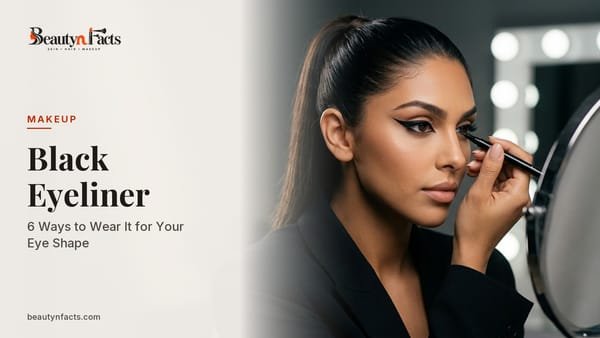
For eyeliner options beyond a smudged line, see black eyeliner looks for your eye shape.
How do you clean up and fix a blend?
- Fallout under the eyes: brush it away with a clean, fluffy brush before touching foundation, or apply eye makeup first and do base makeup after.
- Too dark: blend with a clean brush and a little of the transition shade or a light neutral.
- Harsh edges: blend with a clean fluffy brush using tiny circles.
- Smudged liner outside the shape: dip a cotton swab in a little makeup remover and tidy the edge. A dab of concealer on a small flat brush can sharpen the outer edge.
- Creasing: use thinner layers and a thin base. Mineral mist can help set and refresh makeup, as covered in the mineral water mist guide.
How do you keep the eye area safe and comfortable?
The FDA offers practical tips that apply to every eye look.
- Use products meant for the eyes. Do not use lip liner as eyeliner or any product that is not intended for the eye area.
- Do not share eye makeup, even with close friends. Another person's bacteria can cause problems. If you try testers in a store, use single-use applicators such as clean cotton swabs.
- Wash your hands first, and keep brushes, containers and anything else near your eyes clean. The AAD also suggests washing makeup brushes weekly.
- Replace mascara regularly. The FDA says to discard mascara two to four months after purchase, and never add saliva or water to it.
- Store products below 85°F. Heat, such as in a hot car, can break down preservatives.
- Do not apply or remove makeup in a moving vehicle, where a bump could cause a pencil or wand to injure your eye.
- Avoid eye makeup during an eye infection or when the skin around the eye is inflamed, and discard products you used when it started.
- Skip kohl. The FDA states it is not approved for use in eye cosmetics in the U.S.
How do you remove a smokey eye gently?
The AAD advises removing makeup, including eye makeup, before bed with an oil-free remover, then washing your face with a gentle cleanser without scrubbing. Hold a remover-soaked cotton pad on the lid for a moment, then wipe softly outward. Rinse remover off completely, and use a cotton swab for any stubborn bits at the lash line.
What to expect
Your first smokey eye may look uneven, which is normal. Blending usually gets easier with practice. Wear time depends on your skin, primer and the products you choose. Eye makeup is easy to refresh with a touch of the deeper shade through the day.
When to see a professional
Stop using any eye product that causes burning, redness or irritation, as the FDA advises, and see a doctor if irritation continues. Contact your healthcare provider about a bad reaction such as a rash, redness or burning, and wait until any eye infection or inflammation around the eye has healed before using eye makeup again.
FAQ
What is the easiest way to blend a smokey eye?
Work from light to dark and use a clean, fluffy brush in small windshield-wiper motions. Add color in thin layers and blend after each one. If an edge looks harsh, blend it again rather than adding more color.
Which colors are best for a smokey eye for beginners?
Soft browns and taupes are the most forgiving, because they look defined without being heavy. Once you feel confident, try charcoal, plum or deep bronze for evening. Choose shades that suit your eye color and the occasion.
Do you have to use black for a smokey eye?
No. A smokey eye is about blended, hazy color, not a particular shade. Brown, navy, plum, green or bronze all work. Brown is often the easiest to blend on a first try.
How do you keep eye makeup safe?
Use only products made for the eyes, wash your hands first, keep brushes and containers clean, and never share. The FDA suggests replacing mascara two to four months after purchase and storing makeup below 85°F. Stop using a product if it irritates your eyes.