
An AI skin analysis app is a phone tool that scans a selfie and scores your skin on concerns like wrinkles, pores, pigmentation, hydration, and rednes
An AI skin analysis app is a phone tool that scans a selfie and scores your skin on concerns like wrinkles, pores, pigmentation, hydration, and redness, then hands back a suggested routine in seconds. In 2026 these scans went from novelty to daily habit, showing up as free apps, brand websites, in-store mirrors, and at-home devices that read your face and tell you what they think is going on. The appeal is obvious: a quick, free-feeling second opinion that turns a confusing shelf of products into a short shopping list. The catch is just as real, because a camera is not a dermatologist, lighting changes everything, and the routine it recommends often points straight at the products it sells. This guide covers what these tools do well, where they fall short, how to read the results without getting played, and how to protect the face photos you upload.
Reviewed by the BeautynFacts editorial team. Last updated: July 2026.
What AI Skin Analysis Actually Is
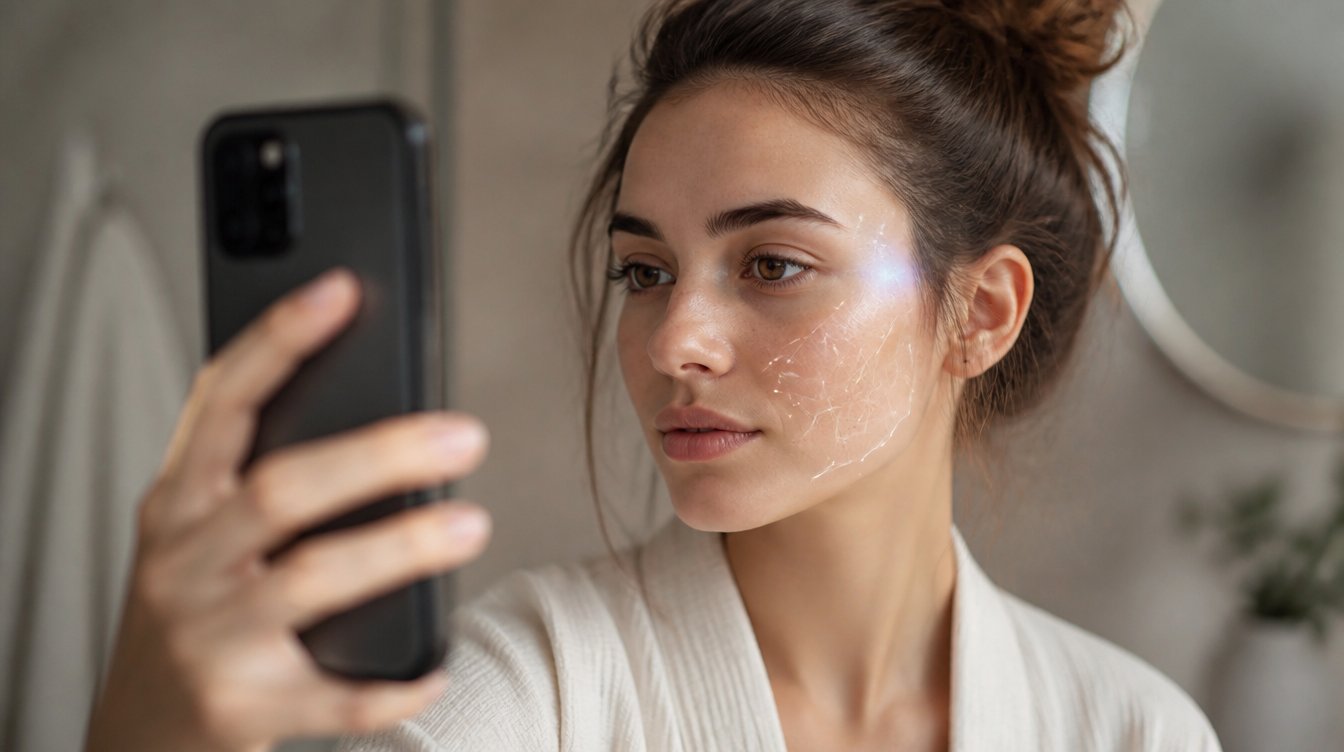
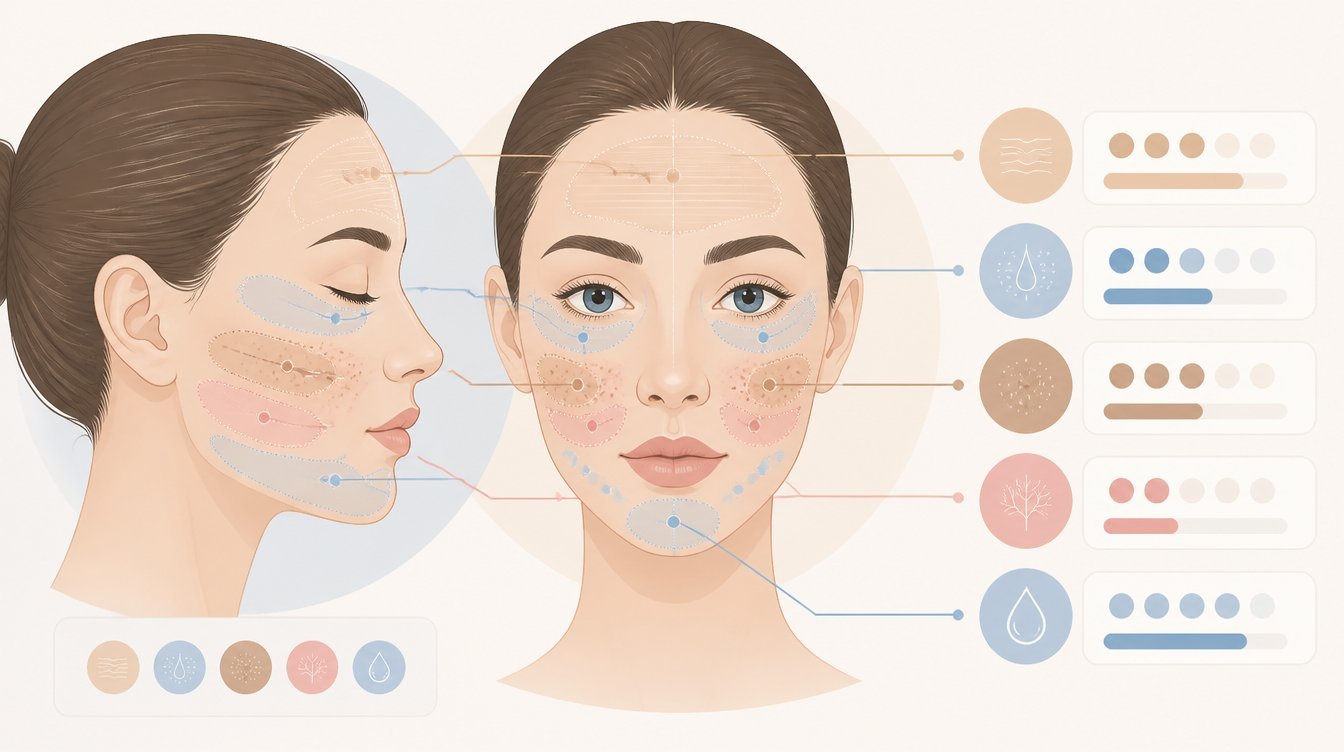
AI skin analysis is software that looks at a photo of your skin and returns numbers. You point a phone camera at your face or upload a selfie, and within seconds the tool reports scores for things like fine lines, pore visibility, dark spots, redness, oiliness, and surface hydration. Most tools then translate those scores into a suggested routine, usually a cleanser, a treatment, and a moisturiser.
The scan itself is not a medical test. It is a pattern-matching read of your skin surface, the same way a photo app can guess your age or spot a smile. It measures what the camera can see, nothing deeper. That distinction is the single most useful thing to hold in your head when the results roll in.
What it reports on
The common metrics are wrinkles and fine lines, pore size and count, pigmentation and dark spots, redness, texture, oiliness, and a hydration estimate. Some tools add a skin-age score, which compares your face to a reference set and spits out a number that is usually higher than you would like on a Monday morning.
Why AI Skin Analysis Took Off in 2026
Three things collided this year. Phone cameras got sharp enough that a front-facing selfie carries real detail. AI image models matured to the point where reading skin texture became cheap and quick. And shoppers, tired of guessing, wanted a shortcut through the overwhelming wall of choices at the beauty counter.
Brands leaned in hard because a skin scan is a brilliant sales funnel. It feels like a free service, it feels personal, and it ends with a product list. Retailers added in-store mirrors and kiosks. Skincare apps folded scanning into their core feature set. What used to be a clinic-only tool landed in everyone’s pocket, and the habit stuck.
The convenience pull
The honest driver is convenient. A scan takes ten seconds and costs nothing up front. Compared to booking a dermatologist, waiting weeks, and paying a fee, an instant read on your phone is an easy yes, even if it is a shallower answer.
How the Technology Works in Plain Terms
Under the hood, AI skin analysis runs on computer vision, a type of software trained to recognize patterns in images. Developers feed the system huge numbers of skin photos, each labelled by humans for concerns like wrinkles or dark spots. Over many rounds, the model learns which pixel patterns tend to line up with which labels.
When you scan your face, the model compares your image against everything it learned and estimates how strongly each concern shows up. It does not consider your skin. It is measuring how closely your photo resembles the millions of examples it was trained on, then converting that resemblance into a score.
Training data shapes the output
The quality of any scan depends entirely on the photos it learned from. A model trained mostly on one age range, one lighting setup, or one narrow range of skin tones will read those faces well and stumble on everything else. The scan is only as balanced as its training set, and you never get to see that training set.
Scores are estimates, not measurements
A hydration score from a photo is an educated guess based on how skin usually looks when it is dry, not a reading of actual water content. The same goes for most metrics. Treat every number as a confident estimate rather than a lab result, because that is what it is.
What AI Skin Analysis Does Well
Used with clear eyes, these tools genuinely help. Their real strength is not diagnosis. It is tracking and translation.
The best use is consistency over time. If you scan under the same light, at the same angle, on the same phone, week after week, the tool becomes a decent progress tracker. It can flag that your redness score is trending down after six weeks on a gentle routine, which is harddifficultjudge with the naked eye in a mirror you look at every day.
The second real strength is simplification. For someone brand new to skincare, a scan can turn a paralysing shelf of options into a starting point. It won’t be perfect, but a reasonable cleanser and moisturiser suggestion is better than buying ten random products on a whim.
Good jobs for a scan
- Tracking one concern over weeks under identical conditions
- Giving a total beginner a simple starting routine
- Nudging you to notice a change you had not clocked
- Comparing before and after photos side by side
Where AI Skin Analysis Falls Short
This is the part the marketing skips. The limits are not minor footnotes. They shape how much you should trust any single result.
Lighting is the biggest wrecker. The same face scanned under warm bathroom bulbs, cool office lighting, and bright daylight can return three different sets of scores. Redness, tone, and texture readings vary significantly with the light, and most people do not account for this variation.
Camera quality matters just as much. A newer phone with a better sensor captures detail an older one misses, so upgrading your phone can change your skin score without your skin changing at all.
The bias problem
If a model were trained on a narrow range of skin tones, it would read skin outside that range less accurately. This is a documented weakness across computer vision, and skin tools are not exempt. Darker skin tones and less common features have historically been under-represented in training data, which can mean less reliable scores for the people the industry already underserves.
It is not a dermatologist
This is the line that matters most. An AI skin analysis app does not diagnose medical conditions. It cannot tell a harmless spot from something that needs a doctor, it cannot assess a mole for danger, and it cannot diagnose acne severity, rosacea, eczema, or skin cancer. If a scan flags something or you notice a changing, bleeding, or painful spot, that is a reason to see a professional, not to trust an app.
Popular Formats You Will Run Into
AI skin analysis shows up in a few distinct shapes, and each comes with its own agenda.
Free phone apps
Standalone apps scan your selfie and give scores, often behind a subscription for the full report or routine. The free tier is the hook. Read the privacy terms before you upload, because a free app is often paying for itself with your data.
Brand and retailer tools
Skincare brands and stores offer scans on their sites and in their apps. These are the most conflicted, because the routine they recommend is almost always built from their own catalogue. The analysis may be sound, but the shopping list is a sales pitch.
In-clinic and in-store scanners
Professional-grade machines in dermatology offices and some stores use controlled lighting and specialised cameras, sometimes including UV imaging. These are more reliable than a phone because they control the variables a selfie cannot, though the in-store versions still often point toward products for sale.
At-home devices
A newer category of handheld gadgets pairs a small, controlled-light camera with an app. By fixing the lighting and distance, they cut down on the biggest source of phone-scan noise, which makes their tracking more consistent than a bare selfie.
AI Analysis Versus a Dermatologist Versus Guessing
The fairest way to see where an app fits is to line it up against the two things it competes with: a professional visit and going it alone. Each has a real place.
| Factor | AI Skin Analysis App | Dermatologist Visit | Guessing Your Own Routine |
|---|---|---|---|
| Cost | Free to low | Higher, may need insurance | Cost of trial and error |
| Speed | Seconds | Days to weeks for an appointment | Instant but blind |
| Medical diagnosis | None | Yes, this is the point | None |
| Best at | Tracking and simple routine ideas | Diagnosis and prescription | Nothing reliable |
| Main risk | Bias, lighting, sales agenda | Access and cost | Wasting money on wrong products |
The takeaway is simple. Use an app for tracking and a starting point, see a dermatologist for anything medical, and treat pure guessing as the option all three of these are trying to replace.
How to Use the Results Wisely
The tool is only as good as how you read it. A few habits turn a gimmick into a genuinely useful signal.
Fix your conditions. Scan in the same spot, in the same daylight if possible, at the same time of day, and on the same phone. Consistency is what makes the trend line meaningful, and the trend matters far more than any single score.
Ignore the absolute number and focus on the direction. A wrinkle score of sixty means little on its own, but a score that drops over eight weeks tells you something is working. The relative change is the real data.
Separate the analysis from the sales pitch
When a brand tool recommends a routine, take the concern it flagged seriously and be cautious about the specific products. The tool saying you have dehydration is useful. The tool insisting the fix is its own thirty-dollar serum is a suggestion, not a prescription.
Cross-check big claims
If a scan claims a dramatic problem, verify it against a mirror, a second scan on another day, and common sense before you act. One alarming score under bad lighting is not a reason to overhaul your whole shelf.
Privacy When You Upload Your Face
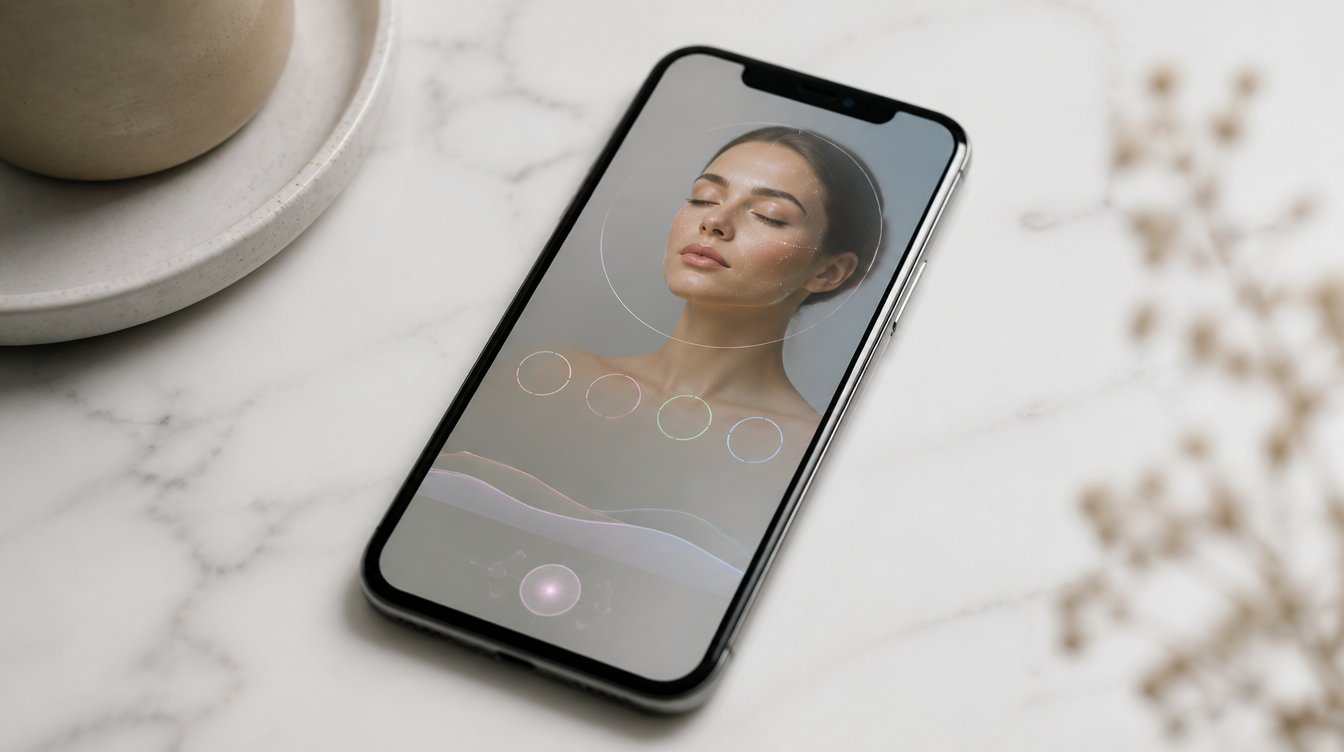
A face photo is sensitive data. It is tied to your identity in a way a shopping cart is not, and once you upload it you have handed a company a clear image of your face. Before you scan, it is worth knowing what happens to that image.
The questions that matter are simple. Is the photo processed on your device or sent to a server? Is it stored after the scan, and for how long? Is it used to train the company’s models? Is it ever shared with or sold to third parties? Can you delete it, and how?
What to check before scanning
- Whether the scan runs on-device or uploads to a server
- How long your photo is kept, and whether you can delete it
- Whether your image is used to train the company’s AI
- Whether data is shared with advertisers or other third parties
- Whether the app is free because you are the product
If the privacy policy is vague or missing, treat that as your answer and skip the scan. On-device processing is the safest option, because your face never leaves your phone.
Common Mistakes People Make
Most disappointment with these tools comes from a few avoidable errors.
The first is to trust one scan as gospel. A single reading under uncontrolled light is noise, not signal. The overall direction across several scans is what matters.
The second is buying everything the tool recommends. The routine is a starting suggestion, often skewed toward products the company sells. You do not need all of it, and you certainly do not need it on day one.
The third is treating a scan as a health check. It is not. Skipping a dermatologist for a real skin concern because an app said you were fine is the most dangerous mistake on this list.
Small fixes that help
Scan under consistent light, ignore the skin-age number if it only stresses you out, wait weeks before judging a routine, and keep a real professional in the loop for anything medical. Those four habits fix nearly every complaint people have about these tools.
Who Benefits Most From AI Skin Analysis
The tool is not for everyone equally. Beginners get the most out of it, because it turns overwhelm into a simple plan. People who like tracking progress get real value from the trend lines. And anyone curious about their skin gets a low-stakes way to pay closer attention.
The people who benefit least are those with an active medical skin concern, who need a doctor rather than a camera, and skincare veterans who already know their skin and routine well. For them, a scan is entertainment more than information.
What to Expect in the Next Wave
The technology is improving fast, and a few shifts are already visible. Training sets are getting broader, which should slowly reduce the bias problem. On-device processing is spreading, which is better for privacy. And at-home devices with controlled lighting are making the tracking more trustworthy than a plain selfie.
What will not change is the core limit. No amount of clever software turns a surface photo into a medical diagnosis. The smartest way to use any AI skin analysis app, now and later, is as a mirror with a memory, not as a doctor in your pocket.
Frequently Asked Questions About AI Skin Analysis
Is an AI skin analysis app accurate?
It is reasonably effective at spotting visible surface concerns like pores, redness, and fine lines, but the scores are estimates, not measurements. Accuracy swings with lighting, camera quality, and the range of skin tones the model was trained on. A scan taken in bright daylight on a newer phone will read differently from one in dim bathroom light on an older device. Use it to track direction over time under consistent conditions rather than trusting any single number as an exact reading of your skin.
Can AI skin analysis diagnose skin conditions?
No. An AI skin analysis app does not diagnose medical conditions and should never replace a dermatologist. It reads the skin surface and scores cosmetic concerns, but it cannot assess a mole for danger, judge acne severity, or detect rosacea, eczema, or skin cancer. If a scan flags something worrying, or you notice a spot that is changing, bleeding, itching, or painful, that is a reason to book a professional, not to rely on an app that was only built to estimate appearance.
Are the product recommendations trustworthy?
Take them with caution. The concerns flagged by a scan, such as dehydration or visible pores, are often useful. The specific products it recommends are frequently drawn from the catalogue of the brand or retailer that built the tool, which makes the routine as much a sales pitch as advice. Treat the flagged concern as the signal worth acting on, then choose products on their merits rather than buying the entire suggested routine on the spot.
Is it safe to upload my face photo?
It depends on the tool. Before scanning, check whether your photo is processed on your device or sent to a server, how long it is stored, whether it trains the company’s AI, and whether it is shared with third parties. On-device processing is safest because your face never leaves your phone. If the privacy policy is vague, missing, or hard to find, treat that as a warning and skip the scan, since a face photo is sensitive data tied directly to your identity.
How often should I use a skin scan?
For tracking, once a week or once every two weeks is plenty, as long as you always use the same lighting, angle, and phone so the results stay comparable. Scanning daily tends to produce noisy swings driven by light and camera rather than real skin change. The value is in the trend across several weeks, not in one reading, so pick a fixed routine and stick with it. Give any new skincare routine at least six to eight weeks before you judge the results.
Is a phone app as good as an in-clinic scanner?
Usually not. In-clinic and professional scanners control lighting, distance, and camera quality, and some add UV imaging that a phone cannot match, which makes their readings more consistent and reliable. A phone app is far more convenient and free, but it inherits every problem of an uncontrolled selfie. At-home devices with built-in controlled lighting sit in between. For casual tracking a phone is fine, but for a serious or medical concern a professional assessment beats any consumer scan.
RELATED ARTICLES:
- Expert-Approved Skin Care Tips for a Healthier Complexion
- Glowing Skin: The Habits That Actually Make a Difference
- Life-Changing Beauty Tips Worth Adding to Your Routine
About The Author

COMMENTS