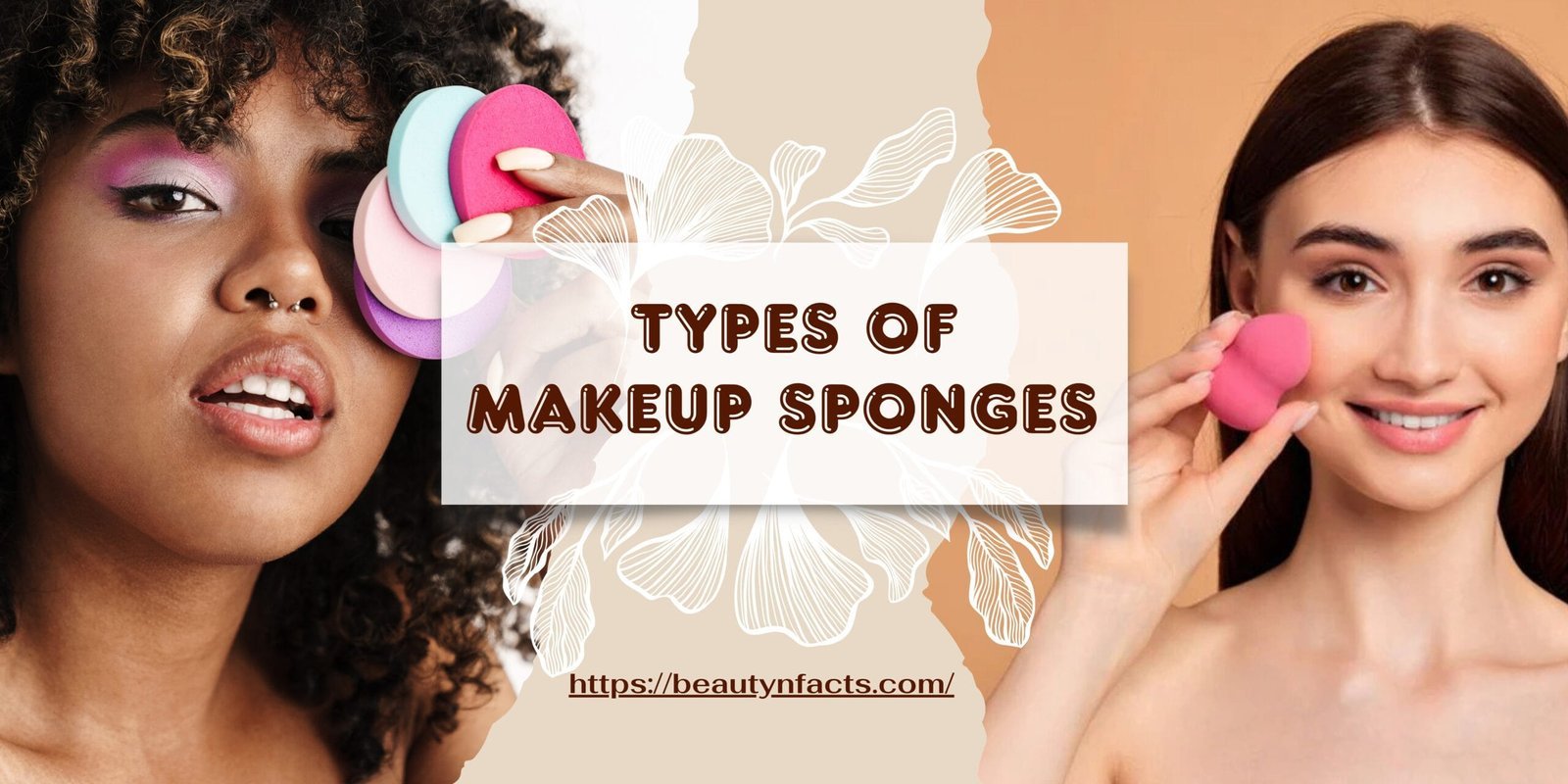
Makeup tools have trends, but makeup sponges are timeless for one reason: they create a finish that looks like skin, not product. Most people discover
Makeup tools have trends, but makeup sponges are timeless for one reason: they create a finish that looks like skin, not product. Most people discover the real secret to using makeup sponges correctly in the first minutes of learning about their types in 2026: it’s not the brand, but rather the shape, texture, moisture level, and technique.
If you have ever wondered, “Why does my foundation appear flawless on TikTok but uneven on my skin?” this guide is designed for you. We’ll break down every major sponge and puff type, what each one is actually designed to do, and exactly how to use it without streaks, cakiness, or wasted product.
In my experience, the greatest glow-up comes from two shifts: choosing the sponge that matches your formula and using the correct motion (tapping, pressing, rolling) at the correct moisture level. Let’s make your base look smoother starting today.
Makeup Sponge Basics (2026): Why They Work So Well
A makeup sponge is basically a tiny “skin-finishing machine.” Instead of painting product on, it presses pigment into place and diffuses the edges so there’s no harsh boundary.
Think of it like this: a brush is a paintbrush, fingers are your hands, and a sponge is a mini paint roller built to smooth, blend, and blur.
The “bounce” principle: pressure + diffusion
When you tap (not swipe), the sponge distributes product in micro-layers. Those micro-layers reduce visible streaks and help foundations look more even under daylight.
Industry experts agree that tapping is the difference between “makeup sitting on top” and “makeup melting in.”
“Use a bounce motion to place the product, then bounce again to blur; don’t drag.”
Wet vs. dry: what changes (finish, absorption, blending)?
- Damp sponge: Less absorption, more slip, more natural finish. This method works particularly well for liquids and creams.
- Dry sponge: More product pickup, more coverage, more texture risk. This method works particularly well for certain powders and for spot cleaning.
Research shows porous applicators can hold moisture and product residue if not dried properly, which is why hygiene matters. [Source
When should you use a sponge, brush, or fingers?
- Sponge wins: Seamless blending, natural edges, quick base correction.
- Brush wins: Building coverage fast, working in thin layers, precise placement with less absorption.
- Fingers are advantageous for melting creams, warming products, and achieving quick, minimal makeup application.
Quick Takeaway: If your base looks streaky, the solution is usually motion + moisture, not “a new foundation.”
Next, let’s map out the full lineup of sponge types so you can choose correctly in seconds.
Types of Makeup Sponges 2026: The Complete Taxonomy (With Table)
“Makeup sponge” is now a whole family: classic foam sponges, microfiber textures, velvet puffs, cushion puffs, silicone blenders, and hybrid tools. In 2026, most confusion happens because people use the right product with the wrong tool.
Here’s the taxonomy you can trust.
Classic foam (teardrop/egg)
The universal blender. Best for liquid foundation, concealer, cream blush, and cream bronzer.
Flat-edge/angled sponges
The sponges are specifically designed to achieve precise lines, press under the eyes, contour edges, and achieve targeted blending.
Wedges/disposables
This product is ideal for one-time use, touch-ups, and maintaining hygiene in professional settings. These sponges are surprisingly effective for spot cleaning tasks.
Microfiber/flocked sponges
These sponges are designed to reduce absorption and increase coverage. When used correctly, they can provide a fuller coverage look.
Velvet/cushion puffs
Velvet/cushion puffs are not synonymous with sponges. Puffs are for pressing powder and cushion product for a blurred, smooth look.
Silicone and hybrid applicators
Silicone doesn’t absorb product (less waste), but it needs a second tool to blend edges.
Comparison Table: Sponge Type → Best For → Finish → Skill Level
Type Best for Finishing Biggest benefit Common mistake Teardrop/egg foam Liquids and creams Skin-like, seamless Easy blending Swiping/dragging Flat-edge/angled Under-eye, contour edges Lifted, precise Sharp placement Using too dry a wedge (often disposable) Spot concealing, touch-ups Targeted Hygienic and controlled Too much pressure Microfiber/flocked Medium–full coverage Smooth, perfected Less absorption Overlayering Velvet/powder puff Setting powder Blurred, soft-matte Long wear Sweeping instead of pressing Cushion puff Cushion foundations Thin, even veil Fast, smooth base Overloading puff Silicone Heavy liquids, mixers Depends on blending. The final blend is skipped, resulting in less product waste.
“Tools control the finish. If you want filtered skin, start with the right applicator.”
Quick Takeaway: Foam blends, puff presses, silicone spreads, and microfiber boosts coverage.
Now let’s go deep on each type, starting with the classic teardrop sponge.
Types of Makeup Sponges 2026: Classic Teardrop/Egg Sponges
If you buy only one tool, make it a classic teardrop/egg sponge. It’s versatile, beginner-friendly, and capable of pro-level results when used with intention.
Best uses by face area
- Round side: cheeks, forehead, and jaw for fast foundation blending.
- Pointed tip: Under eyes, corners of nose, around lips.
- Side surface: Pressing concealer into place, blending cream blush.
In my experience, the teardrop sponge is the best “one tool” solution because it adapts to both placement and blending without switching tools.
Step-by-step for foundation (the “damp bounce” method)
- Wet the sponge fully, then squeeze firmly.
- Wrap in a clean towel and squeeze again (goal: damp, not dripping).
- Apply foundation to the face or back of the hand.
- Pick up a small amount and tap from the center outward.
- Use lighter tapping on the edges for a natural fade.
Pro Tip (Expert Insight Box):
If your foundation separates, stop tapping harder. Tap lighter and switch to micro-layers. Heavy pressure moves product instead of blending it.
“A damp sponge should sound like soft tapping, not slapping. That sound often means it’s too wet.”
Step-by-step for concealer (crease-resistant placement)
- Apply concealer only where you need brightness.
- Let it sit for 10–20 seconds (helps coverage).
- Use the pointed tip and press into place.
- Blend edges outward, not downward (keeps lifting).
- If setting with powder, press it with a puff (more on that later).
Common mistakes and fixes
- Mistake: Dragging the sponge (causes streaks).
Fix: Bounce, then bounce again to blur. - Mistake: If the sponge is too wet, it shears out the foundation.
Fix: Towel-squeeze; aim for damp. - Mistake: Using one sponge for everything (muddy colors).
Fix: Use a second sponge for blush/bronzer if you wear color products.
Quick Takeaway: Teardrop sponges excel at a “skin finish” when damp and used with tapping.
Next, let’s talk about angled sponges and where precision and lift come from.
Flat-Edge & Angled Sponges: Contour, Lift, and Precision
Angled sponges are like the “tailored blazer” of makeup tools: they provide structure. If you love a lifted cheekbone, crisp contour, or clean under-eye application, this shape matters.
The angled sponge provides crisp edges for defining the jawline and cheek contour.
Use the flat edge to stamp the contour exactly where you want it, then blend upward.
A beneficial analogy: imagine you’re shading a drawing. You place the shadow first, then softly blur the edge, not the whole area.
“For contour, place it with the flat side and blend upward; downward blending can drag the face down visually.”
Under-eye placement without creasing
Under-eye skin is thin and moves constantly. Angled sponges help you press product into place without over-blending.
Technique:
- Use a damp angled edge.
- Press concealer where you want coverage.
- Blend only the border; don’t chase perfection across your whole under-eye.
“Press and roll” vs “tap and lift”
- Tap and lift: Best for blending foundation/concealer without moving layers.
- Press and roll (tiny roll): Useful for smoothing edges on thicker base products.
Best formulas (cream, stick, liquid)
Angled sponges are best for:
- Cream contour and bronzer
- Liquid concealer
- Cream blush (especially higher placement)
Quick Takeaway: Flat edges are for placement control; tapping motion keeps lift and avoids texture.
Next, we’ll cover wedges because yes, they still have a place in 2026.
Wedge Sponges & Disposables: The Underrated Workhorses
Wedge sponges look old-school, but they’re quietly effective, especially for controlled application and hygiene.
Why do MUAs still keep wedges?
Professional artists often keep wedges because:
- They can be single-use (hygiene).
- The shape provides controlled placement for small areas.
- They’re ideal for touch-ups without contaminating your main sponge.
Research shows unwashed makeup applicators can harbor bacteria over time, which may contribute to breakouts for some users. [Source
“Wedges are perfect for targeted correction; think ‘spot tool,’ not ‘all-over blender.’”
Spot-concealing, touch-ups, and hygiene wins
Use wedges when:
- Covering a small blemish without disturbing the base
- Touching up around the nose
- Applying a product to clients (single-use)
Simple wedge spot technique:
- Apply concealer to the designated spot.
- Use the wedge point to press only the dot.
- Use the clean side to feather the edges.
When wedges fail, consider using alternative tools.
Wedges are not ideal for:
- Full-face foundation (can look patchy)
- Very dewy finishes (can drag product)
- Quick blending across textures
Quick Takeaway: Wedges are precision “fixers,” not your everyday full-face tool.
Now let’s talk about microfiber sponges, often misunderstood and often used wrong.
Microfiber/Flocked Sponges: More Coverage, Less Cakiness (When Used Right)
Microfiber (sometimes called “flocked”) sponges have a soft, fuzzy surface designed to reduce direct absorption and help distribute product more evenly. When they work, they create a perfected, camera-ready look.
What “microfiber” actually does
That fuzzy layer helps the foundation remain on the surface long enough to be pressed into the skin. It can create:
- More coverage with less product waste
- A smoother look over mild discoloration
- Faster full-face application
“Microfiber sponges are like a velvet roller with great coverage, but they demand lighter pressure.”
Full coverage technique (without heaviness)
- Use the sponge slightly damp (not soaking wet).
- Apply foundation in thin layers.
- Press the product in; don’t aggressively bounce.
- Build coverage only where needed (center face, redness zones).
Stat Point: Some users report using less foundation when switching from very absorbent applicators to denser or coated textures. [Source
Best foundations and avoid list
Best with:
- Medium coverage liquids
- Long-wear foundations
- Satin/matte formulas
Avoid or be cautious with:
- Very thick, fast-drying formulas (can catch)
- Foundations that cause pilling over skincare will require troubleshooting later.
How to prevent texture emphasis
Microfiber can highlight dry patches if you press too tightly or layer too much.
Fix:
- Hydrate skin properly
- Apply in micro-layers
- Use a finishing bounce with a classic damp sponge if needed.
Quick Takeaway: Microfiber can give “perfected skin,” but only with light pressure and layered placement.
Next: puffs, because powders and cushions aren’t meant to be “bounced” the same way.
Velvet Puffs and Cushion Puffs provide a blurring effect and a skin-like finish.
If sponges blend, puffs press. That difference is why puffs can create that smooth, pore-blurred finish that looks almost airbrushed.
Puff vs. sponge: the real difference
- Foam sponge: diffuses edges and blends liquids/creams.
- Velvet puff: presses powder into place, increasing wear and blur.
- Cushion puff: lays down thin layers of cushion foundation quickly and evenly.
Industry experts agree pressing is key for longevity, especially for oily skin zones.
“Press powder where you shine first; sweeping spreads texture.”
Setting powder: “press vs sweep”
- Pressing: Locks base, reduces shine, and blurs pores.
- Sweeping: It can disturb the base and emphasize dryness.
Expert Insight Box (Pro Tip):
For under-eyes, press a tiny amount of powder with a puff, then tap off excess with a clean sponge. This prevents cakiness while keeping creases under control.
Cushion foundation technique (thin, even veil)
- Lightly tap puffs into cushions; don’t dig.
- Stamp from center outward.
- Use edges around the nose and under the eyes.
- Build coverage only where needed.
Stat Point: Pressing techniques can increase wear time in high-oil zones for many users. [Source
Touch-up strategy for oily zones
Carry a puff for touch-ups:
- Blot oil first (tissue or blotting paper).
- Then press powder lightly.
- Avoid layering powder over wet oil (it cakes).
Quick Takeaway: Puffs are the 2026 shortcut to blur and longevity, especially for powder and cushion formulas.
Next, we’ll cover silicone tools, which are great for waste reduction, but only if you know the blending step everyone skips.
Silicone & Hybrid Applicators: Minimal Waste and Maximum Hygiene
Silicone applicators don’t absorb product. That means less waste and easier cleaning but also a different finish if you don’t blend properly afterward.
Who is silicone best for?
Silicone can be useful if you:
- Hate product absorption
- Prefer quick cleaning
- Use thicker base products.
- Want to mix foundations or adjust pigment
“Silicone is for spreading; a sponge is for finishing. Use them together.”
How to blend after silicone (the critical step)
Silicone lays product on the skin like a thin film. You must “finish” it:
- Spread product with silicone in a thin layer.
- Immediately use a damp foam sponge to tap and blur.
- Focus on edges (jawline, hairline, nose).
Pros/cons vs. foam
Pros:
- Minimal waste
- Easy to sanitize
- This product is ideal for blending.
Cons:
- You can look streaky alone.
- Less forgiving on texture
- It requires a second tool for the best finish.
Hybrid tools are worth understanding.
Some tools combine a silicone side with a sponge side. These can work well for:
- These tools are effective in quickly dispersing the product.
- Flipping and finishing immediately
Quick Takeaway: Silicone can save product, but foam is still the king of natural finish.
Next: Mini sponges and specialty shapes serve as the precision toolkit that solves 80% of the issue of “my makeup looks messy up close.”
Mini sponges, detail shapes, and specialty cuts are essential tools for achieving precision in makeup application.
Mini sponges are not a gimmick; they’re a precision solution. If your makeup looks appealing from far away but messy up close, detail tools often correct it.
Under eyes, nose folds, blemish placement
Use minis for:
- Inner corners
- Smile lines
- Around nostrils
- Blemishes without disturbing the base.
“Precision sponges keep coverage where you want it without dragging product into lines.”
Cream blush placement without lifting base
Cream blush can lift foundation if applied aggressively.
Better method:
- Place the blush lightly with your fingers or brush.
- Blend the edge with a clean mini sponge using light tapping.
- Do not overwork the center of the blush.
The “two-sponge system” for long wear
If you wear beige- and cream-colored products, consider:
- Sponge #1: foundation/concealer
- Sponge #2: blush/bronzer/highlight
This prevents muddy tones and keeps your base cleaner.
Travel kit essentials
If you travel, your most useful set is
- One classic teardrop sponge
- One mini sponge
- One velvet puff (for powder)
Quick Takeaway: Detail sponges are your “precision eraser,” perfect for small areas and cleaner edges.
Next, we’ll make selection simple with a decision framework you can use in under a minute.
Choosing Among Types of Makeup Sponges in 2026: Your Decision Framework
Choosing the right tool is like choosing shoes: one pair can’t do every job comfortably. Here is a guide to selecting the most suitable sponge (or puff) tailored to your specific usage.
Match by formula (liquid/cream/powder)
- Liquid foundation: Classic teardrop (damp) or microfiber (slightly damp for coverage).
- Cream products: Teardrop/angled for placement and blending.
- Powder setting: Velvet puff (press), not a wet sponge.
“If it’s powder, press it. If it’s cream, tap it. If it’s thick, place it and then blur it.”
Match by skin type (dry/oily/sensitive).
- Dry skin: Damp classic sponge (skin-like finish, less texture).
- Oily skin: Puff for powder pressing + angled sponge for controlled placement.
- Sensitive/acne-prone: Prioritize easy cleaning and frequent replacement, and avoid over-damp storage.
Stat Point: Skin irritation can be linked to friction, residue, and poor tool hygiene in some users. [Source
Match by finish goal (dewy/soft-matte/full glam).
- Dewy: Damp classic sponge + minimal powder.
- Soft-matte: Sponge for base + puff to press powder in key zones.
- Full glam: Microfiber for coverage + angled sponge for precision + puff for baking/setting.
Latex-free, hypoallergenic, and texture concerns
Many modern sponges are latex-free, but if you’re sensitive:
- Choose latex-free options
- Avoid harsh scrubbing motions.
- Wash and fully dry tools to reduce residue.
Quick Takeaway: The ideal sponge is one that aligns with your specific formula and finish goals; thereafter, your technique will take care of the rest.
Now let’s become practical: exact routines for beginners and pros.
How to Use the Types of Makeup Sponges in 2026 Correctly
This is where most guides fail: they tell you to “blend,” but not how. Here are routines you can follow exactly.
Beginner routine (5 minutes)
- Prep skin (moisturizer + SPF).
- Damp teardrop sponge.
- Apply the foundation in small dots.
- Tap from the center outward.
- Press concealer under eyes and around nose.
- If needed, press powder lightly with a puff on the T-zone.
“Start where you need coverage most. Don’t spread product everywhere first.”
Quick Takeaway Box:
If you are new to this technique, using a damp sponge with a tapping motion to apply thin layers will yield the best results.
Medium coverage “skin-like” routine
- Apply a thin base layer with a damp sponge.
- Spot conceal only where needed using a mini sponge.
- Add cream blush with a second sponge (light tapping).
- Set only high-movement areas (under-eye, sides of nose) with a puff.
Full glam long-wear routine
- Apply foundation using a microfiber sponge (light press).
- Finish edges with a damp classic sponge (blur).
- Apply concealer and use the angled edge of the sponge to press it in.
- Set under-eye with a puff (press).
- Set the T-zone strategically (press, don’t sweep).
Pro Tip (Expert Insight Box):
If your base looks heavy, you don’t need less makeup; you need better placement. Concentrate coverage in the center of the face and blur outward.
Cream blush/bronzer and highlight with sponge
- Bronzer/contour: Place with an angled edge and blend upward.
- Blush: Tap high on cheeks, and blend the border outward.
- Highlight: Use a clean mini sponge to tap on cheekbone tops (don’t drag).
The motions that matter (most)
- Tap/Bounce: blending without moving layers
- Press/Stamp: placement and longevity
- Swipe (rarely used): this technique is only for a minimal powder sweep, and even then, it should be avoided under the eye.
Quick Takeaway: Your motion decides your finish. Tap for blending, press for longevity, and avoid dragging.
Next, we’ll lock in hygiene, replacement, and a troubleshooting lab to resolve every common sponge problem.
Cleaning, Storage, Replacement, and Troubleshooting Lab (2026 Hygiene Rules)
Even the best sponge can yield subpar results if it is dirty, stored damply, or beyond its prime.
Cleaning frequency and methods
Minimum baseline:
- If you wear base products daily, clean your sponge at least 2–3 times per week.
- For acne-prone skin, aim for more frequent cleaning.
Simple cleaning method (fast + effective):
- Wet the sponge with warm water.
- Add gentle soap/cleanser.
- Squeeze repeatedly until water runs clearer.
- Rinse thoroughly.
- Towel-squeeze, then air dry.
Research shows damp environments can promote microbial growth on porous materials if stored without airflow. [Source
“Your sponge should dry in open air, never sealed in a wet bag.”
Sanitizing, drying, and storage
- Always dry in a well-ventilated area.
- Avoid leaving it in a closed container while damp.
- If traveling, carry it in a breathable pouch and let it dry as soon as you have the chance.
Stat Point: Studies on cosmetic applicators have found microbial contamination is more likely when tools are stored damp and unwashed. [Source
When to replace (realistic schedule)
Replace if:
- It smells odd even after washing.
- It tears or sheds
- It stays stained and doesn’t rinse clean
- It feels rough or loses bounce (blending becomes patchy).
A practical rule: if the sponge no longer provides a smooth blend, it’s not saving you money; it’s costing you your finish.
Troubleshooting lab: streaks, pilling, cakiness, patchiness
Problem: Streaky foundation
- Cause: The streaky foundation may result from a swiping motion, using a sponge that is too dry, or applying too much product at once.
- Fix: damp sponge + tapping + smaller amounts
Problem: patchy areas/foundation lifting.
- Cause: layering over skincare that hasn’t set, too much friction
- Fix: Let skincare set 5–10 minutes; press gently; avoid dragging
Problem: Cakiness under the eyes.
- Cause: too much concealer and powder sweep
- Fix: press the concealer thinly; set it with a puff by pressing a tiny amount.
Problem: Pilling
- Cause: incompatible skincare and base, too much rubbing.
- Fix: reduce layers; switch to pressing motions; use less primer
Problem: Sponge “eats” my foundation.
- Cause: The sponge may be too dry or too porous for your specific foundation formula.
- Fix: dampen; use a denser sponge; try microfiber for coverage
Sustainable habits and budget tips
- Use one high-quality sponge longer by cleaning consistently.
- Use puffs for powder (less product waste, better longevity).
- Use wedges/disposables for specific scenarios (travel, quick hygiene, spot fixes).
Final Quick Takeaway:
Clean tools + correct moisture level + tapping/pressing motions = the difference between “makeup sitting on top” and “makeup that looks like skin.”
CTA: If you want a smoother base immediately, start with this: choose one sponge type for your main base (classic teardrop) and one tool for setting (velvet puff), then follow the step-by-step routines above for one week. Your finish will change faster than any new foundation purchase.
FAQ Schema
Q1: Should I wet a makeup sponge before applying foundation?
A1: Yes, dampening helps reduce absorption and creates a smoother, more natural finish. Towel-squeeze so it’s damp, not dripping.
Q2: What’s the difference between a makeup sponge and a powder puff?
A2: Sponges blend liquid and cream products with tapping. Powder puffs press powder into the skin for blur and longer wear.
Q3: Which sponge is best for under-eye concealer?
A3: A pointed teardrop tip or an angled edge works best because it presses product precisely without dragging.
Q4: How often should I replace a makeup sponge?
A4: Replace it when it tears, smells, loses bounce, or stops blending smoothly, often every 1–3 months depending on use and cleaning.
Q5: Why does my sponge make foundation look patchy?
A5: Common causes are swiping instead of tapping, applying too much product at once, or layering over skincare that hasn’t set.