Choosing lipstick can feel like buying paint in the dark. You try a “perfect nude,” and suddenly you look washed out. You select a classic red, and it
Choosing lipstick can feel like buying paint in the dark. You try a “perfect nude,” and suddenly you look washed out. You select a classic red, and it seems as though your lips precede your presence into the room.
Here’s the truth: what lip color suits you best according to the tone of your hair isn’t just about being blonde, brunette, or red-haired. It’s about your hair’s warm vs. cool tone, your skin’s undertone, and your overall contrast (how light or deep your features are together). Think of your hair as the frame of a picture; lipstick is the filter. If the filter fights the frame, everything looks “off.”
In my experience with shade matching, the best results come from a simple system that can be repeated anywhere in the world, without the need for expensive color analysis. Let’s build your personal lipstick map so you can pick confidently in 5 minutes, whether you’re shopping online or standing under harsh store lights.
“Hair tone sets the mood, but undertone decides harmony. Match undertones first, then adjust intensity.” Celebrity Makeup Artist
The rule that actually works is “Hair Tone + Undertone + Contrast.”
Hair tone vs. hair color (why it matters)
Hair “color” is the label: blonde, brown, black, red, or gray. Hair tone is the temperature: warm (gold/copper), cool (ash/blue), or neutral.
Two people can both be “brunette,” yet one has caramel warmth and the other has smoky ash. They won’t look best in the same lipstick family.
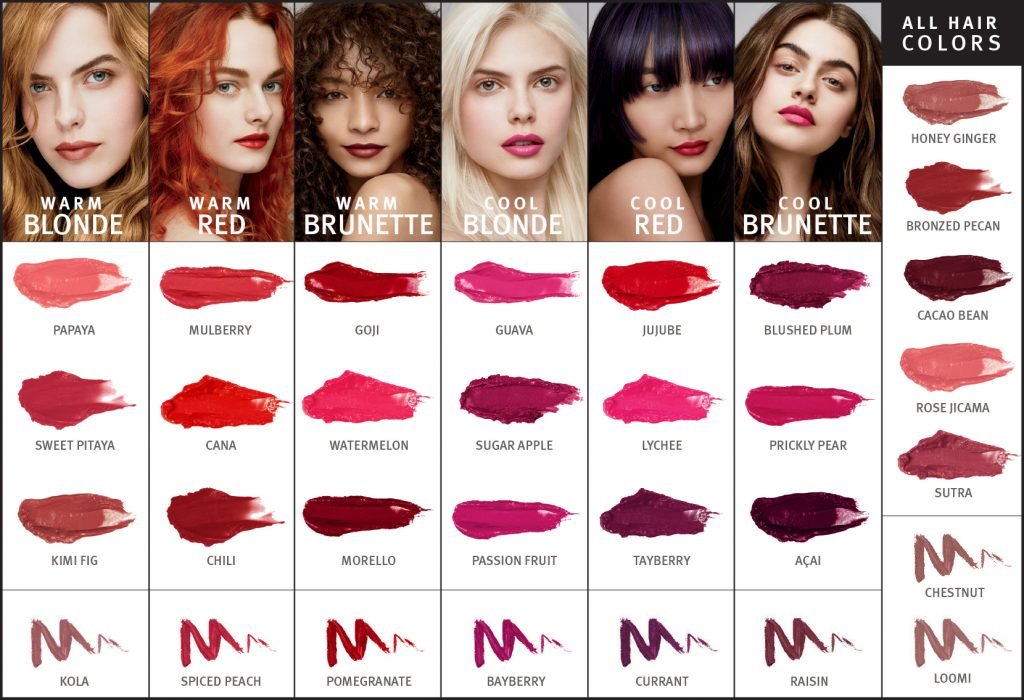
A popular quick-guide approach is to pick lipstick by hair category alone (for example, rosy nudes for light hair and bold reds for dark hair). That can help, and articles like Glamour’s hair-tone suggestions reflect these broad matches.
Undertone is the “glue” that makes shades look natural.
Skin undertone is your consistent background hue: warm, cool, neutral, or olive. Industry experts agree: if the undertones fight, your lipstick looks separate from your face, like it’s sitting on top instead of blending in.
A simple way to contemplate lipstick undertones: warm lip colors lean peach, orange, golden, or warm red; cool lip colors lean mauve, berry, blue-red, or beige-cool.
Contrast level is how bold you can go.
Contrast is the difference between:
- hair depth (light → dark),
- skin depth (light → deep),
- The natural lip pigment ranges from soft to strong.
High contrast (very dark hair + light skin, or light hair + deep skin) can handle stronger, clearer colors. Low contrast looks best in softer, blended shades.
Quick Takeaway:
Match the undertone first, then choose intensity based on contrast. Hair tone is your styling guide, not your only rule.
Visual idea (for your page)
Add a simple 3-step diagram:
- Hair tone (warm/cool/neutral)
- Skin undertone (warm/cool/neutral/olive)
- Contrast (low/medium/high)
→ lipstick family + intensity
“Contrast is why one nude looks ‘expensive’ on you and ‘muddy’ on someone else.” Pro Makeup Educator
Step 1: Identify whether your hair tone is warm, cool, or neutral, and determine its depth.
Warm hair tone cues
Your hair likely runs warm if you see:
- gold, honey, and caramel highlights
- Coppery reflections in the sun.
- auburn, chestnut, and strawberry tones.
Warm hair pairs beautifully with lip colors that echo warmth: peachy nudes, warm roses, and brick reds.
Cool hair tone cues
Your hair likely runs cool if you see:
- ash, beige-blonde (not golden)
- smoky brown, mushroom tones
- blue-black shine in dark hair
Cool hair loves cool lip families: mauves, berries, blue-based reds, and rosy-beige nudes.
Neutral hair tone cues
Neutral hair doesn’t lean strongly gold or ash. It can flex in both directions; your undertone will decide the best match.
Dyed hair & roots: which tone should you follow?
If your hair is colored, obey this rule:
- If your face-framing pieces are warm/cool, let them lead your lipstick tone.
- If your roots are much deeper than the lengths, use contrast rules (deeper roots often handle stronger lip intensity).
Pro Tip (Expert Insight Box #1):
If you’re unsure, stand in daylight and take a selfie next to a white wall. If your hair reflects gold/copper, it’s warm. If it reflects silver/gray, it’s cool.
“Always match to what’s around your face; a face-framing tone beats the label on the box.” Salon Color Specialist
Step 2: Identify Your Skin Undertone in 60 Seconds
You can pick the “right” lipstick family faster by finding your undertone first. Then hair tone becomes your styling filter.
The three quickest undertone tests
- Jewelry test:
- Gold flatters most → warm
- Silver flatters most → cool
- Both work → neutral/olive.
- Vein test (wrist):
- Greenish → warm/olive
- Blue/purple-ish → cool
- Mix → neutral
- White shirt test:
Put on a bright white top.
- If you look “fresh,” you are often cool/neutral.
- If you look “yellowed,” you are often warm/olive.
Neutral and olive undertones (the most misunderstood)
- Neutral: you can wear warm or cool lipsticks, but extremes may look harsh.
- Olive: You often look best in muted shades (rose-brown, terracotta, soft berry) instead of neon-bright tones.
A note for deeper skin tones
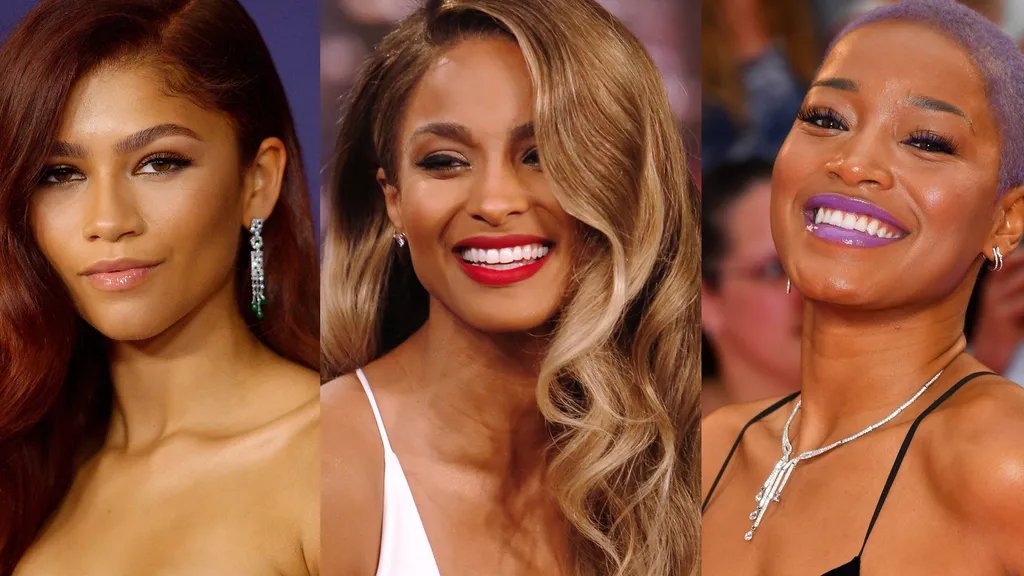
Undertone exists across all skin depths. Many melanin-rich complexions are warm, neutral, or olive, but cool undertones absolutely exist too. The key is don’t default to “warm” just because skin is deep.
Data point: A controlled study evaluating lipstick under different lighting used 60 participants and found lighting can significantly influence preference and purchase intention.
“If your foundation shade runs neutral or olive, choose lip colors that look softer than neon.” Beauty Brand Trainer
What Lip Color Suits You Best With Blonde Hair?
Blonde hair reflects light, so lipstick can either look effortless… or overpowering. The trick is matching hair tone temperature and choosing intensity based on contrast.
Cool blonde (ash, platinum, beige-blonde)
If your blonde is icy or ash, your best matches are
- pink-beige nudes (not orange-beige)
- cool roses and dusty pinks
- mauves and soft berries
- blue-based reds for statement
Why it works: cool blondes already have a “clean” brightness. Cool lip undertones keep the look polished rather than brassy.
Quick Takeaway: If your blonde pulls ash, avoid very orange corals; they can make hair look more yellow.
Warm blonde (gold, honey, strawberry blonde)
Warm blondes glow with:
- peachy nudes
- warm pinks (think “salmon rose”)
- coral and apricot
- tomato red and warm cherry tones for bold looks
This aligns with the broad hair-tone pairing you’ll see in mainstream guides (nudes/roses for lighter hair; brighter shades for drama).
Choose a nude selection that doesn’t wash you out, which is the #1 problem for blondes.
Nude fails when it’s the same color as your foundation. Instead:
- If you’re fair, choose nude with pink/peach (not beige-gray).
- If you’re medium, choose nude with rose-brown.
- If you’re deep, choose nude with caramel, mocha, or berry-brown.
Mini case study (day vs. night)
- Day: warm blonde + warm undertone → peachy nude balm
- Night: same person → add liner + warm red for contrast
Pro Tip (Expert Insight Box #2):
If you have blonde hair and desire a striking lip without appearing overly polished, opt for a sheer formula in a more intense hue (such as a sheer berry shade). You get impact without heaviness.
“Blonde hair amplifies lipstick sheer textures and provides you control.” Editorial Makeup Artist
What Lip Color Suits You Best With Light Brown Hair?
Light brown hair (from dark blonde to soft chestnut) is the most flexible category; your undertone will do most of the deciding.
Beige-brown vs. chestnut vs. caramel highlights
- Beige/mushroom brown (cool): mauve, rose-beige, berry stains
- Chestnut (neutral-warm): rosy nudes, warm mauves, brick-rose
- Caramel highlights (warm): peachy rose, terracotta nude, warm reds
A Glamour-style “hair color match” guide often recommends nudes and rosy shades for lighter hair tones.
The best “your lips but better” (MLBB) shades are recommended.
For light brown hair, MLBB usually sits in:
- rose nude
- pink-brown
- soft mauve
- peach-brown (warm undertone)
Numbered method (fast):
- Choose a lipstick 1 shade deeper than your natural lip color.
- Match undertone (warm/cool).
- Adjust finish: satin for natural, gloss for youthful, and matte for modern.
Best reds by undertone (the confidence shortcut)
- Cool undertone → blue-red (classic, crisp)
- Warm undertone → tomato/brick red (glowy)
- Neutral/olive → muted red (brick-rose, soft wine)
Pro tip: liner prevents muddy nudes.
If nude looks “gray” or “flat” on you:
- Line lips with a pencil close to natural lip tone.
- Add nude lipstick in the center.
- Tap a tiny bit of gloss.
“Light brown hair is a blank canvas; choose the lip you want your face to say.’” Bridal Makeup Specialist
What Lip Color Suits You Best With Dark Brown or Black Hair?
Dark hair creates natural contrast, so lipstick reads stronger, often in a pleasing way. Your mission is to pick a shade that looks intentional, not heavy.
Cool dark hair (blue-black, ash espresso)
Your best families:
- berry, plum, wine
- mauve-rose
- true blue-red
- cool cocoa nudes (not orange-brown)
Why: cool hair + cool lipstick undertones looks cohesive and expensive.
Warm dark hair colors, such as espresso, chocolate, and those with a golden-brown shine, are recommended.
Your best families:
- terracotta
- brick red
- warm rose-brown
- cinnamon nude
- warm cherry (not too blue).
This lines up with popular advice that bold, vivid shades often pop beautifully against dark hair.
Best everyday nudes for high contrast
Nude works best when it has enough depth to stand up to dark hair.
- For individuals with fair skin and dark hair, a pink-beige or rose nude is recommended, while concealer nude should be avoided.
- Medium skin + dark hair: rose-brown, caramel nude
- Deep skin + dark hair: mocha, cocoa, berry-brown
Teeth-brightening picks (simple rule)
Want a “whiter smile” effect? Choose lip colors with a hint of blue:
- blue-red, berry, cool pink
Very orange shades can make teeth appear warmer.
Quick Takeaway: Dark hair lets you wear bold shades, but pick the right undertone so it doesn’t look costume-y.
“With dark hair, you can go deeper OR brighter; just don’t go ‘beige-flat.’” Runway Makeup Artist
What Lip Color Suits You Best With Red, Copper, or Auburn Hair?
Red hair is already a statement. The best lipstick doesn’t compete; it harmonizes or intentionally contrasts.
Copper/ginger/orange-red hair (warm)
Best matches:
- coral
- peach
- terracotta
- warm beige nudes.
- warm reds (tomato, brick)
This echoes the mainstream guidance that warm red/copper hair pairs well with coral, terracotta, and peach families.
Auburn (brown-red, neutral-warm)
Auburn can wear:
- rose-brown
- warm mauve
- brick-rose
- soft wine (if skin undertone leans cool-neutral)
Cool red hair (cherry/cranberry-dyed reds)
If your red is cooler (more berry than copper):
- lean into berries, blue-reds, mauves
- skip orange-heavy corals (they can clash)
Mistake to avoid: the “clashing pink” problem
Many redheads try bright cool pinks, but they often feel that these shades clash with their hair color. If that happens:
- Switch to salmon rose (warm pink) for copper hair.
- switch to dusty rose (muted cool pink) for cool reds
Pro Tip (Expert Insight Box #3):
If your hair is copper and your skin is olive, choose muted terracotta over bright orange. Muted tones look refined and modern.
“Red hair loves lip colors that feel ‘sunset,’ peach, terracotta, or warm rose.” Color Harmony Specialist
For those with gray, silver, or white hair, brightening shades should be chosen to avoid harshness.
Gray hair can make some lip colors look flat (especially pale nudes). The goal is to add life back to the face without going neon.
Cool silver vs. warm gray
- Cool silver or ash gray: choose cool roses, berries, and mauves.
- Warm gray (more beige): choose peachy rose, warm pink-brown, or soft terracotta.
This aligns with mainstream suggestions that vivid shades can look striking with gray hair.
Soft berries, rosy nudes, and modern reds
A “modern” flattering wardrobe for gray hair:
- rosy nude (daily)
- soft berry stain (fresh)
- true red in satin (classic)
- plum-rose (evening)
Avoid “flat lips” with texture tricks.
Flatness is often texture + contrast, not just shade.
- Add a satin finish instead of dead matte
- Use liner to define the border
- Tap “gloss” at the center for dimensions.
Data point: Research suggests lipstick color can influence perceived complexion (an “assimilation effect”), meaning lip hue can subtly shift how skin tone is perceived.
Gray hair exudes sophistication; complement it with a lip shade that revitalizes the spirit. Pro-Aging Beauty Makeup Artist
Multi-Tonal Hair (Highlights, Balayage, Ombre): Which Tone Wins?
If your hair features multiple shades, there is no need to acquire a different lipstick for each strand. You need a smarter rule.
Choose the dominant tone or the face-framing tone.
Pick a lipstick undertone based on:
- Choose the tone that is closest to your face, such as the money piece, bangs, or top layer, or the dominant tone overall (what people notice first).
- the dominant tone overall (what people notice first)
The “bridge shade” method (my go-to)
Bridge shades sit between warm and cool, or between nude and bold:
- rose-brown
- muted berry
- brick-rose
- peachy-mauve
They harmonize with both warm highlights and cooler base tones.
Coordinate lips with brows and blush (the missing step).
If balayage looks warm but your brows are cool-toned (ash), your lipstick can feel confusing. Align your “supporting cast”:
- warm hair → warm blush (peach/terracotta)
- cool hair → cool blush (rose/mauve)
Then lipstick becomes easy.
Quick Takeaway: If you’re multi-tonal, choose lipstick that matches your face-framing tone, not the darkest or lightest part of your hair.
“Balayage changes the frame, so match your lipstick to the highlight tone that is nearest to your cheekbones.” Salon + Makeup Collaborator
Finish & Formula: The Hidden Lever Most People Ignore
Same shade name, different finish, totally different result. This is where pros quietly win.
Matte vs. satin vs. gloss (how each changes color)
- Matte: reads deeper and stronger; can emphasize dryness
- Satin/cream: most forgiving; looks “alive”
- Gloss: lightens and softens shade; adds youthfulness
If you love bold colors but fear intensity, go glossy or sheer.
The difference between sheer and full pigment is that sheer can tone down any color.
A sheer berry can flatter almost every hair tone because it acts like a tinted filter. Full pigment is more dramatic and needs better undertone matching.
Lip preparation and lining for shape is a universal upgrade.
A lipstick that “doesn’t suit you” is sometimes just:
- uneven lip texture
- blurry edges
- a shade that needs a liner “frame”
Pro workflow (60 seconds):
- balm (wait 30 seconds)
- blot
- liner at corners + cupid’s bow
- lipstick
- Tap the center with a fingertip.
Lighting plays a crucial role in your shopping decisions.
A controlled study found lighting significantly impacted lipstick preference and purchase intention, and it also challenged the common habit of judging shades from arm swatches.
If you have ever thought, “This looked perfect in the store,” rest assured, it is not merely in your imagination.
Pro Tip (Expert Insight Box #4):
When testing, examine lipstick in two lights: near a window and under indoor lighting. If it looks good in both, it’s a keeper.
“Finish is your volume knob; matte turns up intensity, and gloss turns it down.” Product Development Makeup Artist
Common Mistakes + Fast Fixes (Troubleshooting Section)
“It looks too orange / too purple / too dull.” What’s happening?
- Too orange: lipstick is warmer than your undertone (or your teeth read yellow)
- Too purple: lipstick is cooler than your undertone (or too gray-based)
- Too dull: there is not enough contrast, or the shade is too close to the foundation color.
Fix in 10 seconds:
- Too orange: → add a cooler liner or mix with a berry balm.
- Too purple → add warm gloss (peach/clear)
- Too dull: deepen edges with a liner and brighten the center with gloss.
Why the “arm swatch test” fails
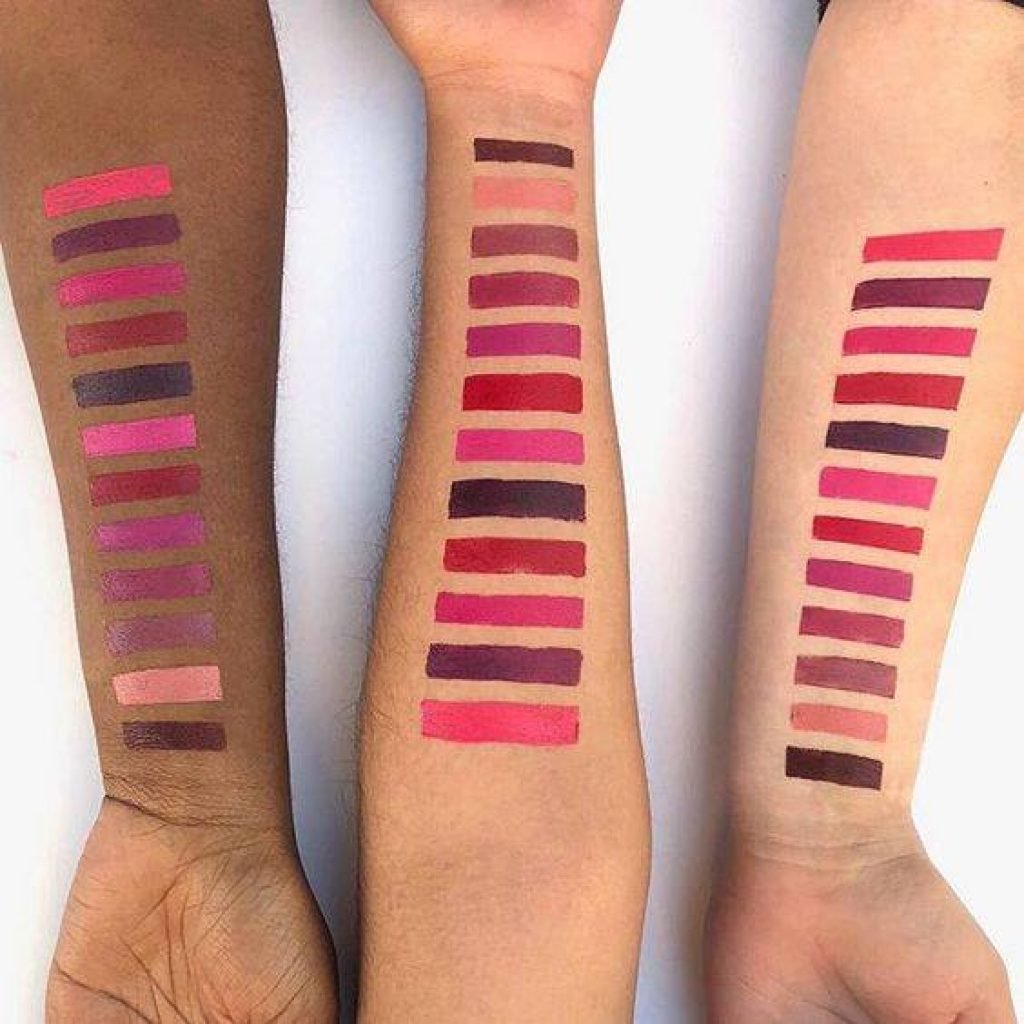
Many people swatch on the forearm, then buy. But research found no significant correlation between preferences judged on lips vs. forearm in a controlled setting.
Your lips have different natural pigment and texture, so test closer to your face when possible.
“My nude makes me look sick.”
This is almost always an undertone and depth mismatch.
- If you have warm hair and a warm undertone, choose nude with peach/rose.
- If you have cool hair and a cool undertone: choose nude with pink-beige/mauve
- If you’re deep-skinned: choose nude with brown/berry depth
Camera/flash problem (it photographs weird)
Flash can:
- wash out nudes.
- make cool lipsticks look more purple
- make warm shades look more orange
Make adjustments for photos: pick a shade slightly deeper and slightly more saturated than your “real life” shade, and choose satin over matte for a smoother look.
“Most bad lipstick moments are just undertone conflicts or the wrong finish.” Beauty Educator
The 5-Minute Shade Finder + Shopping Checklist (Conclusion + CTA)
You now have the system; let’s make it practical.
The 5-minute shade finder (quick quiz)
- Hair tone: warm/cool/neutral.
- Hair depth: light / medium / dark
- Skin undertone: warm / cool / neutral / olive
- Contrast: low / medium / high
- Choose your family:
- Warm hair + warm undertone → peachy nude, warm rose, terracotta, tomato red
- Cool hair + cool undertone → mauve, berry, blue-red, rosy beige
- Neutral/olive → muted rose-brown, brick-rose, soft berry, caramel nude
The “lipstick wardrobe” that never fails
Build a 3-shade wardrobe:
- MLBB (daily)
- Elevated nude/rose (work or events)
- Statement red/berry (night, photos)
Shopping checklist (save this)
- Match the undertone first (warm vs. cool).
- Verify in two lights (window and indoor).
- If unsure, pick a “bridge shade” (rose-brown, brick-rose).
- Decide on a finish: satin for most people, matte for drama, and gloss for softness.
- Don’t trust only arm swatches.
Final Quick Takeaway:
If you remember one thing: undertone makes it harmonious, hair tone makes it styled, and contrast makes it wearable.
CTA: Save this guide, experiment with the three-shade wardrobe this week, and capture two selfies (one in daylight and one indoors). Your perfect lip colors will reveal themselves fast.
“When you stop guessing and start matching undertones and contrast, lipstick becomes effortless.” Senior Makeup Artist
FAQ Schema
Q1: Does lipstick need to match hair color or skin undertone more?
A1: Skin undertone matters most for harmony; hair tone helps you choose warmer or cooler versions of that shade family.
Q2: What lipstick shades suit ash blonde hair best?
A2: Mauves, cool roses, soft berries, and blue-based reds are most flattering on cool, ash-blonde tones.
Q3: What lip colors look best with black hair?
A3: Rose-browns for everyday, plus bold berries, true reds, and brick reds depending on undertone and contrast.
Q4: What lipstick works best with gray hair?
A4: Rosy nudes, soft berry stains, and satin-finish reds brighten the face without looking harsh.
Q5: Why does lipstick look good on my hand but not on my lips?
A5: Lips have different natural pigment and texture, and lighting can change shade appearance. Test closer to your face and check in multiple lights.