
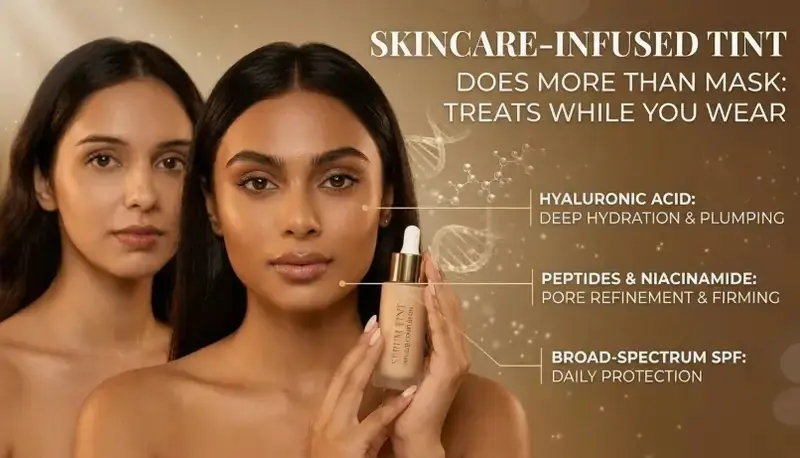
Skincare infused makeup finally lives up to its name, because the 2026 wave of serum foundations, tinted serums, and color-correcting moisturizers tru
Skincare infused makeup finally lives up to its name, because the 2026 wave of serum foundations, tinted serums, and color-correcting moisturizers truly delivers active ingredients alongside coverage. What used to be an empty marketing claim now holds up at the formulation level. This guide walks through the actives that work through pigment, the picks worth the price, and the promises still not worth believing.
Published · Updated
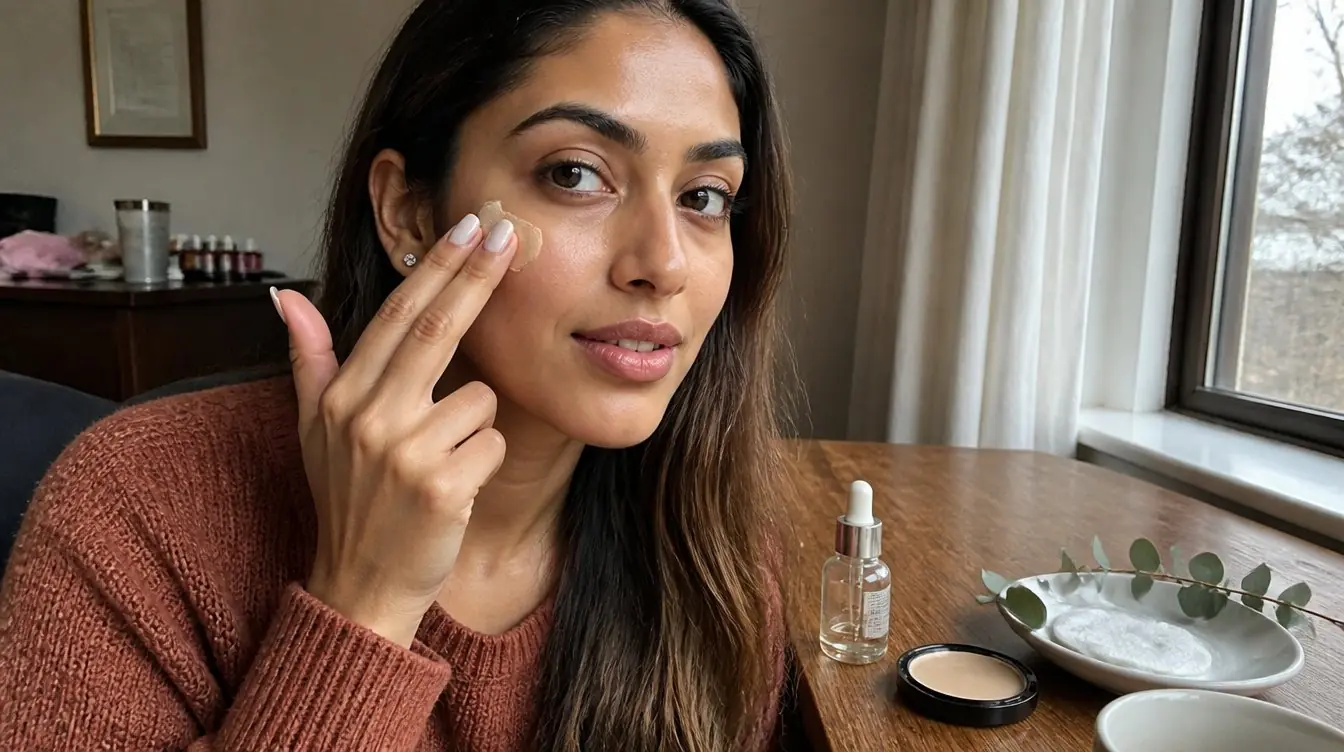
Skincare-infused makeup, especially serum foundations and tinted sunscreens, blends active ingredients like hyaluronic acid, niacinamide, peptides, and antioxidants into lightweight, wearable formulas that look like makeup but behave like skincare. In my experience, the biggest visible transformation in a routine often happens when someone switches from a traditional, heavy foundation to a skin-first, treatment-infused base.
This in-depth guide explains why your 2026 foundation should double as a serum, how skincare-infused makeup actually works, which ingredients matter, how to choose the best formula for your skin type, and how to apply it for maximum results.
What is skincare-infused makeup?
Skincare-infused makeup is a category of cosmetic products, including foundations, tinted moisturizers, BB/CC creams, and tinted sunscreens, formulated with a skincare-first mindset. Instead of starting with a film-forming base and adding pigment, these formulas start with a skincare treatment (like a hydrating or anti-aging serum) and then integrate color pigments on top.
In practical terms, that means your foundation isn’t just providing coverage; it’s also delivering active ingredients to your skin throughout the day. Research shows that commonly used skincare actives like hyaluronic acid and niacinamide remain effective when correctly stabilized within color cosmetics. Industry experts agree that modern hybrid formulations are designed to offer both performance and skin benefits, not one or the other.
Typical skincare actives you’ll find in skincare-infused makeup include:
- Hyaluronic acid for deep hydration and plumping
- Niacinamide for oil control, pore refinement, and barrier support
- Peptides for firming and collagen support
- Antioxidants (vitamin C, vitamin E, green tea) for environmental defense
- Soothing botanicals (aloe, centella, chamomile) for sensitivity
- Broad-spectrum SPF for UV protection
The result is a base product that functions as both your complexion cosmetic and a treatment step in your routine.
How skincare-infused makeup differs from traditional foundation
The easiest way to understand the shift is to look at formulation and function side by side.
Traditional foundation
Traditional foundations were historically built around coverage and longevity. The formulas often relied on:
- High levels of silicones and film-formers for slip and wear time
- Heavier texture that sits on top of the skin
- Minimal or purely marketing-level skincare ingredients
- Finishes that favored matte, “flat” complexions, especially for oil control
These products can certainly perfect the look of skin, but they don’t necessarily support its long-term health. Some formulas can even dry out, irritate, or clog skin over time when used daily.
Skincare-infused makeup
Skincare-infused foundations and tints start with skin health first. Formulators:
- Dedicate more formula “space” to active skincare ingredients
- Use sophisticated emulsions to balance water-loving actives and oil-soluble pigments
- Aim for a “second-skin” finish that looks more like healthy bare skin
- Focus on comfort, breathable wear, and barrier support
Where a traditional foundation might feel like a mask, a well-formulated, skincare-infused base feels like a cushiony, breathable veil.
Why skincare-infused makeup is exploding in 2026
Several major beauty and lifestyle shifts have converged to make skincare-infused makeup one of the defining trends of 2026.
The skinimalism movement
Skinimalism, doing more with fewer, smarter products, has gone mainstream. People want lean, efficient routines instead of 10+ steps. A serum foundation or tinted SPF that can hydrate, protect, and even treat concerns lets you skip multiple products without sacrificing results.
Instead of:
- Serum
- Moisturizer
- Primer
- Foundation
You can often layer:
- Serum (optional for targeted treatment)
- Moisturizer
- Skincare-infused foundation or tinted sunscreen
This saves time, money, and product weight on the skin.
Ingredient transparency and “skin-first” thinking
Consumers are now extremely ingredient-aware. They read labels, research actives, and expect visible results from every step they apply. Skincare-infused makeup fits perfectly into this mindset by openly listing actives and positioning foundation as an extension of your skincare routine, not a separate category.
Social and professional influence
Dermatologists, estheticians, and pro makeup artists increasingly recommend lighter, more nourishing bases, especially for long-term skin health. In my experience, professionals working with camera-ready clients often report that serum foundations and treatment-infused tints photograph better on real skin over time, especially on textured or mature complexions.
Real skin benefits of skincare-infused makeup
It’s fair to ask: is this just clever marketing, or can makeup actually improve your skin? When the formulation is right, the benefits can be real and measurable.
1. Hydration and plumping
Hyaluronic acid and glycerin are common humectants used in skincare-infused foundations. They:
- Attract and bind water to the skin
- Visibly plump fine dehydration lines
- Help makeup sit more smoothly on the skin
If your skin often feels tight by midday in traditional foundation, switching to a hydrating serum-based formula can be game-changing. Over several days or weeks, skin can look smoother, bouncier, and less prone to flaky patches under makeup.
For best hydration results, always apply skincare-infused foundation over slightly damp, well-moisturized skin. Let your moisturizer sink in for 2 3 minutes before applying your base.
2. Barrier support and reduced irritation
Many skincare-infused bases include ingredients like
- Niacinamide to strengthen the skin barrier
- Ceramides and squalane to support lipid layers
- Soothing botanicals to calm redness
A stronger barrier means your skin is better at holding moisture and less reactive to environmental stress. Over time, you may notice less redness, less tightness, and fewer dry patches, especially in cooler or drier climates.
3. Oil control and pore refinement
Niacinamide, zinc, and other sebum-regulating ingredients can help:
- Reduce excess oil production
- Minimize the look of enlarged pores
- Decrease midday shine
Instead of fighting oil with extremely matte, drying formulas, skincare-infused makeup can regulate oil production more gently. Experts in the industry concur that this is particularly beneficial for combination skin, which frequently experiences both dehydration and oiliness simultaneously.
4. Anti-aging and firming support
Some serum foundations now include:
- Peptides that signal collagen production
- Antioxidants that combat free radical damage
- Gentle retinoid derivatives or plant-based alternatives
You should not expect a foundation to replace a dedicated retinol, but daily exposure to low-level actives as you wear your makeup can complement your night routine and support firmer, more resilient skin over time.
5. Sun and environmental protection
Tinted sunscreens and SPF-infused bases offer:
- Broad-spectrum UV protection
- Often iron oxides that help shield against visible light
- Antioxidants to mitigate pollution and blue light stress
Wearing a cosmetic you daily enjoy dramatically increases the chances that you’ll get consistent protection, compared with SPF that feels heavy or leaves a cast.
Skincare-infused makeup won’t replace a full medical-grade skincare routine, but it can significantly enhance your daily “maintenance layer,” especially for hydration, comfort, and environmental protection.
The main types of skincare-infused makeup
Different formats suit different skin types, lifestyles, and coverage preferences.
1. Serum foundations
Serum foundations are the poster child of skincare-infused makeup.
Typical traits:
- Thin, watery, or fluid texture
- Light-to-medium, buildable coverage
- Natural to dewy finish
- Often high levels of humectants and treatment actives
Best for:
- Normal to dry skin
- Mature or dehydrated complexions
- Anyone who wants their base to feel like skincare rather than makeup
In my experience, serum foundations are especially flattering on textured skin because they don’t cake or settle as easily when applied in thin, blended layers.
2. Tinted sunscreens
Tinted sunscreens combine:
- Broad-spectrum SPF (often 30 50)
- Light coverage to even tone
- Hydrating and soothing skincare ingredients
Best for:
- Daily wear, especially if you’re outdoors or near windows
- Sensitive, reactive, or post-treatment skin
- People who want a “no-makeup makeup” finish
They’re ideal for those who prefer to rely on SPF as part of their base rather than layering heavy sunscreen under foundation.
3. Tinted moisturizers and BB/CC creams
These sit between classic moisturizers and foundations.
Traits:
- Light to medium coverage
- Creamy, comfortable texture
- Often include SPF and hydrators
- May contain a smaller but still meaningful percentage of actives
Best for:
- Normal, combination, or slightly dry skin
- Everyday wear where you want some polish but not full coverage
4. Skincare-infused primers and complexion enhancers
These products are applied before foundation or used alone for subtle perfecting.
Examples:
- Niacinamide-infused blurring primers
- Glow drops with vitamin C and hydrating actives
- Pore-refining primers with gentle acids or sebum regulators
They can boost the performance of both traditional and skincare-infused foundations by creating a smoother, more balanced canvas.
Key ingredients to look for (and why they matter)
Understanding the INCI list (ingredient list) helps you separate true skincare-infused makeup from mere marketing.
Hydrators
- Hyaluronic acid: Attracts water and helps plump fine lines. Multi-weight HA can hydrate both surface and deeper layers.
- Glycerin: A classic humectant that boosts hydration and helps prevent transepidermal water loss.
- Squalane: A lightweight, non-comedogenic oil that mimics skin’s natural lipids.
Ideal if your skin feels tight, dull, or textured under makeup.
Barrier-supporting actives
- Ceramides
- Cholesterol and fatty acids
- Niacinamide
These help repair and strengthen the skin barrier, making skin more resilient and less reactive.
Brightening and anti-aging actives
- Vitamin C (or its stable derivatives) for radiance and antioxidant protection
- Peptides for supporting firmness over time
- Gentle retinoid derivatives in some evening or specialty formulas
Perfect if dullness, uneven tone, or early fine lines are your main concerns.
Oil and blemish control actives
- Niacinamide
- Zinc PCA
- Salicylic acid in select acne-focused formulas
These can help reduce excess sebum and keep pores clearer.
Soothers and anti-inflammatory ingredients
- Centella asiatica (cica)
- Aloe vera
- Allantoin
- Colloidal oatmeal
These are especially helpful in formulas designed for rosacea, sensitivity, or reactive skin.
Matching skincare-infused makeup to your skin type
A single “best” product doesn’t exist. The best skincare-infused makeup is the one aligned with your skin type and main concerns.
Dry or mature skin
Look for:
- Serum foundations or rich tinted moisturizers
- Hyaluronic acid, glycerin, squalane, and ceramides high in the ingredient list
- Dewy or radiant finish claims
Avoid:
- Heavy, oil-absorbing powders
- Very matte formulations that can emphasize lines
Use a hydrating serum and moisturizer first, let them set, then apply a thin layer of serum foundation with a damp sponge.
Oily or combination skin
Look for:
- Oil-free or “non-comedogenic” labels
- Niacinamide and sebum-regulating actives
- Natural or soft-matte finishes
Avoid:
- Very rich, oil-heavy textures marketed mainly for dry skin
- Overly dewy finishes unless paired with a setting powder in oily areas
In my experience, many people with oily skin do better with a satin, skincare-infused base plus strategic powder only where they get shiny, rather than a flat, full-matte foundation over the entire face.
Sensitive or reactive skin
Look for:
- Fragrance-free or low-fragrance formulas
- Soothing actives like cica, allantoin, panthenol, oat extract
- Dermatologist-tested or sensitive skin positioning
Avoid:
- Strong essential oils
- Heavy fragrance
- Overly complex formulas loaded with potential irritants
Patch test along the jawline for a few days before applying full-face.
Acne-prone skin
Look for:
- “Non-comedogenic” on the label
- Niacinamide, zinc, or mild salicylic acid
- Lightweight, breathable textures
Avoid:
- Oils you know you’re sensitive to
- Very occlusive, waxy textures in high concentrations
Skincare-infused makeup formulated for blemish-prone skin can be a beneficial partner to your acne treatment instead of something you “tolerate” on top of it.
Skincare-infused makeup vs traditional foundation: practical comparison
Coverage and finish
- Traditional foundation: often medium to full coverage, it can look perfected but is sometimes flat or heavy.
- Skincare-infused makeup: Generally light-to-medium, buildable coverage. Skin still looks like skin, but with more dimension and a natural sheen.
If you love full coverage, you can pair a serum foundation with targeted concealer or build in thin, controlled layers.
Wear time and comfort
- Traditional foundation: Can push 12 16 hours but may feel heavier and look more “worn” by the end of the day.
- Skincare-infused makeup: Typically comfortable for 8 12 hours, often feeling better on the skin as the day goes on thanks to ongoing hydration.
Skin condition over time
- Traditional foundation: Some formulas can dehydrate, clog, or irritate when used daily.
- Skincare-infused makeup: The right formula can support hydration, barrier health, and even breakouts over time.
Common mistakes when switching to skincare-infused makeup
If you try a serum foundation and don’t love it immediately, it’s often about technique or expectations, not the category itself.
Mistake 1: Using too much product
Skincare-infused bases are designed to spread easily.
- One pump is usually enough for the entire face.
- You can always spot-add concealer where you need more coverage.
Too much product ruins the “second skin” effect.
Mistake 2: Skipping proper prep
Even though the formula is hydrating, applying it on completely dry or stripped skin can:
- Highlight texture
- Make blending harder
- Reduce wear time
Always prep with a hydrating layer first.
Mistake 3: Expecting full-coverage, mask-like results
These formulas are meant to enhance your skin, not erase it. For stubborn pigmentation or active blemishes, pair your base with a targeted concealer instead of piling on multiple layers.
How to apply skincare-infused makeup for best results
Method 1: Damp sponge (most forgiving)
- Prep skin with serum and moisturizer.
- Dampen a beauty sponge and squeeze out excess.
- Dispense ½ 1 pump of product.
- Press and bounce the sponge over the face (do not drag).
- Build more coverage only where needed.
This gives a seamless, skin-like finish and is ideal for dry, normal, or combination skin.
Method 2: Buffing brush (more coverage)
- Prep skin as above.
- Use a dense, synthetic brush.
- Pick up product and buff in small circular motions.
- Blend thoroughly around the hairline and jaw.
Best if you want slightly more coverage without heavy layering.
Method 3: Fingers (fast and natural)
- Warm a small amount between fingertips.
- Press and tap into skin, especially on the center of the face.
- Use clean fingers to blur edges.
Great for travel, on-the-go use, or very natural finishes.
Building a routine around skincare-infused makeup
Morning
- Gentle cleanser
- Hydrating toner or essence (optional but helpful)
- Targeted serum (e.g., vitamin C, niacinamide)
- Moisturizer
- Sunscreen (if your base does not provide sufficient SPF)
- Skincare-infused foundation or tinted sunscreen
This balances active treatments with comfort and protection.
Evening
- Makeup remover or cleansing balm
- Gentle cleanser
- Treatment products (e.g., retinoid, exfoliating serum on alternate nights)
- Barrier-repair or hydrating night cream
Removing skincare-infused makeup gently protects the barrier so you get the most from your treatments overnight.
Is skincare-infused makeup worth it?
In my experience, most people who:
- Wear foundation daily
- Struggle with dryness, irritation, or breakouts under makeup
- Want to simplify their routine
find that skincare-infused formulas are worth the investment.
Yes, they are often more expensive upfront than basic foundations. But they can:
- Reduce the need for separate primers
- Make your skin more comfortable during long wear
- Complement your skincare routine for better long-term results
If you treat foundation as something you wear many hours a day, choosing a formula that actively supports your skin makes strategic sense.
Frequently Asked Questions About Skincare-Infused Makeup
Is skincare-infused makeup actually good for your skin?
It depends on the formula. The best skincare-infused makeup pairs pigments with hydrators like hyaluronic acid, niacinamide, peptides, or SPF in concentrations high enough to do real work over a full wear day. Cheaper versions just dust a trace of active onto a standard foundation base for marketing. Check the INCI list and look for the active in the top half of the ingredients. If it sits near the bottom with the fragrance, treat it as a regular foundation with a nicer story rather than a serum replacement.
Can skincare-infused foundation replace your serum?
Not entirely. Skincare-infused makeup delivers a thin film of actives that get worn down by friction, sweat, and reapplication, so the dose is lower than a dedicated serum. Treat it as a top-up layer rather than a stand-in. Apply your real serums and moisturizer first, let them absorb for two or three minutes, then layer the foundation on top. The makeup then locks the routine in and reinforces hydration through the day instead of starting your active routine from scratch.
How long does skincare-infused makeup take to show results?
Most people see surface benefits, like a more even tone and softer texture, within two to four weeks of daily wear because the formula is hydrating skin while it sits on it. Deeper changes such as fine line softening or pigmentation fading take eight to twelve weeks, the same timeline as any topical active. The cosmetic payoff is immediate, the skincare payoff is cumulative, and stopping mid-stream resets the clock on the slower benefits.
Does skincare-infused makeup break out acne-prone skin?
It can if the base oils are heavy or the formula uses comedogenic emollients, so acne-prone skin should check for non-comedogenic labelling and avoid coconut-derived ingredients like isopropyl myristate near the top of the list. Lightweight skincare-infused fluids with niacinamide, salicylic acid, or zinc PCA tend to behave better on oily and breakout-prone skin than rich, dewy formulas built around shea butter or thick silicones. Patch test on the jawline for three nights before committing to a full face.
Is skincare-infused makeup worth the higher price?
It is worth it when the active concentration is meaningful and you wear the product daily, because you essentially fold one step of your routine into another and save time. It is not worth it if you already use strong dedicated serums and just want coverage, since the makeup version delivers a fraction of the dose for double the price. Compare the cost per ounce against a real serum with the same active before deciding, and factor in how often you actually wear foundation.
Can you layer skincare-infused makeup with sunscreen and retinol?
Yes, with the right order. Apply retinol at night only, never under daytime makeup, because UV degrades it. In the morning, layer sunscreen as the final skincare step, give it two minutes to set, then apply the skincare-infused foundation on top. The makeup will not cancel the SPF as long as you used a full quarter teaspoon of sunscreen first. Avoid mixing the two products in your palm because that dilutes the SPF film and reduces protection.
RELATED ARTICLES:
5 Skincare Trends to Watch Out for in 2026, According to a Top Skin Expert
Climate-Adaptive Skincare: Build a Weather-Proof Skin Care Routine
5 Skincare Mistakes You Didn’t Know You Were Making (And How to Fix Them!)
2025 Skincare Revolution:Morning & Evening Routine to Achieve Flawless Skin
About The Author

COMMENTS